


Dubai Is Building 31 New Pedestrian Bridges by 2030 — and the City Just Got More Walkable
If you have ever stood at the edge of Sheikh Zayed Road at rush hour, watching twelve lanes of cars hiss past while you wait for a gap that never quite comes, you already understand why this announcement matters. Dubai is a city built, for decades, around the windscreen. Crossing a road on foot here can feel like an act of faith. That is exactly what the city has just decided to change — at scale.
On 15 June 2026, Dubai's Roads and Transport Authority (RTA) approved a five-year plan to build 31 new pedestrian bridges and tunnels across the emirate between 2026 and 2030. I walk this city far more than most residents — it is genuinely how I find half the places I write about — so let me walk you through what is being built, where, and why it quietly reshapes daily life for anyone who ever travels Dubai on two feet.
What Dubai just approved
The plan covers 2026 to 2030 and was built on detailed technical and field studies — population density, land-use, proximity to tourist and economic hubs, and how well each spot connects to public transport. In other words, these are not random footbridges; they are placed where people are actually trying to cross and currently can't, safely. RTA Director-General Mattar Al Tayer framed it as an integrated network: existing and planned bridges that link residential communities to key destinations and nudge residents toward what the RTA calls ‘soft mobility’ — walking and cycling for first- and last-mile journeys.
It is worth pausing on the scale of what is already there. Dubai had just 26 pedestrian bridges and tunnels in 2006; by the end of 2025 that figure had reached 178 — a 585% increase in under two decades. The new 31 are the next chapter of a very deliberate, long-running project, not a one-off press release. (Figures as of the RTA announcement, reported 15 June 2026.)
Where the new bridges are coming up
The 31 crossings are concentrated on the corridors where pedestrians and fast traffic collide most. According to the RTA's published plan, the headline locations include:
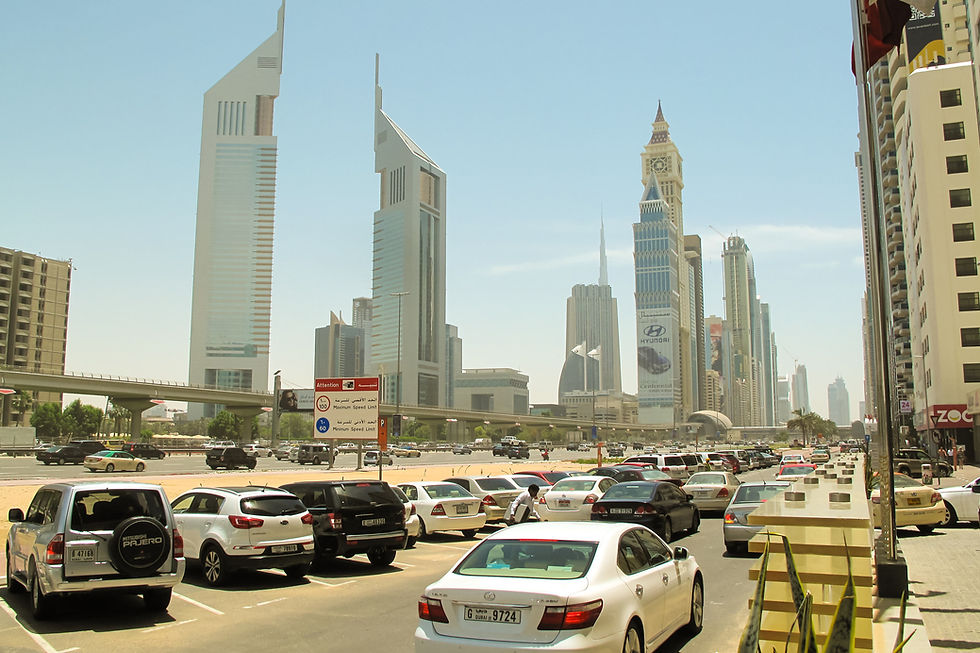
Sheikh Zayed Road — the city's busiest artery, where crossing on foot has long been near-impossible between metro stations.
King Salman bin Abdulaziz Al Saud Street — a major multi-lane corridor serving dense residential and commercial blocks.
Al Ittihad Road — the historic Dubai–Sharjah link that carries enormous daily commuter flow.
Omar bin Al Khattab Street — in the heart of Deira, one of the oldest and most foot-trafficked parts of the city.
Tunis Street and the Al Nahda intersection — high-density neighbourhoods where short trips are often made on foot.
Dubai–Al Ain Road and Al Sukook Street — fast suburban routes connecting growing communities like Liwan and Dubai Silicon Oasis.
If you live or stay near any of these, the practical upshot is simple: routes that currently force a long detour or a risky dash will, over the next few years, get a safe, dedicated crossing — many of them air-conditioned or shaded, with lifts and escalators so they work for families, wheelchair users and anyone hauling shopping in August heat.
The bridges already turning heads
A few of these structures are landmarks in their own right. The largest currently under construction spans the Dubai–Al Ain Road — a 730-metre crossing, 5.6 metres wide, linking Wadi Al Safa 4 (Liwan) with Nad Hessa in Dubai Silicon Oasis. For context, that is longer than seven football pitches laid end to end, built purely so people can get across on foot and by bike.
Two recently completed bridges show the design ambition. The Sheikh Zayed Road crossing runs 528 metres with an interwoven, panoramic design, and the Al Khail Road bridge stretches 501 metres with a sun-ray-inspired form. Crucially, both carry a 3-metre cycling lane alongside a 2-metre pedestrian walkway — these are not just footbridges, they are cycling infrastructure too. (Specifications as reported by the RTA, June 2026.)
The safety story behind the steel
Here is the number that genuinely stopped me. Over the past 18 years, pedestrian fatalities in Dubai have fallen by 98% — from 9.5 deaths per 100,000 residents in 2007 to just 0.22 per 100,000 in 2025. In a city that has roughly tripled in population over the same period, that is not luck; it is the cumulative result of exactly this kind of infrastructure, plus enforcement and design. (Source: RTA, as of 2025.)
And people are clearly using their feet. Dubai now records more than 326 million walking trips a year, and cycling trips hit 57.3 million in 2025 — up 23% on the 46.6 million of 2024. Resident satisfaction with the city's pedestrian infrastructure sits at 88%. The demand is real and rising, which is precisely why the supply is being expanded.
My honest tip as a serial Dubai walker: the existing footbridges are your secret weapon against the heat and the traffic. Most have lifts and many are air-conditioned, so in summer I will happily ride up one, cross above the cars in cool air, and ride down the other side rather than wait three light cycles at street level. Once the new 31 open, that becomes possible across far more of the city.
What it means if you walk or cycle Dubai
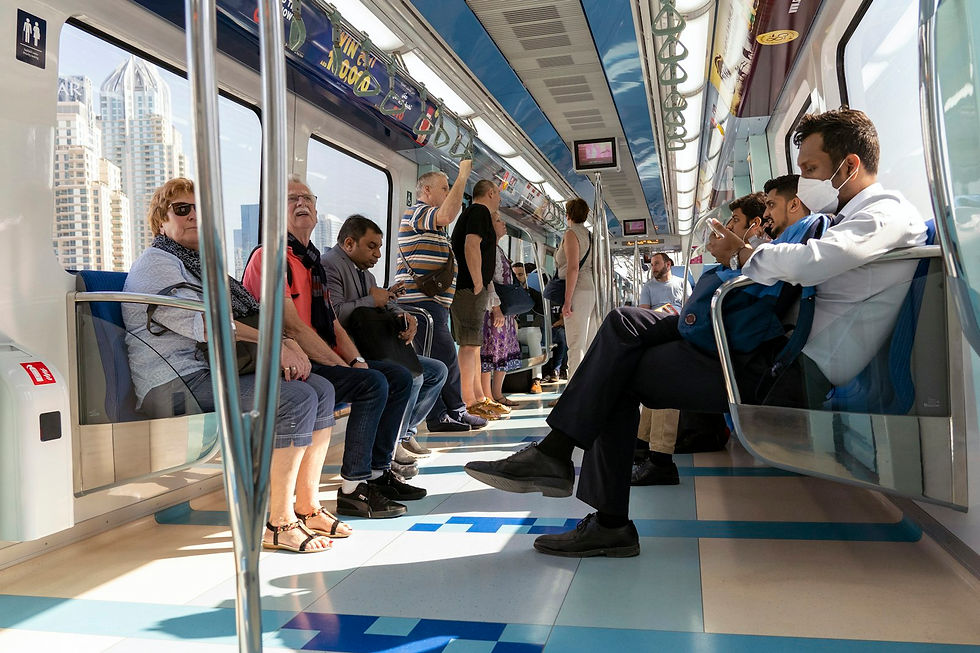
For visitors, the immediate win is connectivity to transit. The bridges are deliberately clustered near Dubai Metro and bus stations, so the awkward, exposed walk from a station to your hotel or the mall gets safer and shadier. If you want to lean into it, pair this with my guide to the best evening walks in Dubai so you can stitch together a genuinely car-free day.
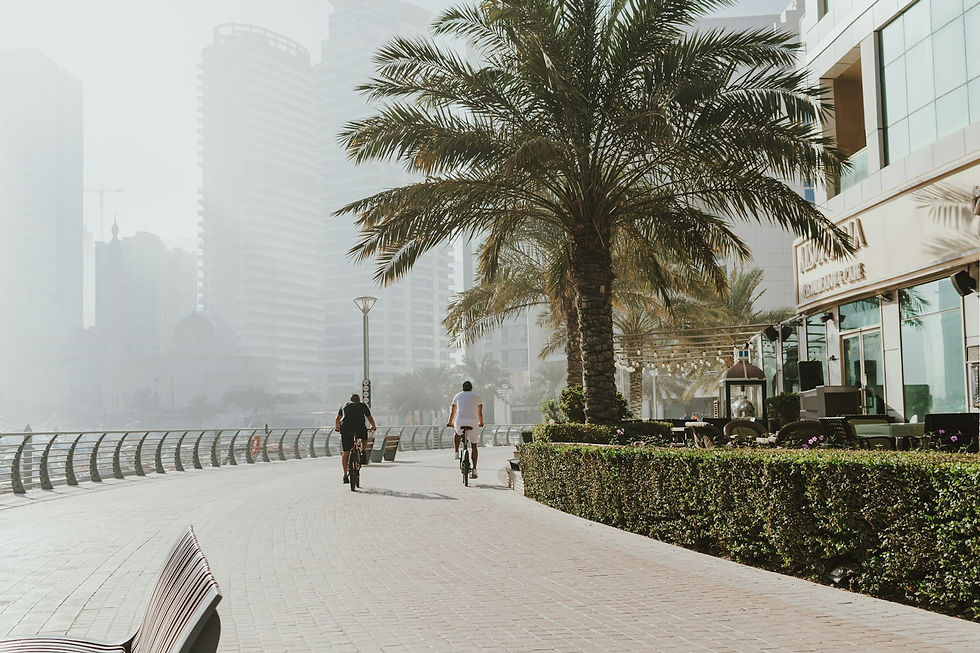
For residents, the long game is a more walkable, more European-feeling Dubai — one where a quick errand does not automatically mean unlocking the car. The waterfront promenades of Dubai Marina and the Downtown boardwalks already prove how much Dubai loves to stroll when the path is good and the shade is there. Extend that logic across 31 more crossings and you start to change how a whole city moves.
How to make the most of a more walkable Dubai right now
You do not have to wait until 2030. A few things I would do this week: download the RTA's S‘hail / Dubai transport app to map metro-plus-walk routes; plan errands around existing footbridges and metro links rather than fighting for parking; and, if you cycle, try one of the new 528m or 501m bridges with their dedicated lanes for a genuinely pleasant crossing. Walk in the cooler early mornings and evenings, carry water, and you will discover — as I keep doing — that Dubai on foot reveals a side of the city you simply cannot see from a car.
Thirty-one bridges over five years sounds like a civil-engineering statistic. On the ground, it is something warmer than that: a city deciding, deliberately, to make room for the person who chose to walk. As someone who does exactly that, I could not be happier to watch it being built.
— Angel Tyagi, Creator of Angel In Dubai
Project details, locations, dimensions and timelines are set by Dubai's RTA and can change — confirm the latest plans and any opening dates with the RTA before relying on them. Hours, access and opening dates may change. Figures cited are as of the RTA's June 2026 announcement. This article is general information for residents and visitors, not official guidance. Not sponsored — no one paid for this coverage.
Photos: Clarissa Carbungco, Kate Trysh and Nick Fewings via Unsplash; Francisco Anzola (CC BY 3.0) via Wikimedia Commons. Images are representative of the corridors and transport modes named, not necessarily the specific new bridges under construction.


Comments