


Dubai AI Tourism Strategy 2026: Smart Tools & Visitor Guide
Stepping off a long-haul flight into Dubai International Airport (DXB) Terminal 3, you no longer brace yourself for the customary hour-long immigration queue. Instead, you walk toward an illuminated biometric portal, pause for three seconds while high-definition cameras capture your facial iris patterns, and hear the pneumatic gates swing open. By the time your carry-on luggage touches the marble floor of the arrivals hall, barely twelve seconds have elapsed since you approached the checkpoint.
This frictionless entry is not an experimental luxury perk; it is the opening salvo of Dubai's 2026 AI-driven tourism strategy. Overseen by the Dubai Department of Economy and Tourism (DET) alongside Smart Dubai, the emirate has systematically embedded machine learning, computer vision, and predictive analytics into every tier of the visitor journey. From automated hotel room service bots to real-time crowd throttling at the Burj Khalifa, understanding where these smart systems operate helps you skip peak queues, unlock tailored pricing, and navigate the city with unprecedented ease.
Biometric Seamless Travel: 12-Second DXB Airport Clearance

Immigration clearance at DXB no longer relies on physical passport stamping for the vast majority of international visitors. The General Directorate of Residency and Foreigners Affairs (GDRFA) has operationalized contact-free Smart Gates across Terminals 1, 2, and 3, utilizing advanced biometric recognition algorithms that match live passenger scans against international passenger manifests. For travelers arriving on biometric passports from more than 70 visa-on-arrival nations, the system removes paper inspections entirely.
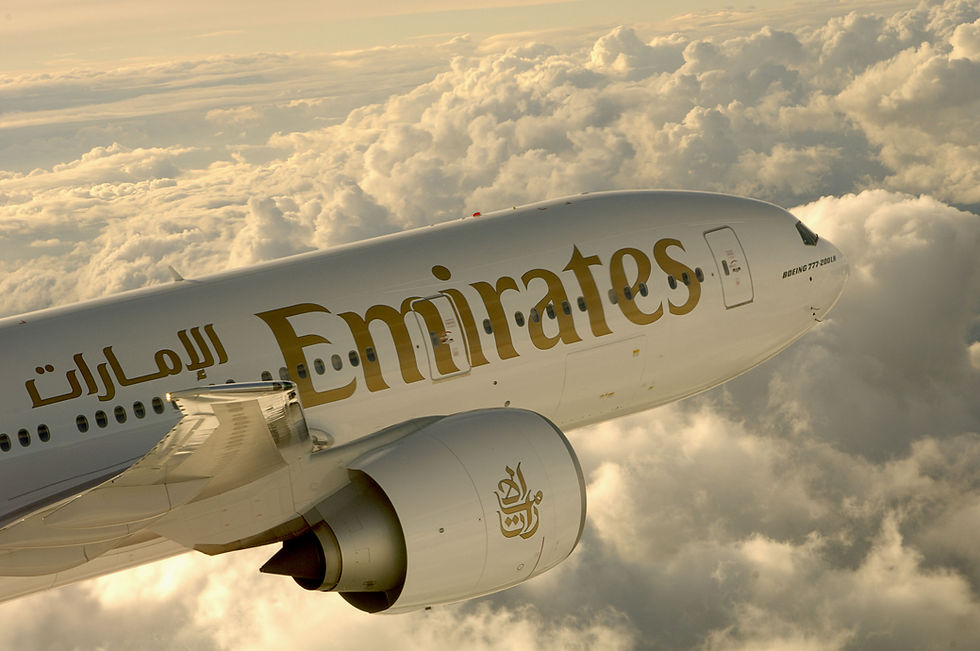
Beyond border control, Emirates has scaled its Biometric Path throughout Terminal 3. Travelers flying out can check in at automated baggage drops, pass security screening, enter business lounges, and board their flights using facial recognition alone. The airline's AI-assisted baggage sorting facility processes over 140,000 bags daily, utilizing computer vision to predict transfer bottlenecks and cut misplaced baggage rates to under 0.05%.
Who Qualifies for Automated Smart Gates
Citizens of GCC countries, UAE residents holding valid Emirates IDs, and tourists from eligible visa-on-arrival jurisdictions (including the UK, EU nations, the United States, Australia, and Singapore) can use the automated Smart Gates without prior registration. Children under the age of 12 or travelers with non-standard passports must continue using dedicated family immigration lanes.
Confirm your passport type: Ensure your physical passport carries the gold microchip icon on the front cover indicating biometric compatibility.
Clear the first-entry scan: If visiting Dubai for the very first time, proceed through a regular manned immigration desk once so border authorities can capture your iris and biometric data.
Use Smart Gates on departure and return: On all subsequent transits, head straight for the green-lit Smart Gate arches without waiting in general visitor lines.
Remove tinted eyewear and headwear: Ensure your face is fully visible to the overhead scanner array to prevent optical read delays.
Personalized Itineraries: The Visit Dubai AI Engine and City Concierge
The centerpiece of Dubai's municipal tourism tech is the enhanced Visit Dubai platform, which now incorporates an adaptive generative AI concierge engine. Unlike static travel apps that provide generic top-ten lists, the system analyzes user behavior, seasonal footfall data, ambient temperatures, and dining preferences to construct customized day-by-day itineraries. If noon temperatures in July hit 42°C, the algorithm automatically reschedules outdoor desert dune bashing to twilight hours and suggests indoor climate-controlled alternatives like the Green Planet bio-dome or Ski Dubai.
The system links directly into Dubai's commercial reservation ecosystems, pulling live table inventory and attraction slot availabilities. Rather than jumping across multiple booking apps, visitors receive push notifications alerting them when reservations open for high-demand venues in DIFC or Downtown, paired with localized transportation estimates provided by Dubai Roads and Transport Authority (RTA) transit data.
Predictive Route Scheduling vs Static Plans
Static travel planners fail to account for weekend traffic spikes on Sheikh Zayed Road or sudden venue closures. The Visit Dubai AI platform continuously recalibrates your itinerary based on real-time transit telemetry from the RTA's Enterprise Command and Control Centre (EC3), alerting you when the Dubai Metro Red Line offers a 20-minute time saving over hailing a taxi.
The real test of the Visit Dubai AI engine came on a Friday evening when it automatically rerouted our reservation from a crowded DIFC venue to a waterfront table in Al Seef with identical cuisine ratings.
Comparing Dubai's AI Visitor Touchpoints Across the Travel Journey
The adoption of artificial intelligence across Dubai is not confined to a single government department; it spans transportation, private hospitality, security, and cultural entertainment. Each sector addresses specific operational friction points, dramatically reducing wait times while maintaining safety standards across the emirate.
Touchpoint & Stage | Core AI Technology | Real-World Efficiency Gain | Availability & Cost |
|---|---|---|---|
DXB Airport Immigration | Biometric facial & iris recognition | Clears immigration in 10–12 seconds without physical stamping | Terminals 1, 2 & 3; Free for eligible passport holders |
RTA Urban Transit | Predictive route modeling & EC3 AI | Reduces connection wait times across Metro, Tram and Bus lines | Integrated into RTA S'hail App; Standard Nol fares |
Attraction Crowd Flow | Computer vision & real-time slot pacing | Prevents elevator bottlenecks at Burj Khalifa & Museum of the Future | Pre-booked digital tickets; Included with general admission |
Hotel Check-in & Stay | Facial recognition kiosks & IoT climate AI | 60-second self check-in and automated room climate optimization | Select properties (Rove, Jumeirah); Included with room booking |
Tourist Police & Services | Multilingual conversational AI at SPS | 24/7 instant reporting and official certificates in 6 languages | Over 25 Smart Police Stations citywide; Free basic civil services |
Smart Hospitality: Robot Butlers and Predictive Hotel Stays
Dubai's hospitality industry is balancing high-tech automation with traditional luxury service. Mid-scale and lifestyle hotel brands, such as Rove Hotels across Downtown, Dubai Marina, and City Walk, now feature automated self-check-in kiosks that scan passports and encode RFID room keys in under 60 seconds. Meanwhile, autonomous room service robots navigate elevators and corridors to deliver extra towels, bottled water, or toiletries directly to guest rooms within four minutes of a request.
In the luxury sector, artificial intelligence focuses on sustainability and customized comfort. High-end resorts across Palm Jumeirah utilize smart building management software that tracks sun angles and room occupancy, dynamically adjusting chiller loads and blackout curtains. When guests leave their suites, air-conditioning units shift into energy-conservation mode at 24°C, automatically returning to the guest's preferred 21°C setting the moment their digital key card approaches the corridor sensor.
Automated Room Service Delivery
Service robots equipped with LiDAR sensors and 3D depth cameras navigate hotel lobbies and guest floors without human intervention. Upon reaching a guest room door, the system triggers an automated telephone chime and sends an SMS containing a secure one-time PIN to open the delivery compartment.
In ultra-luxury properties along Jumeirah Beach, AI stays invisible—handling climate efficiency and supply restocking behind the scenes while keeping front-of-house interactions warmly human.
Crowd Flow Analytics at Landmark Attractions: Burj Khalifa and Museum of the Future
Managing millions of visitors annually at architectural landmarks like the Burj Khalifa and the Museum of the Future requires precise mathematical crowd modeling. Both venues have deployed computer vision sensor networks that monitor real-time queue densities and adjust digital ticketing allocations dynamically to prevent overcrowding at viewing decks and exhibition floors.
At At the Top Burj Khalifa (Levels 124 and 125, where standard adult tickets start at AED 179), AI scheduling algorithms pace access to the high-speed double-decker observation elevators. If queuing time at the mezzanine deck exceeds eight minutes, the ticketing system automatically slows the flow of new arrivals from the Dubai Mall entrance concourse. Similarly, the Museum of the Future (AED 149 standard admission) enforces strict 15-minute staggered entry windows powered by algorithmic capacity controls, ensuring every guest experiences the immersive audio-visual exhibits without shoulder-to-shoulder congestion.
The Trade-Off: Strict Entry Windows
Because AI crowd-control systems maintain rigid venue capacities, visitors face zero tolerance for late arrivals. If your Museum of the Future ticket is booked for 14:00, arriving past your 15-minute grace period can result in ticket cancellation without refund during high-season winter weekends.
Smart Policing and Tourist Safety: Dubai Police Autonomous Stations
Visitor security in Dubai has similarly transitioned toward self-service automated touchpoints. Dubai Police operates more than 25 Smart Police Stations (SPS) distributed across high-footfall tourist zones, including City Walk, La Mer, Dubai Mall, and Palm West Beach. These drive-through and walk-in facilities operate 24 hours a day, 365 days a year, completely unstaffed by physical officers.
Inside an SPS cabin, interactive digital consoles allow international tourists to report lost property, file civil inquiries, or connect via encrypted video link with officers fluent in six languages (Arabic, English, Spanish, French, German, and Mandarin). The system processes digital lost-item certificates in approximately three minutes, issuing digitally signed PDF documentation directly to your smartphone for immediate submission to travel insurance providers.
Lost passport or property reporting: Generate verified police loss certificates instantly for international insurance claims.
Traffic fine inquiries: Check and settle rental vehicle parking or speeding fines via contactless credit card payment kiosks.
Found item drop boxes: Deposit lost wallets, phones, or keys into secure automated lockers for cataloging by municipal lost-and-found units.
Emergency video dispatch: Initiate priority live video consultations with emergency dispatchers at the touch of an illuminated red console button.
FAQ
Do tourists have to pay extra to use the AI Smart Gates at Dubai Airport?
No, Smart Gate access at DXB Terminals 1, 2, and 3 is completely free of charge. Any tourist holding a biometric passport from an eligible visa-on-arrival country who has previously completed manual immigration is automatically registered for subsequent trips.
How does Dubai's Visit Dubai app use AI for tourists?
The Visit Dubai app integrates machine learning models that generate personalized, day-by-day itineraries based on user interests, travel party size, and current weather. It synchronizes live crowd metrics and booking availability at major attractions to optimize daily schedules in real time.
What services can tourists access at Dubai's Smart Police Stations (SPS)?
Visitors can access over 60 self-service options 24/7 without queueing for an officer, including filing lost-item reports, obtaining official lost passport certificates, reporting minor traffic incidents, and accessing multilingual video assistance in six languages.
Are hotel check-in kiosks completely replacing front desk staff in Dubai?
Not entirely; while mid-tier and tech-forward brands like Rove Hotels offer fully automated 60-second passport-scanning kiosks, five-star luxury resorts maintain traditional concierge desks, using AI predominantly for invisible back-of-house operations and predictive room climate settings.
Useful Links
Dubai Airports Smart Gates · Visit Dubai Official Portal · UAE Government Smart Services · Dubai Police Smart Services · Emirates Airline Biometric Path · RTA Dubai Smart Mobility
Pair It With

— Angel Tyagi, Creator of Angel In Dubai
Prices, timings and availability may change — always check directly with the venue before visiting. Not sponsored.
Story lead: gulfnews.com. Reporting can be updated or withdrawn after publication — always check the original before relying on anything here.
Rates and figures are indicative and were correct as of 14 September 2026; they change often, so verify with the provider before acting. This is general information, not financial advice.
Rules, fees and deadlines change often. This is a general summary, not legal advice — confirm with the relevant UAE authority before acting.
Photo by MoHasanie via wikimedia, Photo by Darcey Beau via unsplash


Comments