


How to Explore the Dubai Archives and Al Maktoum Historical Exhibits in 2026
The humidity from Dubai Creek dropped away the moment the heavy timber door clicked shut behind me at the Al Shindagha heritage pavilion. Inside, under soft preservation lighting, an amber-lit display held a ledger from 1958 with handwritten customs records detailing shipments of dried limes, pearl oysters, and machinery bound for the old customs wharf.
For decades, exploring the paper trails of Dubai's pre-oil era felt like an insider privilege reserved for university historians and municipal planners. The 2026 public opening of the Dubai Archives, paired with dedicated exhibition galleries for the Al Maktoum Archives and expanded oral history vaults, completely rewrites that dynamic for curious residents.
At a glance | Details |
|---|---|
Primary Venues | Al Shindagha District and Al Jaddaf |
Museum Ticket | AED 50 for adults, AED 20 for students |
Library Research | Free entry with valid Emirates ID |
Earliest Records | Handwritten trade treaties dating from 1892 |
Nearest Metro | Al Ghubaiba Station on Green Line |
The Three Pillars of Dubai's 2026 Archival Landscape
Dubai's documentary heritage was historically split across separate municipal departments, private ruling family collections, and academic libraries. In 2026, the unified archival framework divides this massive paper and audiovisual legacy into three distinct public touchpoints. National heritage preservation guidelines published on the UAE Government Portal outline public research access standards for modern civic collections. Understanding which archive holds what material saves researchers hours of misdirected visits.
Civic architectural surveys compiled by the Dubai Municipality track Creek development since 1954 through hand-drawn maps and early infrastructure blueprints. Meanwhile, the Al Maktoum Archives gathers diplomatic correspondence, ruling family decrees, and foundational state papers into dedicated exhibition spaces. The third pillar lives along the water at Al Shindagha, where personal testimonies and vernacular maritime histories provide human texture to formal government paperwork.
Archive | Focus | Public Access |
|---|---|---|
Dubai Archives | Administrative maps and civic records | Research desks by appointment |
Al Maktoum Archives | Founding decrees and state documents | Curated public exhibition halls |
Shindagha Oral History | Audio interviews and maritime memories | Walk-in interactive museum pavilions |
Inside the Al Maktoum Archives Exhibition Galleries
The Al Maktoum Archives galleries present the political and economic decisions that shaped modern Dubai from the late nineteenth century forward. Visitors walk past climate-controlled glass vitrines displaying official correspondence between Sheikh Rashid bin Saeed Al Maktoum and international engineers who oversaw the initial widening of Dubai Creek between 1958 and 1961. High-resolution photographic negatives show Deira's waterfront when dhows unloaded cargo directly onto packed sand ramps.
What surprises most first-time visitors is the sheer legibility of the administrative ledgers. Arabic calligraphy in dark iron-gall ink records pearling crew manifests, port tax rates in Gulf rupees, and early telegraph agreements. Formal expansion notices reported by the Emirates News Agency (WAM) detail civic digitisation efforts that now allow guests to magnify delicate seal impressions on touchscreens beside each original document.
Foundational Treaties and Pearl Trade Ledgers
The earliest room concentrates on maritime protection pacts from 1892 and handwritten pearl weighing logs kept by prominent creek merchants. Each case pairs fragile parchment with backlit transcription panels that translate weights from traditional chao and mithqal units into grams.
The Creek Widening and Civil Engineering Blueprints
A dramatic second gallery documents the pivotal 1959 decision to borrow 400,000 Kuwaiti dinars to dredge Dubai Creek. Original contracts, surveying notebooks from British consultants Sir William Halcrow and Partners, and aerial survey prints demonstrate how deeper channels immediately multiplied ship traffic.
Standing before Sheikh Rashid's hand-annotated 1959 Creek dredging blueprint felt like watching modern Dubai get drafted on paper in real time.
Navigating the Digitised Municipal Records at Mohammed Bin Rashid Library
Specialised physical collections sit at the Mohammed Bin Rashid Library along Al Jaddaf overlooking the upper creek waters. The facility houses over one million physical volumes alongside automated retrieval cranes, but its dedicated Emirates and Special Collections section on the sixth floor holds the heart of the municipal paper archive. Researchers who register with their Emirates ID receive secure terminal logins to browse catalogued land grants, school registers from the 1960s, and early medical clinic logs.
Unlike gallery exhibitions aimed at casual walking tours, the library research desks cater to long-form reading and investigative historical study. Digital microfilms reproduce complete print runs of historical Gulf periodicals, while high-resolution scanners allow users to request watermark-free reference copies of non-restricted administrative decrees. Staff archivists provide on-site guidance to help trace neighborhood name changes and older street designations.
Booking Terminal Desks and Requesting Accession Files
Access to the specialised reading room requires a free digital library membership created via the library portal. While digital terminal workstations allow immediate search through public records, inspecting fragile physical documents requires filing an accession request forty-eight hours in advance.
Scanning Rules and Scholarly Citation Standards
Visitors cannot photograph rare collection folders with smartphones or personal handheld scanners. The library provides monitored overhead book scanners that export PDF files directly to approved USB drives, provided the material complies with federal copyright and privacy terms.
Dubai Culture's Living Oral History Vaults at Al Shindagha

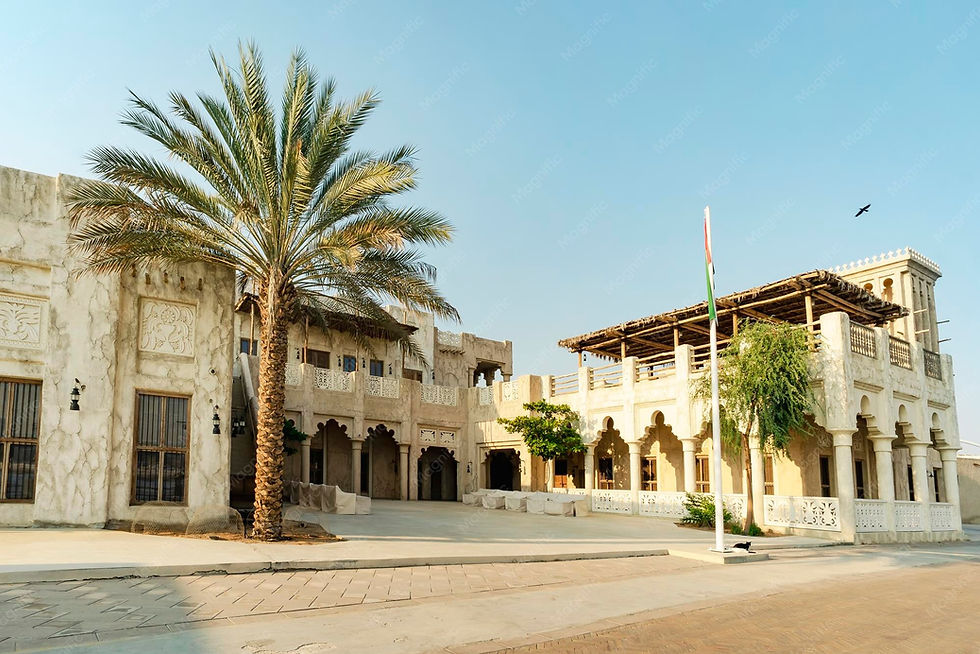
Official cultural programming is managed by Dubai Culture across historical neighbourhoods. In the Al Shindagha Historic Neighbourhood, historic coral-stone residences that once housed ruling family members and merchant patriarchs have been restored into twenty-two themed museum pavilions. Rather than limiting history to dried ink on paper, this initiative focuses on spoken memory recorded across four decades of ethnographic interviews.
Inside the Life of the Creek pavilion, touch-activated acoustic hoods hang from timber ceiling beams. Visitors stand beneath them to hear retired dhow navigators explain how they steered cargo boats between Dubai and Bombay using sextants and pole star alignments. General admission tickets to the Al Shindagha Museum cost fifty dirhams for adults and twenty dirhams for students, granting full-day access to all archival pavilions.
Listening to an eighty-year-old pearl diver describe navigating by star charts while sitting inside a restored coral-stone house beats any textbook.
Step-by-Step Guide to Booking an Archival Research Session
Planning a research trip to Dubai's archival repositories requires advance preparation, especially if you intend to examine restricted physical manuscripts or municipal registers. General public exhibition spaces welcome walk-in visitors during standard opening hours, but primary source reading rooms maintain strict access protocols to protect rare materials.
Create your online research profile on the institutional portal using your Emirates ID or passport number.
Search the digital catalogue database to identify specific document accession codes, map folios, or oral history tape numbers.
Submit a formal reading room appointment request at least two working days prior to your desired visit date.
Check all coats, bags, pens, and liquids into the secure lobby lockers upon arrival at the research facility.
Present your photo identification at the registration counter to collect a visitor badge and assigned desk terminal.
Visitor Etiquette, Metro Access, and Practical Planning Tips
Reaching the historical quarter along Dubai Creek is straightforward thanks to extensive public transit links. Public transport journey planning through the RTA Dubai network connects directly to Al Ghubaiba bus and metro station on the Green Line, leaving visitors just an eight-minute walk from the Shindagha archival pavilions. For the Mohammed Bin Rashid Library in Al Jaddaf, Creek Metro Station sits roughly one kilometre away, with feeder buses running every fifteen minutes.
Maintaining respect for fragile historical items and fellow researchers requires adhering to specific on-site conduct codes. Reading rooms enforce quiet study conditions, and security personnel monitor compliance with handling protocols across all manuscript galleries.
Carry an original Emirates ID or passport because security desks will not accept digital copies on phones.
Bring pencils and paper notepads into reading rooms because ink pens and highlighters are strictly prohibited.
Wear modest museum attire that covers shoulders and knees when visiting public cultural institutions.
Switch smartphones to silent mode before entering reading halls and keep voice calls confined to lobby courtyards.
Plan at least three hours to explore the Al Shindagha pavilions comfortably without rushing through audio stations.
FAQ
Can tourists visit the Al Maktoum Archives and Dubai Archives without a research permit?
Yes, general tourists can access all public exhibition galleries and interactive pavilions without any prior research permit. Special permits and advance registration are only required when requesting access to primary physical documents or restricted research reading rooms.
Are the historical documents in the Dubai Archives available in English?
While original administrative files and royal decrees are written in Arabic, major exhibition halls provide parallel English translations and interactive touchscreens. Historical treaties with British authorities and commercial engineering contracts from the 1950s are frequently catalogued in both Arabic and English.
What are the opening hours for the Al Shindagha archival museum pavilions?
The museum pavilions open daily from 10:00 AM to 8:00 PM, with the last ticket entry sold at 7:00 PM. During the holy month of Ramadan, revised operating hours typically run from 10:00 AM to 5:00 PM, so visitors should verify times on the Dubai Culture website before visiting.
Can school groups arrange guided educational tours of the Dubai archives?
Yes, educational institutions can book dedicated guided tours by contacting the museum and library education desks at least one week in advance. Guided sessions include age-appropriate curator walkthroughs, historical storytelling sessions, and downloadable activity worksheets.
Useful Links
UAE Government Portal — Review national cultural heritage preservation framework
Dubai Municipality — Access urban planning and historical maps
Emirates News Agency (WAM) — Read official state archive announcement notices
Mohammed Bin Rashid Library — Book reading rooms and study spaces
Dubai Culture — Browse exhibitions and heritage museum schedules
Al Shindagha Museum — Check pavilion timings and ticket rates
RTA Dubai — Plan metro routes to heritage districts
Pair It With

— Angel Tyagi, Creator of Angel In Dubai
Prices, timings and availability may change — always check directly with the venue before visiting. Not sponsored.
Story lead: Emirates 24|7. Reporting can be updated or withdrawn after publication — always check the original before relying on anything here.
Photo by New law establishes Al Maktoum Archives to preserve Dubai’s heritage via web, Photo by Premium Photo | Shindagha historic district in dubai creek ... via web, Photo by web via web


Comments