


Dubai Autonomous Vehicle Testing Center: RTA Safety Certifications & Robocab Guide 2026
The midday sun bounced off the windshield of an empty white sport utility vehicle as it approached a four-way intersection on the proving grounds just outside Dubai Industrial City. Inside the cabin, there was no driver, no hands hovering near the steering wheel, and no panic. Instead, roof-mounted LiDAR turrets clicked in soft rhythmic pulses while an array of eight high-definition optical cameras calculated the trajectory of a motorized obstacle darting into the road.
Standing behind the safety barrier with a clipboard and my visitor badge, I watched the vehicle execute an instantaneous deceleration, coming to a halt twelve feet before the hazard with surgical precision. Dubai has spent years laying the legal and infrastructural foundations for smart transportation, but watching this dedicated autonomous testing facility put driverless software through simulated sandstorms and scorching thermal cycles proved that the emirate's target of 25 percent autonomous journeys by 2030 is moving from concept to concrete reality.
At a glance | Details |
|---|---|
Target Goal | 25% autonomous journeys by 2030 |
Proving Ground | RTA Smart Mobility Facility, Dubai |
Regulatory Law | Dubai Law No. 9 of 2023 |
Thermal Testing | Operating validation up to 52C |
Certification Gates | 4 progressive safety validation tiers |
Rollout Corridors | Jumeirah, Downtown, Business Bay |
Why Dubai Built a Dedicated Proving Ground for Autonomous Cars
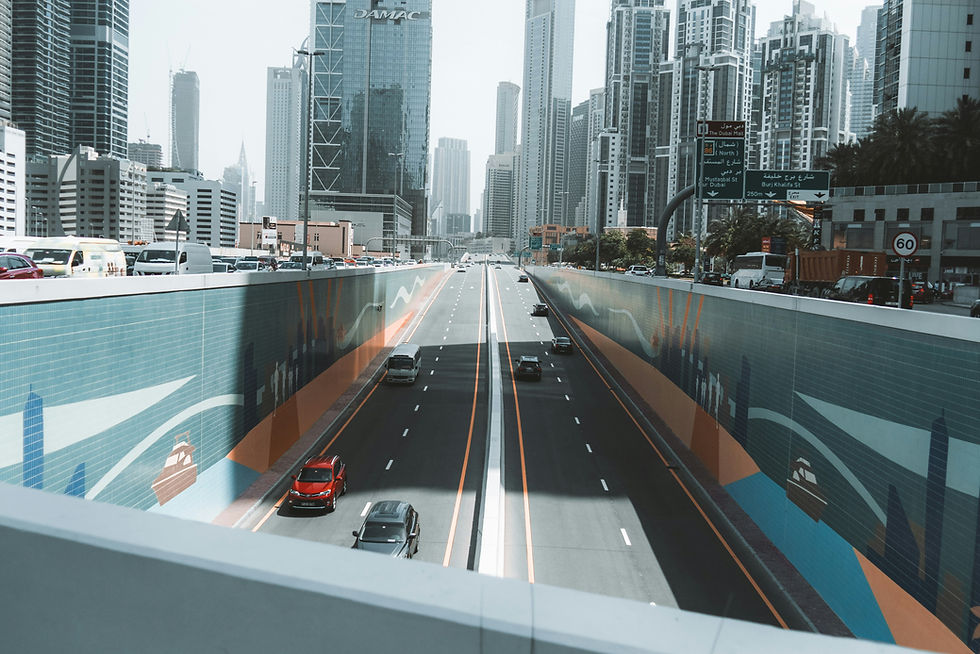
Testing autonomous platforms requires far more than open tarmac and clear weather. According to the Roads and Transport Authority, every autonomous operator must complete thousands of simulated kilometers before touching tarmac. The transition from controlled digital environments to live highways demands physical proving tracks that reproduce the most demanding roadway challenges found in the Middle East.
Dubai roads present unique environmental and behavioral conditions that standard international testing protocols rarely account for. High-speed merges across multi-lane highways, complex roundabout dynamics, and intense solar glare confuse sensor suites tuned only for European or North American conditions. Official bulletins from Emirates News Agency confirmed that dynamic road simulation modules form the backbone of the new certification center.
By centralizing testing inside a dedicated facility, transportation planners can benchmark competing self-driving architectures under identical conditions. The custom proving ground provides a controlled environment where self-driving vehicles must prove their hardware resilience and software reflexes before interacting with human drivers on Sheikh Zayed Road.
The Four-Stage RTA Safety Certification Protocol
The legal foundation for commercial autonomous mobility stems directly from Dubai Law No. 9 of 2023. As documented on the UAE Government Portal, the national smart mobility initiative sets strict baseline criteria for zero-fatality transport networks. Under these standards, private technology vendors cannot bypass structured regulatory checkpoints or self-certify vehicle readiness.
Operators cannot simply download global sensor maps and start transporting passengers. Instead, every fleet entrant must pass through four distinct evaluation gates designed to expose software blind spots and hardware failure modes under rigorous regulatory oversight. Each phase requires documented milestone sign-offs before an autonomous platform advances to the next operational tier.
Digital Twin Stress Testing: Running hundreds of thousands of simulated virtual kilometers to test algorithm reactions against aggressive traffic behaviors.
Closed Proving Track Evaluation: Physical maneuvers on high-friction and low-friction tracks, emergency swerves, and automated roundabout navigation.
Controlled Public Road Shadow Drives: Running vehicles with human safety operators on designated public road corridors like Jumeirah Street.
Commercial Fleet Permitting: Comprehensive audit of vehicle telemetry, cybersecurity resilience, and real-time operations center connectivity.
Watching an unmanned vehicle brake smoothly for a synthetic blowing plastic bag makes the engineering reality hit home immediately.
Simulating Desert Heat, Sandstorms and Extreme UAE Weather
Summer conditions in the United Arab Emirates present brutal operating environments for sensitive electronic components. Ambient road temperatures regularly cross 50 degrees Celsius, while reflective asphalt heat waves challenge optical cameras and fine dust coats precision LiDAR lenses.
Testing partner Cruise has logged extensive verification cycles across coastal roads to refine sensor suites under high humidity. The specialized testing chambers at the new facility simulate extreme sandblasting, high-pressure desert precipitation, and blinding thermal glare to guarantee fail-safe sensor degradation protocols.
Thermal Stress and Sensor Cooling
Autonomous computing stacks generate significant heat, and desert ambient temperatures exceeding 45 degrees Celsius can degrade computer vision chips within minutes without liquid chilling circuits. The facility subjects vehicle sensor clusters to sustained infrared heat lamps and hot tarmac radiation to verify thermal equilibrium.
Particulate Glare and Dust Attenuation
Fine blowing dust scatters standard infrared LiDAR pulses, requiring multi-spectral camera redundancy and air-purged protective sensor domes calibrated specifically for Arabian Gulf summer dust. Vehicles must demonstrate accurate object segmentation even when optical transmittance drops by thirty percent.
Test Phase | Focus Area | Pass Metric |
|---|---|---|
Simulation | Edge case traffic | Zero virtual collisions |
Proving Ground | Physical track hazards | Safe emergency stop |
Shadow Drive | Live urban streets | Zero intervention events |
Smart Road Simulators and Vehicle-to-Everything Infrastructure
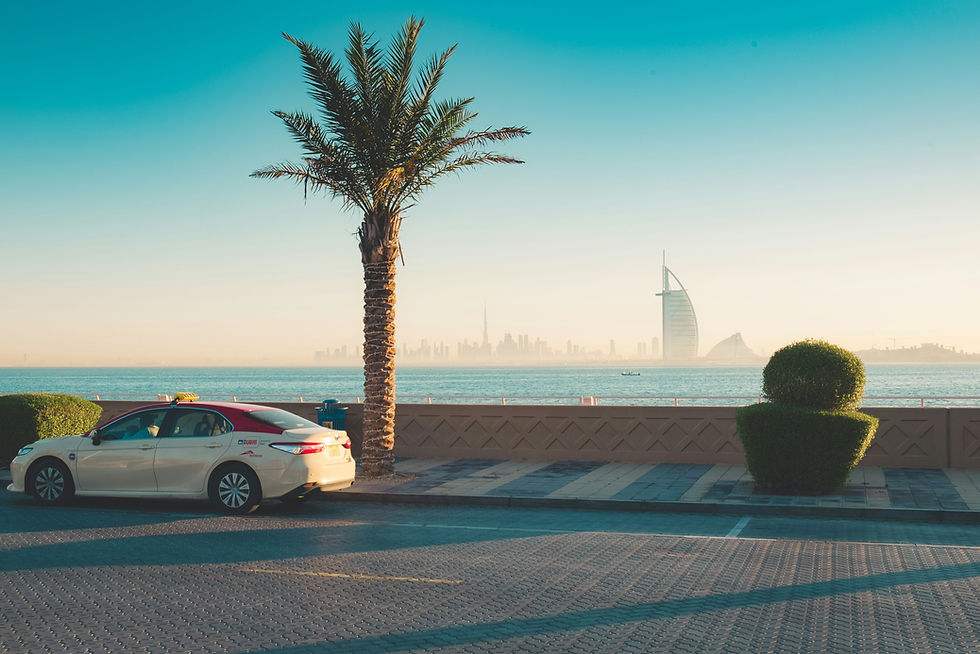
Driverless cars cannot operate in isolation from the city around them. Technical advisors from Dubai Future Foundation helped design the testing frameworks to accommodate artificial intelligence edge cases. The proving facility includes full-scale modular intersections fitted with dynamic lighting, variable speed limits, and robotic target rigs that mimic erratic pedestrian crossings.
The proving ground integrates intelligent road infrastructure that mirrors the connected transport systems being deployed along Dubai's major transit corridors. Coordinated protocols with Dubai Police establish emergency response triggers whenever a test vehicle encounters unexpected road incidents. These communication layers allow the vehicle to receive live situational data before onboard sensors can physically see around blind corners.
Through high-bandwidth vehicle-to-everything transmitters, autonomous shuttles continuously receive signal timings, hazard notifications, and pedestrian proximity warnings before physical onboard sensors even establish visual contact. This redundant communications mesh forms the core requirement for commercial driverless permits.
Smart traffic light telemetry transmitting real-time signal phase and timing directly to vehicle compute units.
DSRC and 5G cellular vehicle-to-infrastructure antennas lining test corridors for sub-millisecond hazard alerts.
Pedestrian trajectory beacons installed at test intersections to predict crosswalk incursions before line-of-sight visual detection.
Centralized fleet operations monitoring capable of initiating safe remote fallback stop commands if system integrity degrades.
The 2026 Robocab Rollout and What Commuters Should Expect
Experiencing a driverless trip transitions quickly from novelty to routine transportation. Passengers stepping into an autonomous cab find intuitive touchscreen interfaces replacing traditional driver interactions, with complete route previews and real-time sensor visualization displays.
Safety remains the central focus during the public deployment phase. Fleet operators maintain continuous teleoperation connectivity from centralized command centers, allowing human technicians to monitor telemetry and provide routing guidance if construction detours disrupt local map data.
Initial Service Corridors
Geofenced testing zones in coastal neighborhoods like Jumeirah and Al Safa are steadily linking into wider urban routes. Commuters can hail trips along designated residential and beachfront streets where road geometries provide optimal sensor sightlines.
Fare Structures and App Integration
Initial ride hailing runs through integrated partner apps alongside RTA digital booking channels. Commercial fares currently sit near executive ride tiers, with regulatory targets pointing toward regular taxi rate parity as driverless vehicle fleets expand.
Sitting in the back seat with an empty steering wheel turning in front of you feels surreal for about two minutes before it feels completely normal.
How Dubai Reaches the 25 Percent Autonomous Mobility Milestone
Dubai's Autonomous Transportation Strategy targets shifting 25 percent of all personal and commercial trips to driverless modes by 2030. Achieving that scale requires integrating autonomous solutions across every tier of public transit, from shared micro-mobility pods and first-mile shuttles to full-sized autonomous city buses.
The economic and environmental dividends of this transition are substantial. Transportation economists estimate that widespread driverless adoption will reduce overall transportation expenses by billions of dirhams annually while eliminating human error causes behind severe traffic collisions.
By pairing rigorous physical safety certification with flexible regulatory sandboxes, Dubai has established one of the world's most progressive testbeds for smart mobility. As the proving ground continues validating new sensor suites and artificial intelligence driving agents, the vision of an efficient, zero-emission autonomous transit grid is rapidly taking shape across the city.
FAQ
When will fully autonomous taxis be available to the general public across Dubai?
Phased public testing began in coastal areas like Jumeirah and Umm Suqeim during 2024 and 2025. Wide commercial availability across downtown business districts and transit hubs is rolling out progressively through 2026 under RTA fleet permits.
Are autonomous vehicles allowed to drive on all Dubai highways right now?
No, autonomous cars are strictly confined to RTA-approved geofenced testing corridors. They cannot legally enter general highways or unmarked desert roads without specific experimental route clearances under Dubai Law No. 9 of 2023.
Who is held legally liable if a driverless car is involved in a collision?
Dubai regulatory standards place operational liability on the licensed fleet operator and autonomous software provider rather than vehicle occupants, with required onboard flight-recorder telemetry capturing all system decisions during traffic incidents.
How much will riding in a Dubai robocab cost compared to a standard taxi?
Initial commercial rides operate at premium rates comparable to private ride-hail services, but the RTA smart mobility framework projects eventual trip fares dropping roughly twenty percent below metered taxi rates as automated fleets scale.
Useful Links
Roads and Transport Authority — official Dubai transport licensing regulations and guidelines
Emirates News Agency — official updates on testing center inaugurations
UAE Government Portal — federal smart mobility strategy and safety framework
Cruise — autonomous commercial vehicle testing fleet specifications
Dubai Future Foundation — future mobility testbed and AI sandboxes
Dubai Police — traffic safety and emergency incident coordination
Pair It With

— Angel Tyagi, Creator of Angel In Dubai
Prices, timings and availability may change — always check directly with the venue before visiting. Not sponsored.
Story lead: thenationalnews.com. Reporting can be updated or withdrawn after publication — always check the original before relying on anything here.
Photo by RTA and Cruise begin supervised autonomous testing on Dubai roads via web, Photo by Juan Domenech via unsplash, Photo by unsplash via unsplash


Comments