


Dubai Building License Surge 2026: What a 37.4% Construction Boom Means for Real Estate Investors
- 2 hours ago
- 5 min read
Standing near the Dubai Water Canal early this morning, watching the silhouette of active tower cranes against the rising sun, I was struck by how rapidly Dubai's skyline is undergoing its next major evolution. Everywhere you look from Business Bay to Dubai South, new site hoardings and excavation works mark the beginning of ambitious development projects.
Official real estate figures released by municipal authorities confirm what is visible on the ground: Dubai has recorded a 37.4% surge in issued building licenses across residential, commercial, and industrial sectors as of August 2026. In this post, I break down what this construction license growth means for market inventory, key development corridors, and smart strategy for property investors.
Understanding the 37.4% Construction Permit Surge

The recent data from municipal authorities indicates a substantial acceleration in building permit approvals across the emirate. As of August 2026, building license issuance has expanded by 37.4% year-on-year, driven by streamlined digital permitting systems, strong population growth, and sustained developer confidence (Source: Dubai Municipality, as of August 2026). This surge represents a clear shift from project planning phases to active physical construction on the ground.
Streamlined digital submission portals have significantly cut administrative turnaround times for master planners and private developers alike. By digitizing structural, environmental, and safety reviews, authorities have allowed main contractors to mobilize machinery and break ground months faster than in previous market cycles (Source: Dubai Municipality, as of August 2026). Please note that all market statistics and growth metrics provided here are for informational market journalism purposes; this is not financial advice.
Streamlined Digital Licensing
The adoption of unified digital licensing portals has reduced approval workflows for foundation and structural permits, enabling contractors to begin site works with minimal bureaucratic delay (Source: Dubai Municipality, as of August 2026).
Diversification Across Property Sectors
While multi-family residential projects make up the largest share of new licenses, commercial office developments and industrial logistics hubs have also registered double-digit growth as of August 2026.
When you see municipal building permit data spike by over a third in a single year, it is proof that developers are putting real capital into the ground.
Key Growth Sectors: Residential, Commercial, and Infrastructure
Examining the breakdown of newly approved building licenses reveals exactly where Dubai's urban footprint is expanding most aggressively. Residential developments continue to lead the expansion, but commercial office space and specialized logistics facilities are claiming an increasing share of overall construction activity.
Multi-Family Residential Towers: Representing 48% of total building licenses issued as of August 2026 (Source: Dubai Municipality).
Villa and Townhouse Communities: Accounting for 28% of approvals, concentrated heavily in suburban growth corridors.
Commercial and Mixed-Use Complexes: Making up 14% of license activity to satisfy expanding corporate office demand.
Industrial and Logistics Facilities: Comprising 10% of new permits across specialized trade and logistics zones.
Sector | Share of New Licenses | Key Development Focus | Reporting Date & Source |
|---|---|---|---|
Residential Apartments | 48% | Mid-rise and high-rise towers along major transit corridors | As of August 2026 (Dubai Municipality) |
Villas & Townhouses | 28% | Master-planned suburban communities and gated enclaves | As of August 2026 (Dubai Municipality) |
Commercial & Mixed-Use | 14% | Grade-A office space and retail-integrated towers | As of August 2026 (Dubai Municipality) |
Industrial & Logistics | 10% | Warehousing, cold storage, and light assembly facilities | As of August 2026 (Dubai Municipality) |
Impact on Off-Plan Supply and Deliveries Through 2028
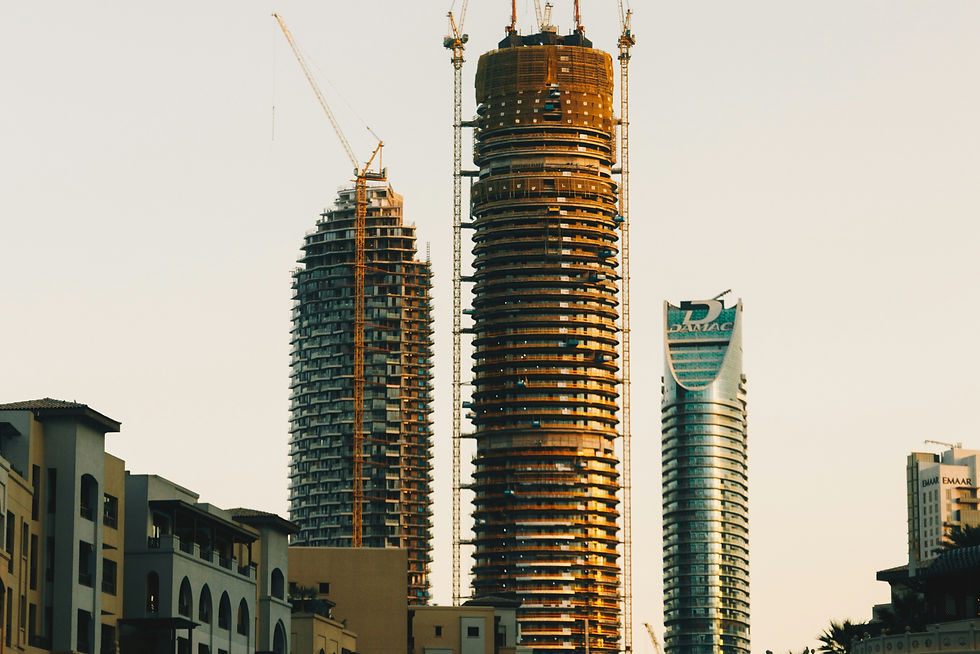
A sharp rise in building licenses today directly impacts completion volumes 24 to 36 months down the road. For buyers tracking off-plan developments, understanding this pipeline timeline provides vital context on future handover dates and neighborhood density.
Projects receiving structural licenses in mid-2026 are scheduled to reach physical completion between late 2027 and Q4 2028 (Source: Dubai Land Department market tracker, as of August 2026). This pipeline ensures a healthy inventory of modern homes to accommodate Dubai's expanding resident base. Any historical yield or rental return figures discussed in market commentary are indicative — verify with the bank/developer before making investment decisions.
Supply Timeline Considerations
Because building licenses mark the start of physical construction, buyers can expect handover distributions to remain steady across 2027 and 2028 rather than experiencing sudden oversupply spikes.
Contractor Capacity and Material Supply Chains
With active construction sites increasing by over 37%, main contractors are securing long-term material procurement agreements to ensure project schedules stay on track (Source: Dubai Municipality, as of August 2026).
A building permit is not just a statistical metric — it is the leading indicator of where neighborhood infrastructure, retail, and community amenities will flourish by 2028.
What the Permit Boom Means for Property Investors
For real estate buyers and investors, monitoring municipal permit activity offers an objective, data-backed metric of developer commitment and neighborhood momentum. High permit concentrations highlight corridors where public infrastructure and commercial amenities will expand next.
Reported market data shows average sales transaction volumes remaining robust across both ready and off-plan segments as of August 2026 (Source: Dubai Land Department). To navigate this expanding landscape effectively, buyers should keep several key practices in mind.
Cross-Reference Permit Activity with Location: High license density signals upcoming community infrastructure and retail developments.
Evaluate Developer Track Records: Review past delivery timelines and build quality on official DLD portals before buying.
Assess Yield Metrics Realistically: Gross rental yields of 6-8% in emerging sectors are indicative — verify with local banks and licensed brokers.
Verify Escrow Accounts: Ensure all project funds are deposited into verified RERA-approved escrow accounts before transferring capital.
Navigating Dubai's Evolving Real Estate Landscape

As Dubai advances its 2040 Urban Master Plan, regulatory oversight by municipal and land authorities remains exceptionally thorough. Independent buyers benefit directly from transparent public data tools that make tracking permit status, title deeds, and developer compliance straightforward.
Whether you are assessing off-plan options or evaluating ready market inventory, relying on verified government statistics guarantees that your decisions are grounded in factual market realities. Always consult official municipal channels and licensed advisors when planning property transactions.
Checking Regulatory Compliance
Verify active project licenses, escrow account details, and developer registrations directly through the official Dubai Land Department portal (Source: DLD, as of August 2026). Remember, this post is market analysis; this is not financial advice.
In a fast-growing market, sticking strictly to official DLD and municipal data portals is the smartest move any buyer can make.
FAQ
What caused the 37.4% surge in Dubai building licenses in 2026?
The increase in building licenses as of August 2026 is driven by population growth, high developer demand, and streamlined digital permit approvals across residential, commercial, and industrial sectors (Source: Dubai Municipality).
How does a surge in building permits affect Dubai property prices?
A rise in building licenses expands future property supply over a 2 to 3-year construction cycle. While immediate ready property prices reflect current demand, upcoming supply helps maintain balanced long-term capital growth.
How can I check if a building project in Dubai has a valid permit?
You can verify active construction permits, contractor licenses, and project registration details directly on the official Dubai Municipality and Dubai Land Department portals.
Does issuing a building license mean construction starts immediately?
Yes, once a building license is issued by Dubai Municipality, the appointed main contractor typically mobilizes equipment and begins foundation work within 30 to 60 days.
Useful Links
Dubai Land Department · Dubai Municipality Building Services · UAE Government Official Portal · Roads and Transport Authority · Dubai Police Official Portal · Department of Municipalities and Transport
Pair It With
Dubai Off Plan New Launches Tracker · Buying Ready Property Cash Direct Owner Dubai · Distress Deal Property Below Op Dubai

— Angel Tyagi, Creator of Angel In Dubai
Prices, timings and availability may change — always check directly with the venue before visiting. Not sponsored.
Story lead: Zawya. Reporting can be updated or withdrawn after publication — always check the original before relying on anything here.
Rates and figures are indicative and were correct as of 30 August 2026; they change often, so verify with the provider before acting. This is general information, not financial advice.
Photo by Burj Khalifa Wallpaper 4K, Panorama, Dubai, Cityscape via web, Photo by Saj Shafique via unsplash, Photo by Damian Kamp via unsplash, Photo by Burj Khalifa Wallpaper 4K, Panorama, Dubai, Cityscape via web


Comments