


Dubai’s Free Zones Just Hit a Record AED 491 Billion — Here’s What It Means
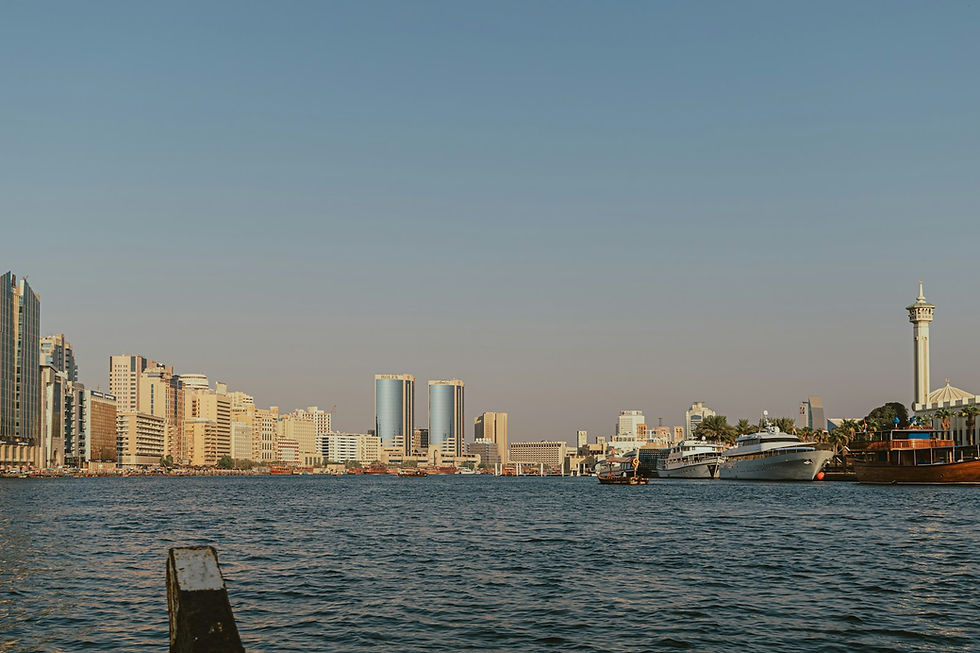
Stand on the edge of Dubai Creek at dusk, watch a wooden dhow being loaded by hand exactly as it has been for a century, and it’s easy to forget that this same instinct for trade now moves nearly half a trillion dirhams a year through some of the most advanced free zones on earth. This month that instinct produced a genuinely historic number — and if you run a business here, or you’ve ever thought about starting one, it’s worth understanding what it actually means.
On 7 June 2026, the Dubai Media Office announced that the Dubai Integrated Economic Zones (DIEZ) recorded its highest-ever non-oil trade performance in full-year 2025. Here’s the headline — and the story underneath it.
The headline number
As of the full-year 2025 results announced on 7 June 2026, DIEZ’s total trade reached AED 491 billion (about USD 133.7 billion) — a 46% jump year-on-year and the fifth consecutive year of growth, according to the Dubai Media Office and reporting in Khaleej Times. The figure has quadrupled since 2020, and trade volume rose 50% to 667,800 tonnes — so this is real cargo moving, not just paper value. DIEZ now accounts for around 16% of Dubai’s non-oil trade, as the emirate’s external trade surpassed AED 3 trillion.
All figures are the official DIEZ full-year 2025 results as reported on 7 June 2026; they are indicative of that period — verify the latest data with DIEZ before making any decision.

What is DIEZ, exactly?
The Dubai Integrated Economic Zones Authority, established in 2021, brings three of the city’s flagship free zones under a single licensing and regulatory framework. Per its own profile and reporting in Arabian Business, it oversees more than 5,000 companies across 20-plus industries, drawing investment from over 50 countries. The three zones each keep their own focus:
Dubai Airport Free Zone (DAFZ) — one of the world’s top-performing free zones, built around Dubai International Airport for fast air-cargo connectivity.
Dubai Silicon Oasis (DSO) — a technology-focused zone built for innovation, R&D and digital transformation.
Dubai CommerCity (DCC) — the region’s first free zone dedicated entirely to e-commerce and digital trade.

What drove the record
Two sectors did most of the heavy lifting. Machinery, electrical equipment and electronics led the way at over 70% of DIEZ’s total trade, growing 42%; precious stones, metals and pearls made up about 26% and surged 71% — together close to the entire trade base. Imports remained the primary driver for a third straight year, a sign of genuine demand flowing into the zones rather than goods simply passing through.
On the map, China led DIEZ’s trading partners at 28.7% of the total, with Saudi Arabia second (up 9.6%) and India third at around 8% — the same trio that anchors so much of Dubai’s wider commerce. Crown Prince Sheikh Hamdan bin Mohammed framed the result as “yet another example of Dubai’s ability to stay ahead of global shifts,” while DIEZ Chairman Sheikh Ahmed bin Saeed Al Maktoum called it “a testament to the resilience of our economic model.”
Numbers this big can feel abstract, so here’s how I read them as someone who lives here: a record trade year usually shows up months later as new offices filling up, more flights, more hiring, and more of those ‘we just moved the company to Dubai’ conversations at dinner. The headline is the lagging indicator; the city is the real one.
What it means if you run — or want to start — a business here
A fifth straight growth year matters beyond the press release. It signals that Dubai’s free-zone model — 100% foreign ownership, a single integrated licensing framework across DAFZ, DSO and DCC, and deep logistics links by air and sea — is still pulling companies in. For founders and investors, the practical read is that the ecosystem around you is deepening: more suppliers, more talent, more potential customers inside the same zones.
That said, a strong macro number is not a personal business plan. The right zone depends entirely on what you do — a digital-commerce brand, a tech startup and an electronics distributor will each fit a different one. Compare the licensing costs, activity lists and office requirements of DAFZ, Dubai Silicon Oasis and Dubai CommerCity directly before committing, and get proper advice for your specific case.
What to watch next
The trend lines worth following are straightforward: whether the 16% share of Dubai’s non-oil trade keeps climbing in the 2026 interim figures, whether the machinery-and-electronics concentration broadens into other sectors, and how the China–Saudi–India trade corridors evolve. The interesting question is whether a fifth record year can become a sixth, especially as global trade patterns keep shifting and more companies relocate their regional bases to the Gulf. None of that is a forecast — it’s simply where the next official DIEZ updates will tell the story, and I’ll be watching the quarterly numbers as they land.
Pair it with
If this has you thinking about setting up here, start with my guide to mainland, free-zone and offshore business setup in the UAE, and my breakdown of the DMCC incentives package and how it cuts business costs — both pick up exactly where this record headline leaves off.
— Angel Tyagi, Creator of Angel In Dubai
Not sponsored. This is general information only — this is not financial advice. All figures are DIEZ’s official full-year 2025 results as announced on 7 June 2026 and are indicative of that period; figures and details may change, so verify current data with DIEZ and seek licensed advice before making any business or investment decision.
Sources: Dubai Media Office, Khaleej Times, Arabian Business.
Photo by Riyas Mohammed, the blowup, Kate Trysh and K T via Unsplash. Images are representative of Dubai’s trade and business districts.


Comments