


Dubai's First-Time Home Buyer Scheme Just Crossed AED 5 Billion — What the Milestone Means for Renters
- 13 minutes ago
- 6 min read
There is a particular look I have watched cross a friend's face more than once in this city — the moment a long-time renter, who had quietly assumed Dubai would always be a place they passed through, realises they might actually own a slice of it. Keys in a palm, a half-furnished living room, slippers by the door of somewhere that is finally theirs. For a lot of us, that picture has always felt one salary band out of reach.
This week that picture got a hard number attached to it. Dubai's First-Time Home Buyer Programme — the government scheme built specifically to turn renters into owners — has crossed a milestone big enough to make even sceptics look twice. Here is what was actually announced, what it gives a first-time buyer, and the honest caveats to keep in mind before you read it as your cue to buy.
The milestone, in plain numbers
On 8 June 2026, the Dubai Media Office confirmed that the First-Time Home Buyer Programme has enabled more than 3,200 residents to own their first home in the emirate, generating residential property transactions exceeding AED 5 billion since it launched in July 2025. As reported by Gulf Business, nearly 45,000 people have registered for the programme in under a year — a scale of interest that tells you how many residents had been waiting for exactly this kind of on-ramp. All figures are as of June 2026 and indicative; verify the current numbers with the Dubai Land Department before you act on them.
The programme at a glance | Figure — as of June 2026 (indicative, verify with DLD) |
Total residential sales generated | More than AED 5 billion since launch |
First-time owners enabled | Over 3,200 residents |
Registered on the programme | Nearly 45,000 individuals in under a year |
Participating developers | 22 in total (9 newly added) |
Participating banks | 5 (tailored first-buyer mortgages) |
Launched | July 2025 by DLD with the Dept. of Economy & Tourism |
Eligibility price ceiling | Homes valued up to AED 5 million |
The programme is run by the Dubai Land Department together with the Department of Economy and Tourism, and it is deliberately broad: it is open to UAE residents of any nationality, aged 18 and over, who do not already own a freehold home in Dubai and are buying a property valued up to AED 5 million. That AED 5 million ceiling is the quiet detail that makes it real — it captures the bulk of genuine first homes, not just trophy apartments.
Why a renter should care about this
Numbers in a press release are easy to scroll past. What makes this one matter is what sits behind it: a coordinated push by the government, developers and banks to lower the very first hurdle of ownership, which in Dubai has always been the wall of upfront cash. For years the maths of going from tenant to owner here meant finding a 20% deposit plus a 4% transfer fee plus agency and mortgage-registration costs, all before you'd hung a single picture. This programme is designed to chip away at exactly that wall.
What the programme actually gives a first-time buyer
The benefits are delivered through the participating developers and banks rather than as a single cash grant, so they vary by partner. Based on the programme details published by the DLD and summarised by the UAE press, here is what is broadly on offer — all indicative as of June 2026 and confirmed case by case with the specific developer or bank:
Priority access to new launches — members are offered first look at units in participating developers' off-plan launches, before they open to the wider market and bulk investors.
Preferential pricing on eligible units — reserved homes up to AED 5 million can come with enhanced commercial terms and preferential prices for programme buyers.
Lower or waived DLD fees — some participating developers absorb part or all of the standard 4% Dubai Land Department registration fee — confirm the exact split per project.
Tailored first-buyer mortgages — the participating banks offer mortgage products designed for first-time buyers, often with discounted rates for the first one to three years.
Flexible payment options — flexible plans for registration fees, including paying eligible costs via credit card, ease the upfront cash crunch.
The Khaleej Times has a useful rundown of how the lower fees and flexible payments work in practice, and Bayut's programme explainer is good on the eligibility fine print. None of these perks is a guarantee of a good deal on its own — they lower the entry cost, but the property still has to be the right one at the right price.
My honest advice if this is you: get pre-approved by one of the participating banks before you fall in love with a unit. Knowing your real budget — deposit, fees and monthly repayment included — turns a scheme headline into an actual plan, and stops a glossy show-apartment from making the decision for you.
More developers and banks just widened the door
Part of why the sales figure jumped is that the partner network keeps growing. Nine new developers joined in this latest expansion — among them Arada, Reportage Properties, SAMANA Developers, Dubai World Trade Centre, 4Direction Developments, IRTH Group, Manam, Qube Development and Sky View Real Estate — taking the total to 22 developers since launch. Five banks now provide the financing side. More partners means more eligible homes across more communities and price points, which is exactly how a scheme like this avoids funnelling everyone into the same two towers.
You can see the official framing of the latest expansion on the DLD's landmark-initiative announcement. For the wider market backdrop, it lands in the same year Dubai's off-plan segment has been running hot — I broke down the transaction data in my piece on Dubai's record off-plan numbers.

Who qualifies — and what to check before you celebrate
To be eligible you must be a UAE resident aged 18 or over, of any nationality, who does not currently own a freehold residential property in Dubai, buying a home valued up to AED 5 million. Registration is free and done through the DLD. That part is genuinely simple. The part that needs a clear head is everything after registration.
A scheme makes the door easier to walk through; it does not make every home behind it a good buy. If you are looking at off-plan, check the developer's track record, confirm the project is RERA-registered with a proper escrow account, and read the payment plan for what you actually pay during construction versus on handover. Off-plan ties up your capital and carries handover risk — that is true with or without a buyer programme. None of the figures here are a forecast of price growth, and nothing in this scheme promises a return.
How to read this if you're thinking of buying
If the milestone has you seriously weighing renting versus owning, start with the mechanics rather than the marketing. My full first-time home buyer programme guide walks through registration and eligibility step by step, my Dubai mortgage and home-loan rates compared page helps you sanity-check what the banks are actually offering this month, and the off-plan new-launches tracker is where I keep an eye on which participating projects are coming to market. If you prefer to do it in person, the Dubai Land Department (find it on Google Maps) can point you to the right desk.
AED 5 billion is a genuinely big number, and behind it are 3,200 people who now have keys instead of a renewal notice. That is worth celebrating. Just make the move on your own maths — not on a headline, and not on mine.

Not sponsored, and this is not financial advice — it is general information only, not financial, mortgage or property advice for your situation. The First-Time Home Buyer Programme is run by the Dubai Land Department and the Department of Economy and Tourism; all figures are indicative as of June 2026, are drawn from public sources including the Dubai Media Office, the DLD, Gulf Business and Khaleej Times, and change frequently — verify the current programme terms, eligibility, fees and any bank or developer offer directly with the DLD, the participating bank or the developer before you act. Property values can fall as well as rise; nothing here promises any return.
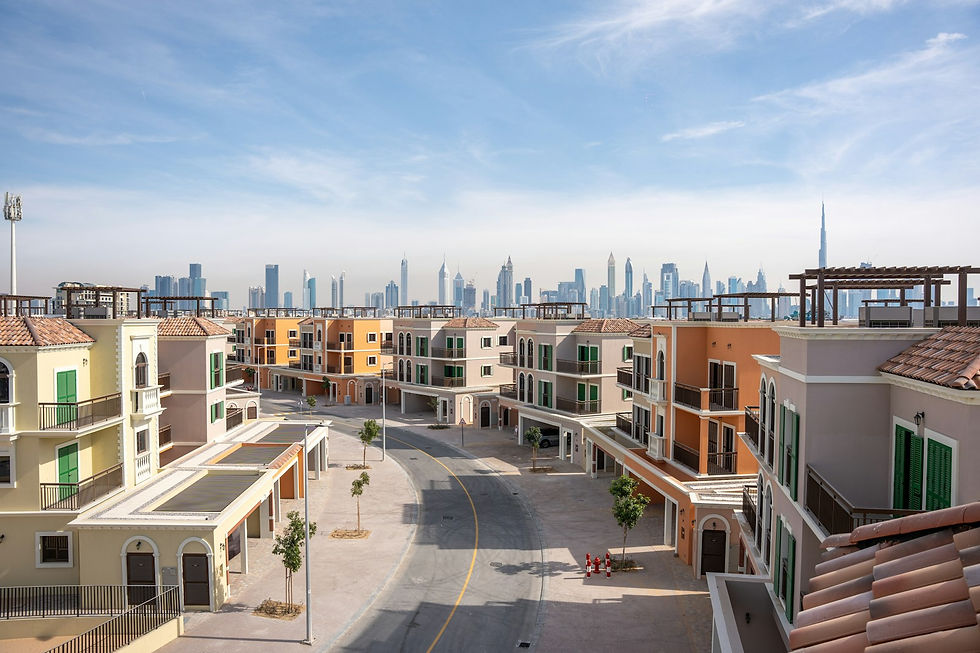
Photos: Kate Trysh (Dubai new-build towers), Ben Koorengevel (Dubai residential community) and Aadil Sabeer (Dubai residential towers) via Unsplash, all depicting Dubai and reviewed this session for UAE subject and quality; the document-signing image (Cytonn Photography, via Unsplash) is representative.
— Angel Tyagi, Creator of Angel In Dubai


Comments