


How Dubai Infrastructure Projects Drive Property ROI: 2026 Corridor Guide
Standing at the edge of the Dubai Creek Harbour promenade early on a Tuesday morning, the distant thud of pile drivers across Ras Al Khor was impossible to ignore. Watching heavy engineering equipment carve out the future path of the Metro Blue Line brought home just how aggressively physical infrastructure dictates real estate valuations in this city.
Public works in Dubai are not speculative promises; they are executed multi-billion-dirham blueprints that systematically unlock trapped land value. According to recent market analysis from brokerage W Capital, institutional capital expenditure into transit corridors and airport logistics is fundamentally restructuring investor yields across secondary and suburban districts.
At a glance | Details |
|---|---|
Blue Line Spend | AED 18 billion as of October 2026 |
DWC Airport Budget | AED 128 billion terminal expansion |
Transit Yield Premium | 7.5 to 9.2 percent rental yields |
Prime Corridors | Dubai South, Creek Harbour, Silicon Oasis |
Research Source | W Capital Real Estate Brokerage |
The Infrastructure Multiplier: How Capital Works Reshape Dubai Real Estate
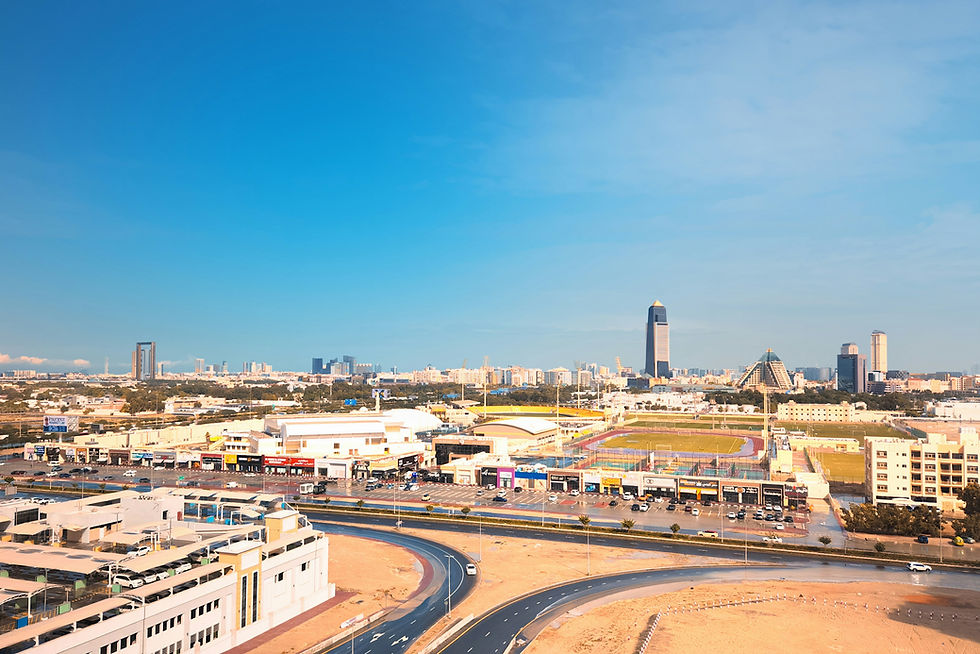
Public infrastructure acts as the primary catalyst for asset appreciation in master-planned metropolitan economies. Federal urban transformation targets published on the official UAE Government Portal outline national economic connectivity through 2031. When transport authorities invest billions into high-capacity transit links, travel times shrink and tenant catchment zones expand exponentially.
According to research published by W Capital in October 2026, residential communities situated within an 800-meter radius of upcoming transit interchanges capture capital appreciation rates 15 to 25 percent higher than non-connected peripheral neighborhoods. Furthermore, localized gross rental returns in transit-adjacent hubs currently range from 7.5 to 9.2 percent as of October 2026, indicative — verify with the bank/developer based on individual unit location.
Tracking municipal earthworks and rail contracts before cranes appear on site has consistently separated top-tier real estate investors from reactive retail buyers.
Comparative Yields Across Dubai Major Infrastructure Corridors
Evaluating property portfolios against planned capital expenditure reveals stark performance variations between mature coastal enclaves and developing transit axes. As of October 2026, data compiled by W Capital indicates that emerging infrastructure corridors generate higher cash-flow yields compared to established luxury districts, where capital values have largely peaked.
The strategic alignment of mass transit, highway flyovers, and cargo rail creates distinct risk-reward profiles across different suburban submarkets. The following matrix illustrates indicative performance metrics across key infrastructure-backed zones in Dubai.
Corridor | Project Driver | Gross Yield |
|---|---|---|
Dubai South | Airport DWC expansion | 7.8 to 9.2 percent |
Creek Harbour | Metro Blue Line | 6.2 to 7.4 percent |
Silicon Oasis | Academic rail link | 7.5 to 8.6 percent |
Ras Al Khor | Industrial logistics upgrade | 7.0 to 8.1 percent |
Dubai Metro Blue Line: Unlocking Emerging High-Density Suburbs
Transit masterplans coordinated by RTA Dubai establish 30-kilometer rail connections across high-density residential clusters. Budgeted at AED 18 billion as of October 2026, according to official Road and Transport Authority filings, the 14-station network bridges the existing Red and Green lines while directly integrating underserved inland communities.
Creek Harbour to Ras Al Khor Connectivity
The Blue Line positions Dubai Creek Harbour as a central multimodal transit hub rather than a picturesque waterfront cul-de-sac. Connecting the lagoon district directly to Academic City and International Airport terminals reduces vehicle dependency, accelerating tenant absorption for one-bedroom apartments yielding 6.5 to 7.2 percent as of October 2026, based on property developer transaction benchmarks.
Silicon Oasis and Academic City Demand Shifts
For years, Dubai Silicon Oasis and International City suffered from road congestion along the E311 highway. Introducing grade-separated metro stations provides rapid commuter access for 150,000 residents and university students, elevating rental yields to between 7.9 and 8.7 percent as of October 2026, indicative — verify with the bank/developer before executing tenancy contracts.
Al Maktoum International Airport and the Dubai South Acceleration
The historic approval of the AED 128 billion mega-expansion at Al Maktoum International Airport (DWC) announced in 2024 represents the largest aviation undertaking on earth. Transforming the southern desert into a global aviation hub handling 260 million passengers annually by the mid-2030s has altered property dynamics across Dubai South and Expo City.
Mortgage borrowing regulations supervised by the Central Bank of the UAE establish loan-to-value ratios for domestic real estate transactions. With thousands of aviation, cargo, and engineering executives expected to relocate southwest, secondary townhouses and mid-rise residential buildings within Dubai South are trading at average price points between AED 950 and AED 1,250 per square foot as of October 2026, based on Dubai Land Department registration indices.
Strategic Due Diligence: Evaluating Infrastructure-Led Property Assets
Capitalizing on public works requires rigorous project-level verification rather than broad speculative acquisitions. Infrastructure timelines can shift, and properties situated too close to arterial road widening projects may suffer noise pollution and traffic bottlenecks instead of premium returns.
Commercial real estate transactions governed by the Federal Tax Authority require precise compliance regarding input tax recovery and supply classifications. Savvy individual investors audit developer track records and municipal approvals before signing sales agreements in early-stage master communities.
Verify actual station entrance locations rather than relying on generalized developer marketing maps
Inspect master developer escrow account balances registered with the Dubai Land Department
Calculate net yields after deducting district cooling charges and building service maintenance fees
Assess road connectivity to primary highways including Sheikh Mohammed Bin Zayed Road and Emirates Road
Check municipal zoning regulations for nearby commercial or high-density expansion parcels
A planned transit line only generates alpha if the property sits within an eight-minute shaded walking radius of the actual station exit.
Financing and Risk Management in Capital Expenditure Corridors
Real estate investment funds regulated by the Securities & Commodities Authority offer fractional exposure to emerging logistical corridors. Smart neighborhood safety initiatives spearheaded by Dubai Police contribute directly to sustained tenant retention rates in developing suburbs. Balancing leveraged debt against realistic handover milestones remains critical for private buyers entering high-growth zones.
This guide is for informational purposes only and does not constitute financial advice; all projected rental returns and asset valuations are indicative — verify with the bank/developer or professional advisory team before committing capital.
Determine debt affordability limits and obtain formal mortgage pre-approval before booking off-plan inventory
Cross-reference municipal project completion schedules published by municipal transport bodies
Negotiate construction-linked payment plans with minimum forty percent payable upon formal handover
Secure Ejari tenancy certifications immediately upon unit possession to protect gross revenue flows
FAQ
How does proximity to a new Dubai Metro station affect property resale value?
Properties within an eight-minute walk of an operational Dubai Metro station historically command a capital price premium of 12 to 22 percent compared to similar units beyond walking distance. Rental liquidity also increases, resulting in lower vacancy periods between tenant renewals.
Which Dubai infrastructure project offers the highest potential capital appreciation by 2030?
The Al Maktoum International Airport expansion in Dubai South presents the longest capital growth runway due to the scale of aviation and logistics jobs moving south. The Metro Blue Line corridor across Silicon Oasis provides immediate medium-term yield stability.
Are off-plan properties near future infrastructure corridors protected against construction delays?
Yes, property buyer funds are safeguarded through statutory escrow accounts regulated by the Dubai Land Department. Developers can only withdraw project funds in alignment with verified construction milestones certified by third-party engineering auditors.
How do road expansion projects impact residential tenant renewal rates in suburban communities?
Major arterial upgrades, such as the Al Khail Road improvement project, reduce daily commute congestion by up to 50 percent. This travel efficiency directly boosts suburban tenant renewal rates and sustains annual rental rates above municipal averages.
Useful Links
UAE Government Portal — Review federal urban planning frameworks
RTA Dubai — Track public transit and road masterplans
Central Bank of the UAE — Check official bank lending limits
Federal Tax Authority — Verify commercial property tax obligations
Securities & Commodities Authority — Confirm licensed real estate fund listings
Dubai Police — Review community policing and safety programs
Pair It With

— Angel Tyagi, Creator of Angel In Dubai
Prices, timings and availability may change — always check directly with the venue before visiting. Not sponsored.
Story lead: Zawya. Reporting can be updated or withdrawn after publication — always check the original before relying on anything here.
Rates and figures are indicative and were correct as of 13 October 2026; they change often, so verify with the provider before acting. This is general information, not financial advice.
Photo by Miguel Joya via unsplash, Photo by Max Tcvetkov via unsplash
Comments