


Emaar Chairman's Dubai Property Market Prediction: 2026 Buyer Guide
Standing inside the bustling Emaar Sales Centre at Dubai Creek Harbour earlier this week, I watched a senior property consultant present master-plan layouts to an international family. A year ago, buyers were making frantic off-plan deposits within minutes of a launch to beat rapid price hikes. Today, the conversation is calmer, more deliberate, and focused on long-term value.
That noticeable shift matches recent market commentary from Emaar founder and chairman Mohamed Alabbar, who forecasted a period of healthy market balance and price stabilization for Dubai real estate in late 2026. Rather than indicating a market decline, Alabbar's outlook points to a maturing property ecosystem where incoming supply meets sustained demand. *Disclaimer: This article is for informational purposes only and does not constitute financial or investment advice. Property prices, yields, and forecasts are indicative — verify with licensed developers, brokers, and financial advisors.*
Mohamed Alabbar's Dubai Property Market Outlook Explained
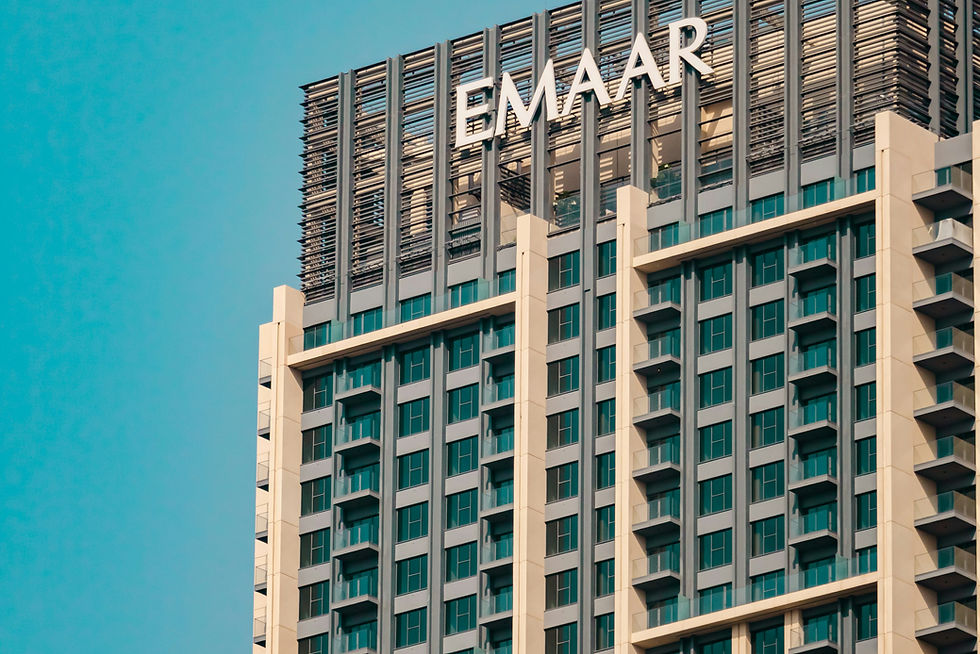
In his recent industry observations, Emaar Chairman Mohamed Alabbar emphasized that Dubai's real estate sector is moving toward a healthier, more balanced phase. After consecutive years of rapid double-digit capital appreciation, the market is absorbing new residential deliveries, leading to moderated price trajectories.
As of September 2026, according to official Dubai Land Department (DLD) transaction summaries, Dubai has recorded over 38,000 residential completions year-to-date, with approximately 45,000 additional units scheduled across major master developments through 2027 (figures indicative — verify with DLD transaction databases). This steady pipeline of inventory helps prevent overheated asset bubbles while providing end-users with expanded options.
Supply Additions and Market Absorption
The influx of newly completed apartments and townhouses across master communities is providing much-needed inventory, allowing population growth to match housing availability naturally.
Transition from Speculation to End-User Stability
With flipping activity slowing down, buyers are focusing on quality of construction, community amenities, and long-term rental yield stability.
Transition from rapid price spikes to sustainable single-digit annual growth.
Increased residential inventory helping to balance supply and demand dynamics.
Greater participation from long-term end-user residents rather than short-term speculators.
Sustained institutional interest backed by Dubai's strong macroeconomic fundamentals.
Market Metric | Hyper-Growth Phase (2022–2024) | Balanced Market Phase (2026 Forecast) | Impact on Buyers & Investors |
|---|---|---|---|
Price Escalation Speed | Double-digit annual appreciation (15-25%) | Moderate single-digit growth (3-6%) (indicative) | Less speculative pressure, realistic pricing |
Off-Plan Supply Pipeline | High demand outpacing immediate delivery | Steady pipeline delivery stabilizing inventory | Broader selection across master communities |
Rental Yield Trajectory | Rapid rent surges across primary hubs | Rent stabilization & tenant negotiations | More predictable long-term rental yields (indicative) |
Buyer Profile | Heavy cash investor & speculative flipping | End-user residents & long-term institutional capital | Greater market stability and lower volatility |
Alabbar's message to buyers is clear: market balance isn't a downturn—it's the sign of a mature, resilient global property hub.
How Fresh Residential Supply Is Easing Dubai Property Prices
A primary catalyst for market stabilization is the delivery of major off-plan projects launched between 2022 and 2024 that are now reaching handover. As handover keys are delivered in areas like Dubai Creek Harbour, Dubai South, and Jumeirah Village Circle (JVC), tenant options expand.
This influx tempers rapid rental inflation and forces sellers to price properties competitively rather than testing unrealistic market ceilings.
Impact on Mid-Market Residential Hubs
Suburbs and mid-market developments are experiencing the fastest stabilization, giving families seeking 2- and 3-bedroom units increased bargaining power.
Resilience in Prime and Luxury Segments
High-end prime waterfront properties in Palm Jumeirah and Downtown Dubai remain resilient due to constrained land supply and steady ultra-high-net-worth demand.
Increased handed-over unit volume providing immediate rental supply.
Normalization of secondary market asking prices across mid-market communities.
Greater developer emphasis on flexible payment plans to attract buyers.
Reduction in panic-buying behavior across off-plan sales launches.
What the Emaar Forecast Means for End-User Homebuyers
For residents who felt priced out during the 2023–2025 surge, a balanced market presents an advantageous window to transition from renting to homeownership. Easing price escalations mean buyers can take time for due diligence, mortgage pre-approvals, and property inspections without fear of losing a home overnight.
Furthermore, developers are structuring attractive post-handover payment plans and fee waivers to capture serious end-user interest.
Greater Leverage in Price Negotiations
In a balanced market, buyers can request seller concessions, such as covering partial transfer fees or including appliances, during contract negotiations.
Favorable Payment Plans from Developers
Leading developers including Emaar, DAMAC, and Sobha are offering extended payment structures to keep off-plan sales momentum steady.
Ability to negotiate purchase terms and property prices with motivated sellers.
Wider availability of completed, move-in ready homes across Dubai.
More competitive mortgage rates offered by UAE commercial banks.
Reduced risk of short-term negative equity compared to peak-market purchases.
Tip: Focus on prime master-planned communities with completed infrastructure rather than chasing high speculative off-plan returns.
Investor Playbook: Navigating Yields in a Stabilizing Market
Investors accustomed to 20% annual capital gains must shift their strategies toward cash-flow generation and rental yield stability. As of September 2026, average gross rental yields in Dubai hover between 6% and 8% depending on the community and asset type (figures indicative — verify with DLD rental index metrics).
Focusing on well-managed master communities with strong transport links ensures consistent tenant occupancy and steady long-term income.
Targeting established rental corridors with high tenant demand.
Evaluating service charge fees against gross rental projections.
Prioritizing quality developers with proven track records of timely delivery.
Diversifying portfolios across residential and commercial micro-assets.
Comparing Prime vs. Emerging Secondary Communities in Dubai
Understanding micro-market dynamics is essential when navigating Dubai real estate in 2026. While established prime areas hold capital value due to scarcity, emerging master developments offer lower entry prices and potential infrastructure upside over a 5- to 10-year horizon.
Evaluating community master plans against upcoming Dubai Metro expansions (such as the Blue Line) provides valuable insight into future capital appreciation potential.
Prime Hub Resilience
Iconic locations retain strong international appeal, protecting capital values even when broader market volume normalizes.
Secondary Market Value Opportunities
Developing master communities offer lower per-square-foot entry points for first-time buyers seeking long-term capital growth.
Prime Communities: Downtown Dubai, Palm Jumeirah, Dubai Marina (High capital stability, lower yield).
Emerging Hubs: Dubai South, Dubai Creek Harbour, JVC (Higher rental yield potential, moderate entry price).
Infrastructure Drivers: Proximity to Dubai Metro Blue Line stations and major highway networks.
Always factor in DLD 4% transfer fees, agency commissions, and service charges when computing your total purchase budget.
Key Steps for Buying Property in Dubai During a Balanced Market
Navigating a property purchase in Dubai requires following established legal steps under Dubai Land Department guidelines. Whether purchasing off-plan or secondary market properties, working with licensed RERA brokers protects your capital.
Ensure that all escrow account details are verified on the official DLD REST app before making initial booking payments.
Secure mortgage pre-approval from a UAE bank to establish your exact budget.
Verify the developer's registered escrow account via the DLD REST mobile app.
Inspect secondary market properties thoroughly with a certified property auditor.
Review the Unified Sale Contract (Form F) carefully before signing.
FAQ
Did Mohamed Alabbar predict a Dubai property market crash?
No, Mohamed Alabbar predicted a healthy market stabilization and balance where supply meets demand naturally, leading to sustainable growth rather than a market crash.
Is 2026 a good time to buy property in Dubai?
A balanced market in 2026 offers end-users and investors less speculative pressure, wider inventory choices, and greater leverage during price negotiations compared to peak growth years.
How will new property supply affect Dubai rent prices in 2026?
Fresh residential completions increase available rental inventory, helping to moderate rental rate increases and giving tenants better options during Ejari lease renewals.
What are average rental yields in Dubai during a balanced market phase?
Gross rental yields in Dubai typically average between 6% and 8% (indicative figures — verify with DLD transaction data), remaining among the highest for global benchmark cities.
Useful Links
Dubai Land Department (DLD) · Abu Dhabi Department of Municipalities and Transport (DMT) · Dubai Municipality · UAE Government Official Portal · Dubai Police Official Portal · Roads and Transport Authority (RTA)
Pair It With
Dubai Property Prices Market Cooling 2026 · Albero By Emaar Dubai Price Floor Plan · Savanna Dubai Creek Harbour Apartments Guide 2026

— Angel Tyagi, Creator of Angel In Dubai
Prices, timings and availability may change — always check directly with the venue before visiting. Not sponsored.
Story lead: thenationalnews.com. Reporting can be updated or withdrawn after publication — always check the original before relying on anything here.
Rates and figures are indicative and were correct as of 10 September 2026; they change often, so verify with the provider before acting. This is general information, not financial advice.
Angel in Dubai is not a real-estate broker and holds no DLD or RERA advertising permit. Any prices here are reported market data as of the date noted — not an offer, and not an invitation to buy. Verify directly with the developer or on the Dubai Land Department portal.
Photo by Застройщик Emaar Properties в ОАЭ via web, Photo by Imad 786 via unsplash


Comments