


UAE Green Bonds and Sustainable Debt Guide 2026: Bank Issuances and Net Zero Goals
I spent Tuesday morning reviewing trading terminals inside DIFC as order books closed for Emirates NBD's latest green bond. Watching European bids pour into a Swiss franc debt offering from a Dubai lender felt like a watershed moment for how international capital views local sustainability commitments.
The UAE debt capital market is no longer merely talking about Net Zero 2050 as a distant policy ambition. Local banks are actively pricing multi-million-dollar green instruments, channeling global institutional capital into solar grids, energy-efficient commercial towers, and clean transport networks across the Emirates.
At a glance | Details |
|---|---|
Latest deal | CHF 150M by Emirates NBD |
Total market | Over AED 121B in ESG debt |
Primary hub | Nasdaq Dubai |
National target | Net Zero by 2050 |
Eligible sectors | Solar, transport, green buildings |
Emirates NBD's CHF 150 Million Green Bond: Why the Swiss Franc Issuance Matters
Earlier this week, Emirates NBD priced a CHF 150 million green bond that caught the immediate attention of international fixed-income desks. The transaction carries a five-year maturity and priced at an attractive spread over Swiss franc mid-swaps, reflecting exceptionally tight pricing for a regional commercial lender. Tapping the Swiss market allows the bank to diversify its liability base away from traditional US dollar and local dirham investor pools.
European institutional investors maintain some of the strictest sustainability mandates in global asset management. By pricing a green tranche in Zurich, Emirates NBD proved that UAE banking credits can satisfy rigorous Swiss ESG criteria while securing competitive cost of funds. The proceeds are ring-fenced to refinance eligible green assets across renewable energy, clean transportation, and certified sustainable architecture in the UAE.
Seeing a major Dubai bank raise green debt in Swiss francs proves how global institutional demand for UAE climate assets has become.
UAE Sustainable Debt Market Size: Key Issuers and Instruments in 2026
The UAE has established itself as the leading destination for green and sustainable debt across the Middle East and North Africa. Outstanding ESG debt volumes on local exchanges surpassed USD 33 billion, representing more than AED 121 billion in cumulative issuance value. What began as occasional sovereign-backed green notes has evolved into a routine liquidity management strategy for national commercial champions.
Green Sukuk Versus Conventional Green Bonds
Islamic finance represents a massive portion of the UAE sustainable debt story. Green sukuk structures comply fully with Sharia principles by granting investors beneficial ownership of underlying tangible assets rather than interest-bearing debt obligations. In Dubai and Abu Dhabi, Islamic banks structure green trust certificates backed by renewable energy infrastructure, generating lease revenues that fund semi-annual distributions to international investors.
Conventional green bonds operate alongside these Islamic instruments, providing global fixed-income funds with familiar eurobond documentation. By offering both formats across major exchanges, UAE issuers attract traditional European environmental funds as well as specialized Islamic liquidity pools across the GCC and Southeast Asia.
Nasdaq Dubai's Role as the Regional ESG Hub
Nasdaq Dubai has emerged as the clear center of gravity for Middle Eastern sustainable debt listings. More than half of the region's green debt listings now trade on Nasdaq Dubai, turning the exchange into an established international venue for ESG capital. Local banks benefit from dual-listing structures that give European and Asian asset managers direct clearing access through Euroclear and Clearstream.
Sovereign-linked utility champions such as DEWA paved the way with massive capital programs for clean solar power generation. Commercial banks followed quickly, using the exchange's transparent secondary trading infrastructure to prove liquidity and keep primary issuance pricing competitive.
UAE Bank Green Bond Issuance Comparison: Rates, Currencies, and Terms
Local commercial banks have adopted different funding strategies across international capital markets to build their green liability portfolios. While First Abu Dhabi Bank and Abu Dhabi Commercial Bank focused primarily on benchmark US dollar tranches, Emirates NBD demonstrated currency agility by issuing in Swiss francs and Australian dollars alongside its core dollar programs. These choices reflect different treasury objectives, matching specialized investor appetite against specific asset-liability profiles.
Spreads on UAE bank green debt have tightened significantly over conventional paper, reflecting what fixed-income traders call a greenium. International investors willingly accept marginally lower yields in exchange for certified ESG governance and transparent environmental reporting.
Utility-scale solar photovoltaic plants and grid-scale battery storage facilities
Certified green commercial buildings meeting Dubai Al Sa'fat gold or platinum benchmarks
Municipal water desalination retrofits replacing thermal processes with reverse osmosis
Clean public transportation projects including metro extension works and electric bus fleets
Issuer | Size | Tenor |
|---|---|---|
Emirates NBD | CHF 150M | 5 years |
First Abu Dhabi | USD 600M | 5 years |
ADCB | USD 650M | 5 years |
Dubai Islamic | USD 750M | 5 years |
The Regulatory Framework: How the UAE Central Bank and SCA Govern Green Debt

Financial regulators across the UAE have moved quickly to prevent greenwashing and standardize how local institutions measure environmental impact. The Central Bank of the UAE issued principles for sustainability-related financial risk management, mandating that commercial banks stress-test their loan portfolios against climate transition scenarios. These regulatory requirements compel treasury teams to expand their certified green asset pools.
Every registered issuance aligns with International Capital Market Association principles to ensure that proceeds flow directly into certified green activities. The Securities and Commodities Authority also introduced fee waivers for green debt listings, lowering the administrative barrier for local corporates and financial institutions coming to market.
According to guidelines outlined on UAE Government Portal, national banks must publish annual allocation reports showing verified impact metrics. These third-party audited disclosures track exact megawatt-hours of solar energy financed, cubic meters of water conserved, and metric tons of carbon emissions avoided.
Regulatory fee waivers from SCA gave local banks the exact push needed to absorb verification costs for international ESG listings.
Funding the Net Zero 2050 Strategic Initiative: Where the Capital Goes
The UAE Net Zero by 2050 strategic initiative represents the foundational economic roadmap guiding all domestic sustainable finance. Meeting national decarbonization commitments demands substantial private sector investment alongside public budget expenditures. Banking syndicates deploy green bond proceeds across targeted infrastructure projects that deliver measurable reductions in carbon intensity.
Renewable Energy and Clean Grid Expansion
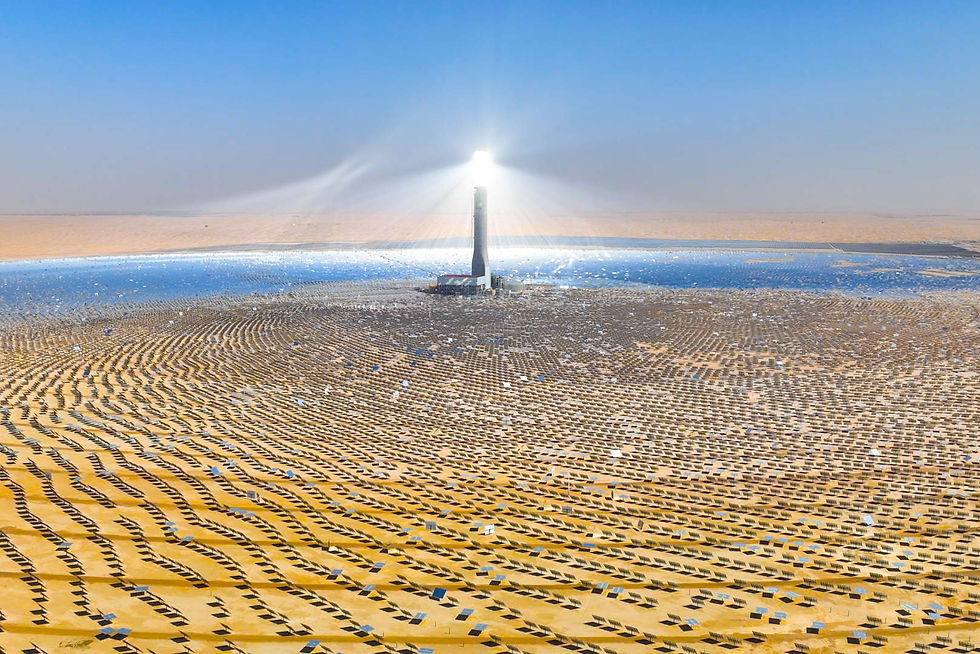
The transition to clean electricity consumes the largest single share of sustainable bond proceeds across the Emirates. Capital raised by local lenders finances long-term power purchase agreements for utility-scale solar complexes, high-voltage direct current subsea transmission cables, and grid-scale battery storage installations that stabilize intermittent daytime solar generation.
Official statements tracked by Emirates News Agency confirm that federal climate initiatives require more than AED 600 billion in total investments by mid-century. Bank-led green debt bridges the capital expenditure gap between government budgetary allocations and commercial project finance.
Sustainable Urban Infrastructure and Retrofits
Commercial real estate represents another critical destination for green loan portfolios. Dubai's building stock accounts for substantial cooling demand and electrical load during peak summer months, making energy retrofits a high-yield decarbonization pathway. Banks deploy green facility proceeds into deep retrofits that replace chillers, install building management systems, and upgrade building envelopes.
Borrowers who demonstrate energy consumption reductions of twenty percent or higher qualify for preferential borrowing margins under bank sustainable lending frameworks. This creates a direct commercial incentive for landlords and developers to modernize aging towers across Business Bay and Deira.
How Institutional and Retail Investors Can Access UAE Green Debt in 2026
Access to primary green bond issuances in the UAE remains largely the domain of institutional allocators, sovereign wealth funds, and private banking clients. Standard minimum denominations of USD 200,000 for international tranches mean that individual retail investors cannot typically place primary market bids. However, the expanding depth of the secondary market on local exchanges is creating new avenues for broader participation.
Retail investors seeking exposure to UAE green financing can participate through regional fixed-income funds and exchange-traded products listed on local bourses. These collective investment vehicles hold diversified baskets of green bonds and sukuk issued by regional national champions, distributing regular dividend income while maintaining daily liquidity.
Open a trading account with a DFSA-regulated or SCA-regulated brokerage firm in Dubai
Obtain an investor number from Dubai Financial Market or Abu Dhabi Securities Exchange
Target regional green bond ETFs or fixed-income mutual funds for fractional exposure
Review the bank annual allocation report to verify eligible project asset pools
If you want local green paper in your portfolio, regional ESG exchange-traded funds offer lower entry barriers than direct bond lots.
FAQ
Can retail investors in the UAE buy green bonds directly?
Retail investors cannot usually buy institutional tranches directly due to high minimum ticket sizes of USD 200,000. Instead, retail individuals access UAE green debt through local ESG mutual funds, exchange-traded funds on DFM, or fractional bond platforms licensed by the DFSA.
What is the difference between a green bond and a green sukuk in the UAE?
A green bond is a conventional fixed-income debt instrument paying regular coupons, whereas a green sukuk represents an undivided ownership share in tangible Sharia-compliant green assets that generate lease returns or profit rates rather than interest.
How do UAE banks verify that green bond proceeds fund real environmental projects?
Banks appoint independent second-party opinion providers like Sustainalytics or Moody's ESG to review their framework against ICMA standards, followed by annual post-issuance assurance reports auditing exact capital disbursements to eligible solar, water, or building projects.
Why did Emirates NBD issue a green bond denominated in Swiss francs?
Denominating the bond in Swiss francs allows Emirates NBD to tap European pension funds and private banks with strict ESG mandates while achieving negative or exceptionally low base-rate coupon pricing that can be swapped back to AED or USD.
Useful Links
Emirates NBD — official sustainable finance framework documentation
Nasdaq Dubai — official ESG debt listing registry
DEWA — clean energy infrastructure project updates
International Capital Market Association — global green bond principles standards
UAE Government Portal — federal green economy policy documentation
Emirates News Agency — official net zero financial announcements
Pair It With

— Angel Tyagi, Creator of Angel In Dubai
Prices, timings and availability may change — always check directly with the venue before visiting. Not sponsored.
Story lead: Zawya. Reporting can be updated or withdrawn after publication — always check the original before relying on anything here.
Rates and figures are indicative and were correct as of 30 September 2026; they change often, so verify with the provider before acting. This is general information, not financial advice.
Photo by Nasdaq Dubai Welcomes USD 500 Million Sukuk Listing by Sharjah Islamic Bank via web, Photo by El parque solar Mohammed bin Rashid Al Maktoum en Dubai alcanza un ... via web, Photo by web via web


Comments