


How to Open a Clinic in Dubai Healthcare City: 2026 Licensing and Setup Guide
Walking through Building 64 in Dubai Healthcare City on a Tuesday morning, the pace is unmistakable. Clinical directors review architectural blueprints at reception counters, medical device reps unpack diagnostic equipment, and newly credentialed physicians finalize paperwork under the updated regulatory framework. The free zone has long anchored regional healthcare, but setting up a practice here requires navigating precise statutory pathways.
With the issuance of the latest regulatory decree governing the Dubai Healthcare City Authority, the route from initial commercial registration to clinical opening has been restructured. Between clinical operating permits, professional credentialing, and facility inspection standards, opening a medical facility in DHCC requires clarity on exact costs, timelines, and compliance rules.
At a glance | Details |
|---|---|
Governing Authority | Dubai Healthcare City Authority (DHCA) |
Min Lease Area | 1,200 sq ft for outpatient clinics |
Initial License Fee | AED 28,000 to AED 65,000 |
Foreign Ownership | 100% full foreign equity |
Approval Timeline | 8 to 12 weeks total |
Primary Location | DHCC Phase 1 and Phase 2 |
Understanding the 2026 Dubai Healthcare City Regulatory Decree
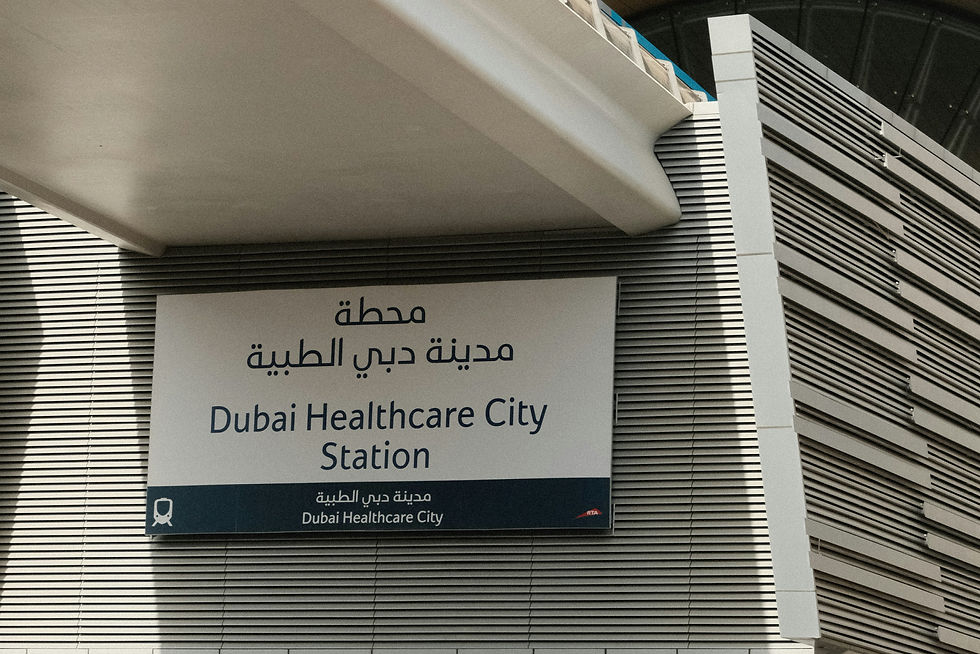
The governance overhaul announced by the Dubai Healthcare City Authority sets streamlined operational standards across all outpatient facilities and specialized clinics. Issued as a comprehensive regulatory update, the decree modernizes operational governance, separates commercial leasing oversight from clinical compliance, and clarifies how international healthcare providers establish standalone practices. For entrepreneurs and clinical founders, this structural clarity cuts administrative delays that historically slowed facility launches.
Official reporting released through the Emirates News Agency confirmed that the updated decree clarifies licensing jurisdictions and dispute resolution mechanisms for free zone medical operators. Healthcare operators now register through a unified digital compliance pipeline that integrates environmental health checks, medical waste disposal contracts, and facility design approvals under a centralized regulatory desk.
Statutory company registration parameters on the UAE Government Portal outline commercial entity formation requirements for foreign healthcare investors entering free zone jurisdictions. Investors can incorporate either as a Free Zone Limited Liability Company (FZ-LLC) or as a branch of an existing domestic or overseas medical corporation, retaining 100 percent equity without requiring a local Emirati partner.
Setup Costs, Commercial Licensing Fees, and Capital Requirements
Budgeting for a medical facility in DHCC requires separating free zone commercial registration expenses from clinical licensing and physical engineering outlays. Initial administrative fees for commercial trade name reservation, company registration, and Articles of Association typically total AED 15,000 to AED 22,000. Clinical operating permit fees are assessed independently based on facility scale, service complexity, and room counts.
Leasing rates across DHCC Phase 1 in Umm Hurair 2 average between AED 180 and AED 260 per square foot annually for fitted clinical spaces, while shell-and-core units in newer developments command slightly lower base rents but require substantial upfront MEP fit-out investments. Operating reserves must also account for mandatory medical malpractice insurance, clinical waste disposal through municipal-approved contractors, and biomedical equipment maintenance contracts.
Clinic Type | Min Area | License Fee |
|---|---|---|
Outpatient Clinic | 1,200 sq ft | AED 28,000 |
Polyclinic Unit | 2,500 sq ft | AED 42,000 |
Day Surgery Center | 5,000 sq ft | AED 65,000 |
Diagnostic Lab | 1,800 sq ft | AED 35,000 |
Submitting your architectural MEP drawings before finalizing your lease can prevent weeks of costly structural modifications during the mandatory engineering audit.
Step-by-Step Procedure to License a Clinic in DHCC
Establishing a medical facility requires passing through structured regulatory milestones that connect corporate registration with strict clinical oversight. Missing a documentation step or signing a commercial tenancy contract before obtaining spatial layout pre-approval can stall a launch for months.
The procedural roadmap below guides healthcare founders from initial concept submission through final operational inspection and commencement of patient care.
Submit business plan and clinical service proposal to the regulatory board for initial activity approval.
Reserve company commercial name and file incorporation documents for the Free Zone Limited Liability Company.
Secure clinical commercial space and submit preliminary architectural and MEP drawings for facility layout clearance.
Execute the lease agreement, obtain construction NOCs, and complete clinical interior fit-out according to infection control standards.
Register the clinical director and medical staff through the professional credentialing portal.
Schedule the final physical audit by regulatory inspectors to secure the permanent Clinical Operating Permit.
Physician Credentialing, Staffing Ratios, and Clinical Privileges
Every medical facility in DHCC must designate an authorized Medical Director who carries an active clinical license in the UAE and assumes legal responsibility for clinical governance. The regulatory framework maintains strict staff-to-patient ratios, mandatory nursing allocations based on operational chair counts, and verified continuing medical education records.
Mutual recognition agreements maintained with the Dubai Health Authority enable qualified physicians to transfer clinical privileges across mainland Dubai without duplicate primary examinations. This interoperability allows DHCC operators to recruit specialist talent currently working in mainland hospitals without forcing practitioners to repeat licensing exams.
Primary Source Verification and Background Audits
Every medical practitioner must secure clearance from Dubai Police to verify character certificates during the healthcare professional registration cycle. Simultaneously, educational degrees, clinical specialist transcripts, and logbooks undergo primary source verification through DataFlow before temporary clinical licenses are granted.
Maintaining CME Points and Scope of Practice
Licensed physicians and allied healthcare workers must accumulate at least 40 continuing medical education credits annually to renew clinical privileges. Scope of practice definitions are strictly enforced, meaning visiting international consultants must register under temporary visiting expert permits at least three weeks prior to patient appointments.
Ensure your lead physician has completed their primary source credentialing report through DataFlow before you book the initial clinical inspection.
Facility Specifications, Fit-Out Standards, and Engineering Clearances
Physical clinical spaces within the healthcare free zone must comply with rigorous architectural guidelines covering room dimensions, ventilation changes, scrub sinks, and sterilized dirty-to-clean flow paths. Standard consultation rooms require a minimum of 12 square meters, while treatment procedure suites demand at least 16 square meters with specialized clean air exchange systems.
Final fit-out approval requires utility verification from DEWA to ensure specialized medical equipment loads and backup generators meet urban grid standards. Operators must coordinate structural inspections before enclosing walls to verify acoustic insulation, radiation shielding in radiography suites, and biomedical emergency shutoff valves.
Minimum ceiling height of 2.7 meters in treatment rooms and clinical corridors
Dedicated medical grade dirty utility room with separate exhaust ventilation
Lead-lined partition walls and safety signage for diagnostic X-ray installations
Certified biomedical hazardous waste storage closet with temperature regulation
Touchless clinical hand-washing sinks adjacent to every examination table
Uninterruptible power supply circuits for critical patient monitoring gear
Operating Logistics, Patient Records, and Malpractice Governance
Once licensed, healthcare operators must interface with the national digital health ecosystem. Medical record keeping must comply with UAE federal data localization mandates, requiring electronic medical record systems to store patient clinical files on certified cloud servers situated physically within the Emirates.
Facilities must establish an active clinical governance committee that reviews clinical audit outcomes, patient safety incidents, and infection control logs quarterly. Malpractice coverage is mandatory for both the facility and individual practitioners, with statutory minimum coverage thresholds scaling according to clinical risk classifications and surgical invasiveness.
Operators seeking to scale their practices frequently explore complementary wellness and diagnostic programs, tapping into specialized local patient demands for preventative care and multidisciplinary consultations. Maintaining transparent fee schedules and digital insurance claims integration ensures smoother patient onboarding from day one.
FAQ
Can a foreign doctor own 100 percent of a clinic in Dubai Healthcare City?
Yes, DHCC operates as an autonomous healthcare free zone allowing 100 percent foreign equity without requiring an Emirati national commercial partner. Non-medical corporate holding entities can own the shares, provided an authorized licensed physician oversees all clinical governance as medical director.
What is the difference between a DHCC clinical license and a mainland DHA license?
A DHCC license is issued directly by the free zone authority to govern healthcare premises inside the DHCC geographic free zone. While mainland clinics fall under Dubai Health Authority jurisdiction, physicians can transfer credentials through the unified medical registry without repeating qualifying exams.
How much minimum share capital is required to incorporate in DHCC?
Standard Free Zone Limited Liability Companies in DHCC generally require a minimum deposited share capital of AED 50,000 to AED 300,000 depending on the clinical classification. Branch offices of existing UAE or international healthcare corporations are exempt from this initial paid-up capital deposit.
How long does physician credentialing take in Dubai Healthcare City?
Credentialing takes four to six weeks once primary source verification reports are completed through DataFlow. Specialists holding recognized tier-one qualifications from countries like the UK, Australia, Germany, or the United States qualify for expedited verification without taking oral licensing exams.
Useful Links
Dubai Healthcare City Authority — Official portal for clinical operator licensing guidelines
Emirates News Agency — Official reporting on government healthcare decrees
UAE Government Portal — Federal guidelines on business establishment and healthcare
Dubai Health Authority — Mainland healthcare licensing and unified medical registry
Dubai Police — Criminal clearance certificates for healthcare registration
DEWA — Utility connection and engineering fit-out clearance
Pair It With

— Angel Tyagi, Creator of Angel In Dubai
Prices, timings and availability may change — always check directly with the venue before visiting. Not sponsored.
Story lead: zawya.com. Reporting can be updated or withdrawn after publication — always check the original before relying on anything here.
Rates and figures are indicative and were correct as of 3 October 2026; they change often, so verify with the provider before acting. This is general information, not financial advice.
Rules, fees and deadlines change often. This is a general summary, not legal advice — confirm with the relevant UAE authority before acting.
Photo by Dubai Healthcare City Records A 12% Year-On-Year Increase As It ... via web, Photo by Monody Le via unsplash



Comments