


How India Dominates Dubai Property Search Rankings in 2026: Buyer Trends & Data
Every time I sit with a Dubai real estate agent — whether at a Downtown sales gallery or a JVC show flat — the first question out of their mouth is the same: 'Are you based here, or flying in from India?' It is not a random guess. Indian nationals have cemented themselves as the single largest group searching for, enquiring about, and purchasing property in Dubai, and the gap between India and every other source country is not even close.
I have watched this trend accelerate over the past three years from my own vantage point as someone who covers Dubai's property market regularly. But the 2025–2026 data tells a story that even I did not fully appreciate until I dug into the portal analytics and Dubai Land Department transaction records. India is not just influencing Dubai's property search rankings — it is rewriting them.
What the Search Data Actually Shows
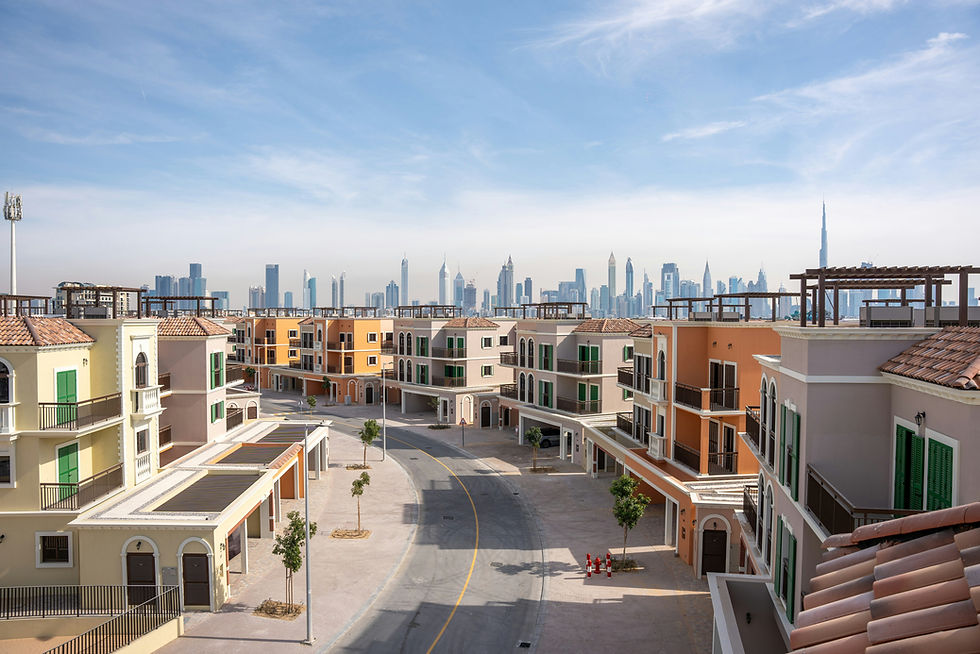
Property Finder's 2025 annual market report confirmed that India accounted for the highest share of international property searches on its platform for the fifth consecutive year (as of December 2025, source: Property Finder Market Watch 2025). Bayut's own data mirrored this, showing Indian-origin users generating more search sessions than the next three nationalities combined — the United Kingdom, Pakistan, and Russia — throughout the second half of 2025.
The Dubai Land Department's 2025 annual report showed that Indian investors completed over 9,400 property transactions in Dubai during the year (as of December 2025, source: Dubai Land Department Annual Report 2025). That figure represented approximately 20 percent of all foreign-national transactions recorded by the DLD, making India the top buyer nationality for the third straight year. These are indicative figures — verify with the relevant authority for the latest data.
What makes the search-ranking dominance even more striking is the intent behind the clicks. Property Finder noted that Indian searches skewed heavily toward ready properties priced between AED 1 million and AED 3 million, with two-bedroom apartments in communities like Jumeirah Village Circle, Business Bay, and Dubai Marina drawing the bulk of interest.
*When I speak with Indian buyers, the recurring theme is not speculation — it is lifestyle arbitrage. They want a second home in a city with better infrastructure, zero income tax, and a four-hour flight from Mumbai.*
Why Indian Buyers Lead Every Other Nationality

There is no single reason India dominates Dubai's property funnel — it is a stack of structural advantages that compound year over year.
First, the currency angle. The Indian rupee has depreciated steadily against the US dollar (and therefore the AED, which is pegged to the dollar). For high-net-worth Indians earning in dollars or holding dollar-linked assets, Dubai property prices have effectively become more attractive in relative terms. For salaried professionals in the UAE's large Indian expat community — numbering roughly 3.5 million residents — buying a home here is simply a logical financial step.
Second, the Golden Visa. India was the top nationality applying for the UAE's 10-year Golden Visa linked to property investment (minimum AED 2 million) through the first half of 2026, according to ICP data cited by Gulf News (as of June 2026, source: Gulf News). The visa provides long-term residency certainty, which removes the biggest hesitation Indian families have about committing capital to a foreign market.
Third, connectivity. There are now over 1,100 direct weekly flights between Indian cities and Dubai (as of Q1 2026, source: DGCA India / flightradar24 estimates), spanning not just Mumbai and Delhi but Tier-2 cities like Kochi, Hyderabad, Ahmedabad, and Lucknow. This has turned Dubai into a weekend-accessible second-home market for a much wider pool of Indian families.
Rupee depreciation makes AED-priced assets relatively cheaper for Indian buyers over time
Golden Visa eligibility at AED 2 million provides 10-year residency security
3.5 million Indian residents in the UAE create organic, word-of-mouth demand
1,100+ direct weekly flights connect Tier-1 and Tier-2 Indian cities to Dubai
Zero income tax in the UAE on rental yields versus up to 30 percent in India
Transparent freehold ownership laws and RERA-regulated escrow accounts reduce risk perception
Which Communities Indian Buyers Search for Most
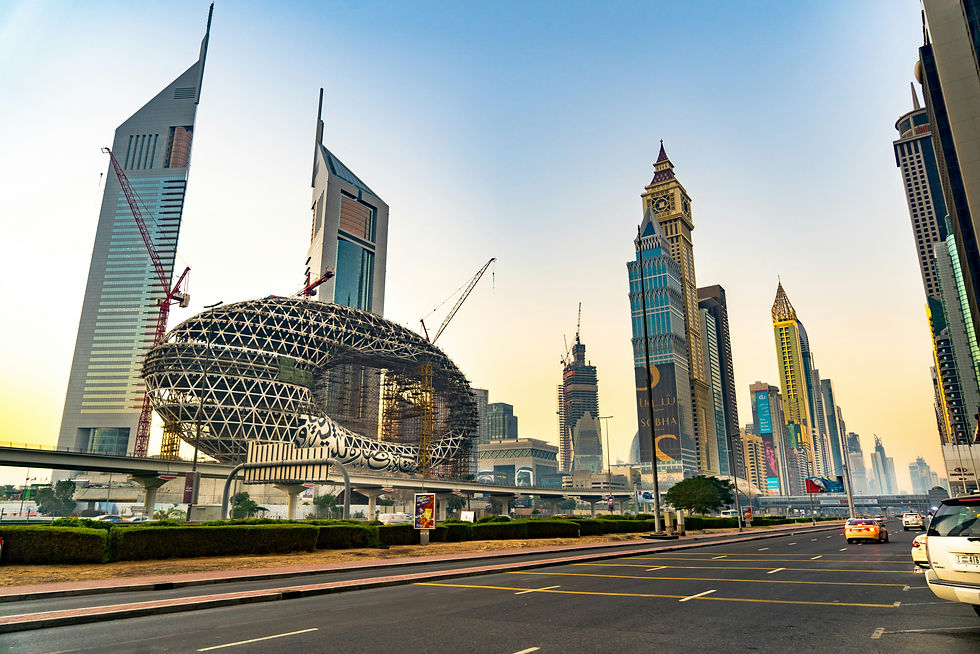
The search-ranking data reveals clear neighbourhood preferences. According to Property Finder's H1 2026 insights, the top five communities by Indian search volume were Jumeirah Village Circle, Business Bay, Dubai Marina, Downtown Dubai, and Jumeirah Lake Towers (as of June 2026, source: Property Finder). JVC's dominance is almost entirely price-driven — a two-bedroom apartment there starts from around AED 900,000 to AED 1.2 million, which slots neatly into the budget sweet spot for first-time Indian investors. These prices are indicative — verify with the developer or your broker for current availability.
Business Bay and Dubai Marina attract a slightly different profile: Indian professionals already living in the UAE who want to convert rent into ownership. Downtown Dubai, predictably, draws the ultra-high-net-worth segment looking for branded residences and flagship tower addresses.
An emerging trend I have noticed in 2026 is growing Indian search interest in Dubai South, Damac Hills 2, and Town Square — communities that offer villa-style living under AED 1.5 million. Families relocating from India are increasingly prioritising space and community amenities over a Marina postcode, and developers are responding with India-focused roadshows and payment plans.
How Developers Are Responding to the India Factor
Dubai's biggest developers have essentially built India-specific sales pipelines. Emaar, Damac, Sobha Realty, and Danube Properties now maintain permanent offices or partner brokerages in Mumbai, Delhi-NCR, Bengaluru, and Hyderabad. Sobha Realty — itself founded by Indian entrepreneur PNC Menon — has leveraged its brand recognition on the subcontinent to become one of the fastest-growing developers in Dubai.
Danube Properties launched its 'one-percent monthly payment plan' model specifically to appeal to Indian salaried professionals, and its Bayz 101 and Diamondz towers in Business Bay and JLT were reportedly sold out with over 40 percent Indian buyers (as of late 2025, source: Danube Properties press releases). Payment plan structures like these — low down payments, post-handover instalments — are calibrated for the Indian middle-class buyer who may not have AED 2 million liquid but can commit AED 15,000–20,000 per month.
I attended the Indian Property Show at the Bombay Exhibition Centre in early 2026, and nearly every Dubai developer had a booth. The energy was unmistakable — Dubai property is now marketed in India the way European holidays were a decade ago: aspirational but achievable.
*My tip for Indian buyers flying in for a property viewing: block three full days, visit at least five communities in person, and always ask the developer for the DLD-registered unit price — not just the brochure price. The gap can surprise you.*
The Impact on Dubai's Overall Market
India's outsized search and purchase volume has measurable effects on Dubai's property ecosystem. For one, it creates a floor of demand that insulates certain price segments — particularly the AED 1–3 million apartment range — from the kind of sharp corrections seen in 2019–2020. As long as India's economic trajectory holds and the rupee continues its gradual depreciation, fresh capital flows into Dubai are structurally supported.
Secondly, Indian buyer preferences have influenced product design. Developers now routinely include modular kitchens (a feature Indian families prioritise), higher parking ratios, and community temples or multi-faith prayer rooms in master-planned communities. These are tangible design shifts that trace directly back to feedback from the Indian buyer segment.
However, concentration risk is real. If India were to impose stricter capital controls under the Liberalised Remittance Scheme (LRS) — currently capped at USD 250,000 per individual per financial year — or if the Reserve Bank of India tightened TCS (Tax Collected at Source) on overseas remittances beyond the current 20 percent above INR 7 lakh, search volumes and transaction counts could soften. This is not a prediction; it is a structural dependency worth monitoring.
*This article is for informational purposes only and does not constitute financial or investment advice. Past performance of the Dubai property market is not indicative of future results. Always consult a licensed financial adviser before making investment decisions.*
What This Means If You Are an Indian Buyer in 2026
If you are an Indian national considering a Dubai property purchase this year, you are entering a market where your nationality gives you a structural advantage in one sense — developers, brokers, and banks are geared up to serve you — but also a market where Indian demand has already priced in much of the value in popular corridors.
My practical suggestion is to look beyond the obvious. JVC and Business Bay are solid, but the search data shows that when everyone is searching for the same communities, you are competing against the widest possible buyer pool, which can limit negotiation leverage. Pockets like Al Furjan, Arjan, and Dubai Investments Park are seeing rising infrastructure delivery with lower per-square-foot pricing.
Also, factor in the full cost stack: DLD transfer fee (4 percent), agent commission (typically 2 percent), service charges (annual, varies by community), and the TCS you will pay on outward remittance from India. A property listed at AED 1.5 million will have an all-in acquisition cost closer to AED 1.6 million before furnishing. These figures are indicative — verify with your bank and broker for current rates.
Frequently Asked Questions
FAQ
Which country searches for Dubai property the most?
India has been the top country by search volume on major Dubai property portals like Property Finder and Bayut for several consecutive years. As of mid-2026, Indian users generate more searches than the next three nationalities combined, including the UK, Pakistan, and Russia.
Can Indian citizens buy property in Dubai?
Yes. Indian citizens can buy freehold property in designated freehold zones across Dubai, which include most popular communities like Dubai Marina, Downtown, JVC, and Business Bay. No UAE residency is required to purchase, though buying property worth AED 750,000 or more can qualify you for a residency visa.
How much can an Indian citizen remit to buy property in Dubai?
Under India's Liberalised Remittance Scheme (LRS), an individual can remit up to USD 250,000 per financial year for permitted purposes including property purchase abroad. Amounts above INR 7 lakh attract a 20 percent Tax Collected at Source (TCS), which is adjustable against your income tax liability. These thresholds are as of the 2025–26 financial year — verify with your bank for the latest limits.
What is the cheapest area to buy property in Dubai for Indian investors?
Communities like Jumeirah Village Circle (JVC), International City, Dubai South, and Town Square offer some of the lowest entry points, with studio apartments starting from around AED 400,000–500,000 and two-bedrooms from AED 900,000 as of mid-2026. Prices are indicative and vary by developer and building — always verify with a RERA-registered broker.
Does buying property in Dubai give you residency?
Yes. Purchasing property worth AED 750,000 or more qualifies you for a 2-year renewable residency visa. Properties valued at AED 2 million or above can qualify for the 10-year Golden Visa, subject to meeting all ICP requirements. These thresholds are as of 2026 — verify with GDRFA or ICP for the latest eligibility criteria.
Useful Links
Dubai Land Department Official Portal · Property Finder Dubai · Bayut Dubai Property Portal · Dubai REST App (RERA/DLD) · Reserve Bank of India – Liberalised Remittance Scheme · ICP UAE – Golden Visa
Pair It With

— Angel Tyagi, Creator of Angel In Dubai
Prices, timings and availability may change — always check directly with the venue before visiting.
Photo by Drew McKechnie via unsplash, Photo by Ben Koorengevel via unsplash, Photo by Darcey Beau via unsplash, Photo by Darcey Beau via unsplash


Comments