


Guide to Innovative Schools in Dubai 2026: KHDA AI Models, Curricula & Fees
Walking into a newly designed primary studio in Nad Al Sheba, the absence of traditional front-facing rows is the first thing that catches your eye. Instead of a single chalkboard and uniform textbooks, small clusters of students work alongside digital learning surfaces that adapt problem difficulty based on biometric engagement and comprehension speed.
Over the past few weeks, I spoke with curriculum directors, education founders, and parent liaisons across Dubai to understand how recent leadership directives are reshaping K-12 schooling. As international families navigate the 2026 academic enrollment season, this comprehensive guide clarifies what next-generation campuses look like, how new regulatory models operate, and what these changes mean for your family budget.
At a glance | Details |
|---|---|
Regulatory Body | KHDA in Dubai |
Average Tuition | AED 45,000 to AED 95,000 annually |
Target Rollout | September 2026 Academic Year |
Key Campus Hubs | City Walk, Al Barsha, and Nad Al Sheba |
Student Capacity | 200 to 450 per micro-school |
The 2026 Directive: Sheikh Hamdan Vision for Next-Generation Classrooms
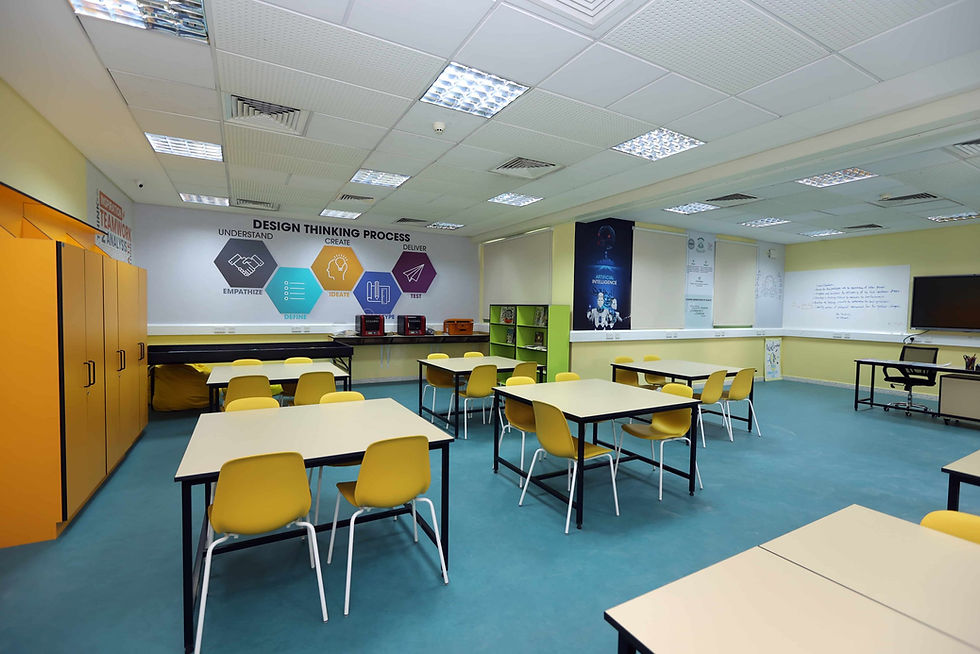
Dubai leadership has issued clear instructions to rethink foundational schooling architecture. Under directives championed by Sheikh Hamdan bin Mohammed, local education planners are tasked with replacing rigid nineteenth-century classroom structures with flexible, competency-driven learning environments that prepare pupils for algorithmic economies.
Official directives issued to the KHDA mandate responsive curricula across private campuses. Rather than tying educational progress purely to seat time and calendar birthdays, emerging schooling frameworks focus on demonstrated mastery across interdisciplinary technology, emotional intelligence, and ecological science.
Adaptive learning platforms that adjust diagnostic math tasks to individual pace
Project-based term assessments replacing high-stakes mid-year written examinations
Flexible four-day campus attendance models combined with independent inquiry days
Cross-disciplinary portfolios evaluated by industry mentors alongside certified teachers
KHDA Regulatory Sandbox: How New Curricula Enter Dubai Schools
Historically, launching a non-traditional private school required years of bureaucratic compliance under prescriptive national frameworks. The contemporary regulatory sandbox introduced by Dubai authorities allows accredited operators to pilot agile pedagogical concepts in controlled cohorts before widespread rollout.
Federal oversight managed by the Ministry of Education aligns state diploma tracks with international standards. This collaborative framework guarantees that even when students engage with experimental coding modules or decentralized project studios, their graduation certificates retain universal recognition for university matriculation abroad.
Always ask whether an AI school tool replaces teacher instruction or simply automates grade tracking.
Inside AI Classrooms: Adaptive Tutors and Real-Time Feedback
Pilot incubators backed by the Dubai Future Foundation test generative AI tools in designated pilot classrooms. These artificial intelligence assistants analyze how individual pupils process linguistic syntax and spatial geometry, presenting tailored remedial tasks the moment confusion arises.
At City Walk, Citizens School Dubai delivers non-traditional learning pathways that replace standard rote memorization. The campus integrates bespoke entrepreneurial tracks where children build functional prototypes, code algorithms, and manage simulated venture budgets starting in primary grades.
Personalized AI Diagnostic Systems
Classrooms across Jumeirah and Al Barsha now integrate intelligent diagnostic algorithms that monitor math and literacy progress in real time. Rather than waiting for term-end progress cards, educators receive daily dashboards pinpointing exact conceptual gaps.
Teacher Led Human Guidance
Far from replacing certified educators, intelligent software automates routine grading and lesson scheduling. This structural shift frees teachers to spend more contact hours leading small-group seminars, debate circles, and emotional mentorship sessions.
Comparing School Models: Future Studios versus Traditional Campuses

Parents evaluating education choices face distinct structural methodologies. Understanding fee benchmarks and day-to-day curriculum priorities helps families determine whether an agile studio or a legacy academy matches their child learning disposition.
The comparative table below breaks down tuition expectations, primary pedagogical models, and institutional strengths across emerging campus formats operating across the emirate.
Model | Core Focus | Annual Fees |
|---|---|---|
Future Studio | Project Based Learning | AED 65000 to AED 90000 |
Hybrid Campus | Digital and In-Person | AED 45000 to AED 68000 |
STEM Academy | Robotics and AI Focus | AED 72000 to AED 105000 |
Eco-Campus | Sustainability and Nature | AED 58000 to AED 82000 |
Campus Architecture and Health: Micro-Schools, Biophilia, and Flexible Spaces
Along Dubai Creek, Swiss International Scientific School Dubai blends international baccalaureate science labs with ecological design. Clean airflow systems, sound baffles, and ergonomic standing desks replace static plastic furniture, reflecting a holistic focus on cognitive stamina.
Parent enrollment verifications through the UAE Government Portal require valid Emirates ID credentials for registration. The streamlined digital verification ensures that student health metrics, medical clearances, and academic histories follow children smoothly between campuses.
Biophilic Acoustic Architecture
Newer educational developments incorporate natural daylighting, living plant walls, and specialized sound-dampening timber ceilings. These design modifications reduce ambient classroom decibels, helping students maintain concentration during multi-group collaboration.
Fluid Micro-School Formats
Instead of monolithic institutions housing three thousand pupils, Dubai is piloting modular micro-schools across emerging residential zones. These compact hubs house between two hundred and four hundred students, lowering transit times while deepening neighborhood social ties.
A state-of-the-art VR laboratory means nothing if students spend their school day memorizing worksheets.
Admissions Roadmap: Evaluating Innovation Without Sacrificing Accreditation
Selecting an innovative school requires looking past glossy marketing brochures to verify statutory compliance and educator qualifications. Transit safety regulations established by RTA Dubai enforce automated GPS tracking across dedicated yellow fleets, giving parents peace of mind during daily commutes.
Before signing annual tuition agreements, families must assess how an institution validates competency outcomes and whether credits transition seamlessly into international secondary certificates.
Review the latest KHDA annual inspection report to confirm school governance ratings
Schedule a morning campus tour during active lesson periods to observe classroom engagement
Ask the academic director how non-traditional portfolios translate into university entrance credits
Confirm whether tuition quotes include technology subscriptions and device licensing fees
FAQ
Do universities accept diplomas from innovative non-traditional schools in Dubai?
Yes, provided the institution maintains formal KHDA licensing and dual accreditation through recognized global boards like the International Baccalaureate or British Cambridge Assessment. Families should request the school credit equivalency code before finalizing enrollment.
Are school fees higher at AI-driven innovative schools in Dubai?
Tuition at tech-first campuses typically starts around AED 60,000 and can exceed AED 95,000 for secondary grades. However, KHDA fee frameworks cap unsanctioned annual increases, tying adjustments directly to official inspection rankings.
Can students switch back to a traditional curriculum from a flexible school model?
Transferring between curriculum systems is permissible under KHDA transfer guidelines, usually requiring a placement assessment and transcript attestation. Transitions are easiest at the start of the academic year in September.
What age groups are eligible for Dubai future school pilot programs?
Most innovation pilots target primary and middle school cohorts from ages 6 to 14, where flexible competency frameworks can be tested before high-stakes external board examinations begin in Year 10 or Grade 9.
Useful Links
KHDA — Access school inspection reports and fee framework
Ministry of Education — Review federal curriculum benchmarks and standards
Dubai Future Foundation — Explore futuristic learning programs and sandbox initiatives
Citizens School Dubai — Inspect future-focused custom learning frameworks and tuition
Swiss International Scientific School Dubai — View bilingual IB programs and lab spaces
UAE Government Portal — Verify digital identity and student residency requirements
RTA Dubai — Check smart school bus transport safety rules
Pair It With

— Angel Tyagi, Creator of Angel In Dubai
Prices, timings and availability may change — always check directly with the venue before visiting. Not sponsored.
Story lead: khaleejtimes.com. Reporting can be updated or withdrawn after publication — always check the original before relying on anything here.
Photo by Citizens School Dubai opens new Early Childhood Centre to re-imagine a ... via web, Photo by Dubai International School Laboratory Project | LabSpace via web, Photo by web via web


Comments