


UAE Real Estate in Q1 2026: What JLL's 'Divergent Trends' Report Really Means for Buyers
- Jun 2
- 5 min read
From a 40th-floor balcony in Dubai Marina at the start of June, the city looks anything but uncertain. Cranes still pirouette over half-finished towers, the Sheikh Zayed Road corridor glitters at dusk, and the yachts below have not noticed a single headline about regional disruption. But the honest story of where UAE property actually sits right now is not in the skyline — it is in the data that landed this week.
On 1 June 2026, global property consultancy JLL published its Q1 2026 read on the UAE market, and the headline was deliberately careful: diverging trends across sectors, with resilience holding in the segments that matter most. In plain English — some corners cooled, some quietly outperformed, and very little actually cracked. I went through the numbers so you can read the divergence the way an investor or an expat buyer should: calmly, and with every figure dated. Everything below is as reported for Q1 2026 and indicative — verify the latest before you act on any of it.
The snapshot: one quarter, five different stories
The single most useful thing about JLL's quarterly is that it refuses to give the market one mood. Here is the divergence on a single page — treat each line as a dated, indicative signal for Q1 2026, not a permanent state of the market:
Sector (UAE, Q1 2026 — per JLL, published 1 June 2026; indicative) | What the data showed |
Residential — sales | Off-plan sales +9.5%; secondary-market sales −8.2% — buyers tilting to new launches |
Residential — prices (Dubai) | Annual price growth moderated to ~8–12%, down from ~16–19% — cooling, not falling |
Offices (Abu Dhabi prime) | Prime rents +11.7% year-on-year; citywide prime vacancy fell to ~0.1% |
Retail | Footfall held by experiential concepts, pop-ups and wellness; community centres most resilient |
Industrial / logistics (Dubai) | Rents +12.8% YoY to ~AED 48 per sq ft — the quiet outperformer |
Industrial / logistics (Abu Dhabi) | Rents +18.2% YoY, averaging ~AED 486 per sq m |
Sources: JLL UAE insights and its Living market dynamics (Q1 2026), with the office figures reported by Arabian Business and the residential and industrial detail via Economy Middle East. All figures are as of Q1 2026, indicative, and change frequently — confirm the current numbers with JLL or the relevant portal before acting.
Residential: cooler, not cracking — and the off-plan tilt
The residential line is the one most readers care about, and it is more nuanced than the doom-or-boom framing usually allows. As of Q1 2026, JLL reported off-plan sales up 9.5% while secondary-market sales slipped 8.2% — buyers are clearly tilting toward new launches and their staggered payment plans. On pricing, Dubai's annual appreciation moderated to roughly 8–12%, down from the heady 16–19% of recent cycles (per Economy Middle East). That is a market gently letting air out of the tyres, not a puncture. JLL also flagged that investor-focused stock is feeling more pricing pressure than owner-occupier homes — a useful tell for anyone weighing a buy-to-let. If you have been tracking the transaction headlines, this lines up with the record run I covered in the April 2026 transactions breakdown: huge volumes, but a slower, saner pace of price growth underneath.

Offices and retail: the resilience nobody expected
If residential cooled, the commercial side did the opposite. The standout figure of the quarter: Abu Dhabi prime office rents jumped 11.7% year-on-year while citywide prime vacancy fell to around 0.1% — effectively zero empty top-grade space, as reported by Arabian Business. Dubai's prime offices remain tight for the same reason: limited new Grade-A supply meeting steady demand from finance, tech and regional headquarters. Retail, meanwhile, held up by reinventing itself — JLL points to experiential concepts, pop-up destinations and wellness-led offerings keeping footfall alive, with community and neighbourhood centres the most resilient of all. The lesson for investors is that the UAE's commercial strength is now structural, not just a tourism spike.

Industrial and logistics: the quiet outperformer
The sector almost nobody talks about at brunch was Q1's real winner. Dubai industrial and logistics rents rose 12.8% year-on-year to roughly AED 48 per sq ft, and Abu Dhabi went further still at +18.2%, averaging about AED 486 per sq m (per Economy Middle East). The drivers are unglamorous and durable: e-commerce, regional distribution, and a chronic shortage of modern warehouse stock. JLL has separately forecast around US$470 billion of real-estate project cash flow across the UAE from 2026 to 2030 (per Zawya) — a pipeline that says the institutional money is still betting on the long game here.

What the divergence means for expat buyers and investors
Divergence is not a reason to freeze — it is a reason to be specific about which question you are asking. Here is how I would read this quarter depending on who you are, with the honest caveats attached:
The end-user buying a home — A cooler, 8–12% price-growth market is friendlier than a frenzied one — less pressure to overpay, more time to negotiate. Buy for the life you want, not the chart.
The buy-to-let investor — JLL's note that investor stock faces more pricing pressure matters — run the yield honestly, factor service charges, and don't assume double-digit capital growth repeats. Past growth is not a forecast.
The off-plan buyer — The 9.5% off-plan rise reflects real demand for payment plans — but it also means more launches competing. Check the developer's track record and the project's escrow and RERA registration, every time.
The commercial or logistics investor — Near-zero prime-office vacancy and double-digit warehouse rent growth are the quarter's quiet story — supply-constrained and demand-led, but specialist and less liquid than residential.
My honest take after years of watching these reports land: a 'divergent' market is the healthiest kind. When everything moves together you are in a bubble or a bust. When sectors split — residential easing, logistics surging, offices tight — it usually means the market is maturing. That is good news for patient buyers and a warning to anyone still chasing one-way bets.
What to watch next
JLL's quarterly is a rear-view mirror; the forward calendar is where the next move shows up. Watch the handover wave as 2026–2027 completions land (more supply can soften rents in specific communities), interest-rate decisions that shape mortgage affordability — our Dubai mortgage and home-loan rates compared page tracks the spread — and whether the off-plan tilt holds or buyers rotate back to ready stock, a trade-off I lay out in the guide to off-plan vs ready property in mid-2026. I keep every fresh launch logged in the Dubai off-plan new-launches tracker, and the running transaction tape lives in the weekly deals roundup. You can place any of these communities on Google Maps, and the official transaction record sits with the Dubai Land Department. Read the data, date your figures, and let the divergence — not the noise — guide you.
— Angel Tyagi, Creator of Angel In Dubai
This is general market information for readers following UAE property, not financial, investment or legal advice, and not a recommendation to buy, sell or hold any property or security. This is not financial advice. All figures are as of Q1 2026 (JLL report published 1 June 2026), indicative and subject to change — they are drawn from JLL's published research as reported by Arabian Business, Economy Middle East and Zawya, and should be verified against the latest data before acting. No return is promised or implied; property markets can fall as well as rise. Speak to a licensed adviser for your own situation. Not sponsored.
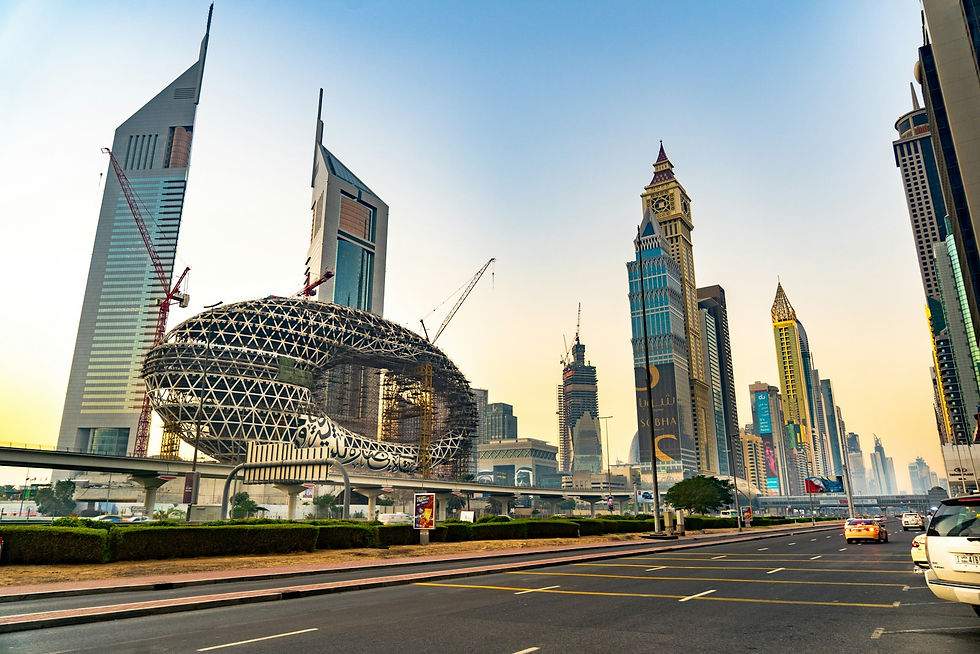
Photo: Dubai skyline, residential, office and warehouse images via Unsplash (Unsplash License), used illustratively to depict the sectors discussed — they are general scenes, not photographs of any specific JLL-surveyed asset.


Comments