


Dubai Energy and Climate Initiatives Guide 2026: Clean Power Projects, Net Zero Targets & Regulations
Standing at the foot of the 262-meter concentrated solar power tower at the Mohammed bin Rashid Al Maktoum Solar Park in Seih Al Dahal, the scale of Dubai's clean energy transition hits you immediately. Mirrored heliostats stretch across thousands of hectares of desert sand, reflecting blinding rays of sunlight toward the central receiver to store thermal energy and power homes long after sunset.
Over the past six months, Dubai has moved from broad climate pledges into aggressive execution across solar generation, grid decarbonization, industrial water recycling, and mandatory commercial energy efficiency standards. Here is the practical guide to the newest energy and climate initiatives reshaping the emirate, what targets they carry, and how they impact everyday residents and businesses.
At a glance | Details |
|---|---|
Clean Energy Target | 100 percent clean energy capacity by 2050 |
Flagship Project | Mohammed bin Rashid Solar Park 5000 MW target |
Solar Energy Share | Over 17 percent of Dubai grid mix in 2026 |
Green Building Code | Al Safat green building rating system |
Regulatory Body | Dubai Supreme Council of Energy and DEWA |
Mohammed bin Rashid Al Maktoum Solar Park: Expansion Phases and Storage Milestones
The Mohammed bin Rashid Al Maktoum Solar Park remains the primary engine driving Dubai's decarbonization schedule. Covering a planned 77 square kilometers in the southern desert, the mega-facility is designed to reach an ultimate capacity of 5,000 megawatts by 2030 with total planned investments reaching AED 50 billion.
According to data published by the DEWA official portal, the operational generation capacity across commissioned photovoltaic and concentrated solar power phases now exceeds 2,600 megawatts. This infrastructure supplies more than 17 percent of Dubai's peak electricity demand with zero direct carbon emissions during daylight hours.
Concentrated Solar Power and Thermal Storage
The fourth phase of the complex integrates three distinct clean technologies: a 100-megawatt central tower, three parabolic trough collectors producing 600 megawatts, and 250 megawatts of photovoltaic panels. Its central molten salt thermal storage system holds heat for up to 15 hours, allowing turbines to supply base-load power through the night.
Phase Six Grid Integration and Competitive Tariffs
The sixth phase of the development is deploying high-efficiency bi-facial solar panels with single-axis tracking systems. By capturing reflected sunlight from the desert sand beneath the panels, this phase achieved one of the lowest levelized costs of electricity in the world at 1.621 US cents per kilowatt-hour.
Seeing the molten salt storage tanks operational at Seih Al Dahal proves that Dubai is serious about generating solar electricity around the clock.
Dubai Clean Energy Strategy: Milestones and Decarbonization Targets
Dubai's climate policy operates under two closely aligned frameworks: the Dubai Clean Energy Strategy 2050 and the Net Zero Carbon Emissions Strategy 2050. These strategies set mandatory intermediate generation targets for each decade, compelling state utilities and private industrial operators to systematically retire older fossil generation in favor of renewables.
Federal sustainability frameworks outlined on the UAE Government Portal confirm that Dubai has consistently met its interim capacity milestones ahead of schedule. The policy prioritizes a diversified energy mix that balances solar photovoltaic generation, thermal energy storage, pumped-storage hydroelectric power in Hatta, and district cooling efficiency.
Target Year | Clean Energy | Key Focus |
|---|---|---|
2030 | 25 percent | Solar and storage |
2040 | 50 percent | Hydro and grid |
2050 | 100 percent | Full net zero |
Commercial Building Retrofits and Al Safat Green Building Regulations
Decarbonizing energy consumption is just as critical as expanding clean generation. Cooling accounts for roughly 70 percent of peak electricity demand in the UAE during summer months, making architectural efficiency and chiller plant retrofits the fastest route to reducing emirate-wide emissions.
Mandatory construction standards set by Dubai Municipality through the Al Safat green building evaluation system require all new commercial properties, warehouses, and multi-family residential towers to comply with strict thermal insulation and water preservation metrics. In addition, the Etihad Energy Services Company has already retrofitted over 8,000 existing buildings across the emirate, generating guaranteed utility savings for property owners.
Mandatory smart meter integration for all newly commissioned commercial spaces
High-efficiency chiller plant upgrades delivering over 20 percent power reductions
Low-VOC interior coatings and certified sustainable building envelope insulation
Automated greywater recycling systems for landscaping and toilet flushing
Rooftop solar photovoltaic installations under the updated Shams Dubai scheme
Green Hydrogen and Alternative Fuel Innovations at the DEWA R and D Centre

Heavy industry, marine shipping, and long-haul aviation present the toughest decarbonization challenges. To address sectors that cannot be electrified directly through batteries, Dubai has invested heavily in green hydrogen production and testing facilities at the DEWA Research and Development Centre.
Policy decisions issued by the Dubai Supreme Council of Energy support pilot programs that deploy green hydrogen for clean public mobility and industrial gas blending. The pilot electrolysis plant at the solar park produces clean hydrogen using surplus solar power during midday generation peaks.
Solar Electrolysis Production Facility
The plant utilizes polymer electrolyte membrane electrolysis driven entirely by daytime solar electricity. The system compresses and stores clean hydrogen on-site, serving as a zero-emission fuel testbed for commercial transport fleets and stationary power generators.
Testing Clean Mobility and Heavy Transport Solutions
Field trials are currently evaluating hydrogen fuel cell buses and heavy logistical trucks operating between Dubai industrial zones and Jebel Ali Port. These pilots gather real-world telemetry on component durability, fuel cell degradation, and cooling efficiency under extreme desert temperatures.
Green hydrogen will bridge the gap for heavy logistics and industrial manufacturing where direct battery power remains impractical.
Waste to Energy and Resource Recovery: The Warsan Thermal Facility
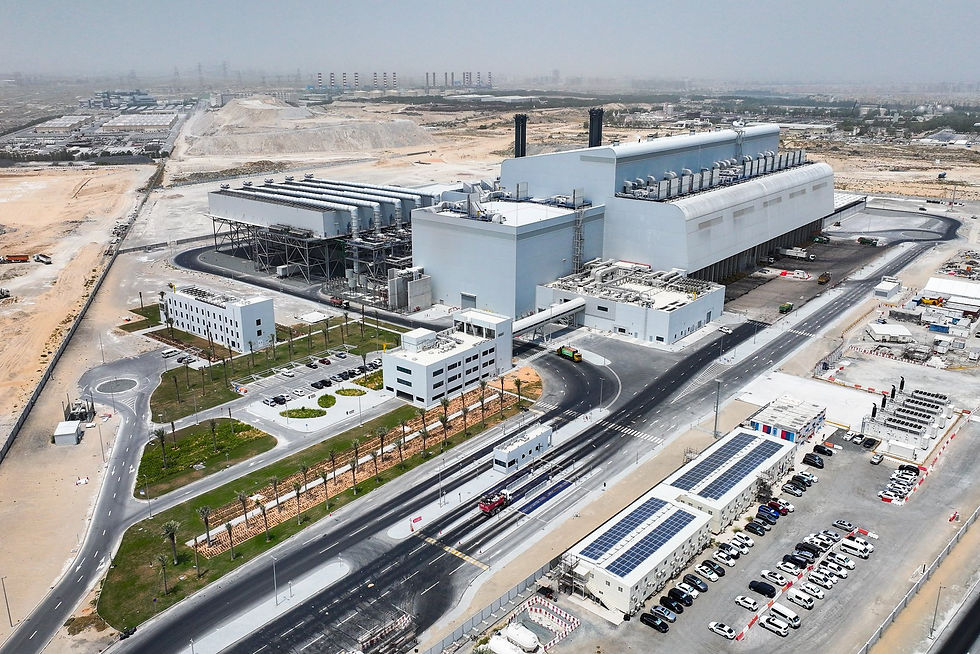
Handling municipal solid waste while generating base-load power is another cornerstone of Dubai's circular economy strategy. The Dubai Waste Management Centre located in Warsan represents the world's largest waste-to-energy facility, designed to divert massive volumes of municipal refuse away from municipal landfills.
Official project progress announcements documented by the Emirates News Agency highlight that the Warsan complex processes 5,555 tonnes of municipal non-recyclable solid waste every single day. The thermal conversion process generates approximately 200 megawatts of clean electricity, enough to power 135,000 local homes continuously.
Public Transit Electrification and Sustainable Mobility Rollouts
Transport decarbonization in Dubai connects directly to city-wide climate targets. The Roads and Transport Authority has committed to transforming all public buses, government limousines, and franchised taxis into clean, hybrid, or fully electric fleets ahead of 2050.
Public transit electrification goals managed by RTA Dubai are supported by expanding EV Green Charger stations installed across public parking areas, metro stations, and highway service plazas. Residents and fleet operators benefit from dedicated green vehicle incentives, including free public charging permits and discounted registration renewals.
Check utility consumption patterns through the DEWA smart living portal online.
Set domestic programmable air conditioning thermostats to 24 degrees Celsius during peak hours.
Upgrade standard interior light fittings to certified high-efficiency LED units.
Apply for rooftop solar panel grid connection approval via the official DEWA portal.
FAQ
What is Dubai's target for clean energy by 2050?
Under the Dubai Clean Energy Strategy 2050 and the Net Zero Carbon Emissions Strategy 2050, the emirate aims to produce 100 percent of its total power capacity from clean and renewable energy sources.
How does the Shams Dubai initiative work for private property owners?
Shams Dubai allows residential and commercial property owners to install photovoltaic solar panels on their rooftops. The electricity generated powers the building directly, and any surplus is fed into the DEWA grid, offsetting subsequent utility bills via net metering.
What is the planned total capacity of the Mohammed bin Rashid Al Maktoum Solar Park?
The Mohammed bin Rashid Al Maktoum Solar Park is planned to reach a total production capacity of 5,000 megawatts by 2030, with over 2,600 megawatts already commissioned across its solar photovoltaic and concentrated solar power phases.
What are the Al Safat green building regulations in Dubai?
Al Safat is Dubai's mandatory green building evaluation system enforced by Dubai Municipality. It rates structures from Bronze to Platinum based on energy efficiency, water conservation, indoor environmental quality, and sustainable material usage.
Useful Links
DEWA official portal — Check utility tariffs and sustainability initiatives
UAE Government Portal — Review national net zero strategies and legislation
Dubai Municipality — Download Al Safat green building codes
Dubai Supreme Council of Energy — Access emirate energy policy and transition targets
Emirates News Agency — Read official green energy development bulletins
RTA Dubai — Explore green mobility and electric bus rollouts
Pair It With

— Angel Tyagi, Creator of Angel In Dubai
Prices, timings and availability may change — always check directly with the venue before visiting. Not sponsored.
Story lead: gulfnews.com. Reporting can be updated or withdrawn after publication — always check the original before relying on anything here.
Rates and figures are indicative and were correct as of 2 October 2026; they change often, so verify with the provider before acting. This is general information, not financial advice.
Rules, fees and deadlines change often. This is a general summary, not legal advice — confirm with the relevant UAE authority before acting.
Photo by LOOK: Massive solar park in Dubai provides clean energy to 240,000 ... via web, Photo by Warsan Waste-to-Energy Plant Enters Full Operation, Advancing Dubai’s ... via web, Photo by web via web


Comments