


How to Sell Gold Jewellery in Dubai Souk: 2026 Buyback Rates, Stone Deductions, and ID Rules
I stood across the glass showcase inside a bustling Deira shop as the counter merchant placed an old twenty-two karat bangle onto his calibrated digital scale. The display read twenty-four point six grams, but turning broken heirlooms or unworn rings into hard cash across the lanes of the Gold Souk requires far more than calculating simple weight. Between scrap discounts below daily spot rates, aggressive stone weight deductions, and rigorous police identity logging, liquidating personal jewellery in Dubai requires clear preparation before you hand over a single piece.
Whether you want to take advantage of recent market price shifts or simply declutter your safe deposit box, selling precious metals in Dubai is remarkably fast and liquid once you know the rules. The entire process takes under fifteen minutes per shop when your paperwork is in order. Understanding how merchants separate metal value from making charges ensures you walk away with the maximum dirham payout rather than an unexpected haircut at the counter.
At a glance | Details |
|---|---|
Typical Scrap Spread | AED 2 to 5 below spot per gram as of November 2026 |
Mandatory ID | Original Emirates ID or tourist passport with entry stamp |
Primary Trading Hub | Deira Gold Souk and Gold and Diamond Park |
Payment Method | Instant cash up to AED 10,000 or direct bank transfer |
Stone Deduction | 100 percent deduction of gross gem and enamel weight |
How Scrap Gold Buyback Pricing Works in Dubai
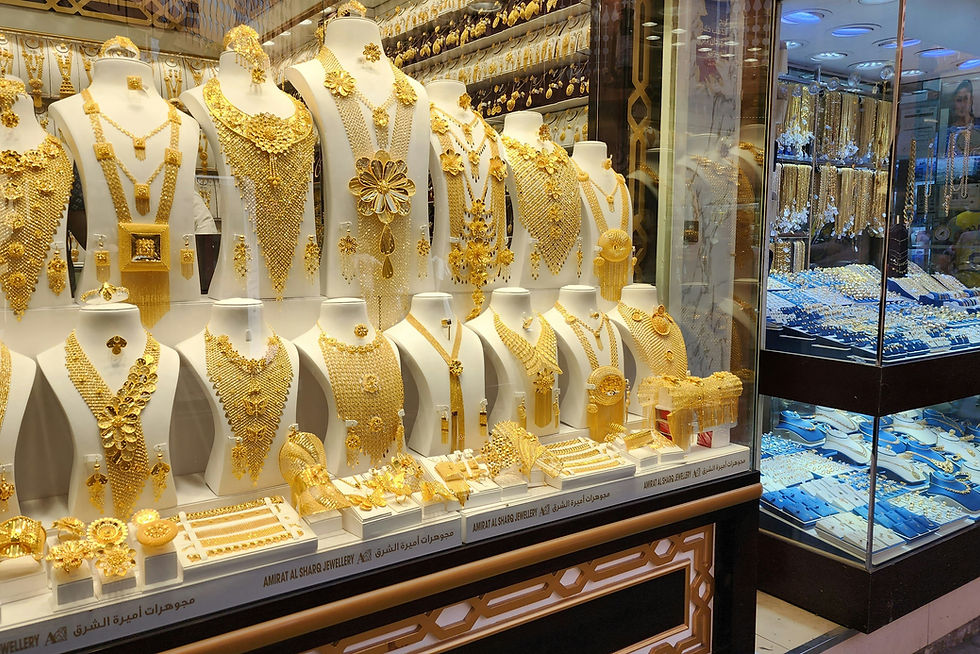
Every morning the official board rate is established by the Dubai Jewellery Group to reflect international bullion movements and local retail demand. When you purchase jewellery from a retail showroom, your receipt includes the daily gold price plus craftsmanship fees known as making charges, which typically range from fifteen to thirty-five dirhams per gram. When you return to sell that item back into the market, merchants buy strictly scrap gold, meaning every single dirham previously paid for artistry, branding, or intricate design is completely written off.
As of 3 November 2026, retail 24k gold traded around AED 332 per gram, 22k traded around AED 307 per gram, and 18k traded around AED 251 per gram according to the Dubai Jewellery Group. When selling scrap, expect counter bids to sit between two and five dirhams below the prevailing market board rate per gram to accommodate dealer refinery fees and melting margins. Indicative — verify with the jeweller or merchant. This is not financial advice.
Retail Board Rates Versus Scrap Spot
Retail rates posted on electronic boards throughout Deira represent the selling price for new jewellery rather than guaranteed buyback figures. When a dealer acquires scrap, they calculate payout based on melt value, which discounts the metal slightly to account for batch assaying and transit to regional refineries.
The Making Charge Haircut
Because handcrafted filigree and machine-pressed chains carry identical scrap value upon melting, ornate antique sets lose a larger percentage of their initial retail purchase price than simple machine-cast gold biscuits. Viewing personal jewellery as pure weight rather than wearable art prevents sticker shock when evaluating dealer quotes.
Purity | Indicative Scrap | Target Spread |
|---|---|---|
24K Bullion | AED 328 to 330 | AED 2 to 4 off |
22K Jewellery | AED 302 to 305 | AED 3 to 5 off |
18K Jewellery | AED 246 to 249 | AED 4 to 6 off |
Mandatory Dubai Police ID Rules and Verification Requirements
Under strict regulatory guidelines enforced by Dubai Police, every retail jeweller purchasing pre-owned precious metals must verify and record seller identity. The emirate maintains zero tolerance for unregistered trade in secondary metals, requiring merchants to log every buyback transaction directly into a secure municipal network before handing over any payment. Attempting to liquidate gold without formal government identification is strictly prohibited across all licensed retail outlets.
Residents must provide documentation recognized on the UAE Government Portal, including valid residency status and updated civil identity records. Counter staff scan your physical card into a specialized card reader, capture a real-time photograph of the pieces laid beside the transaction voucher, and log the exact weight. This electronic paper trail protects legitimate consumers while ensuring that lost or stolen goods cannot enter the commercial supply chain.
Original physical Emirates ID for UAE residents or original passport with valid entry stamp for visiting tourists
Complete merchant log entry capturing full legal name, nationality, identity document number, and working phone contact
High-resolution digital photograph of the jewellery items positioned on the certified scale counter beside the buyback receipt
Original store invoice or authenticity certificates whenever accessible to verify legitimate personal acquisition history
Never attempt to sell scrap gold without your original physical identification card because merchants face immediate license suspension for unverified buybacks.
Purity Testing Methods at Souk Counters
Before any merchant writes an offer, your gold undergoes rigorous assay testing to confirm exact karat purity. Hallmarks stamped inside ring bands or bracelet clasps provide an initial reference, but dealers never rely entirely on surface stamps because solder joints, internal clasps, and wear often alter total fineness across aged jewellery collections.
Most modern establishments in Deira and the Gold and Diamond Park utilise non-destructive X-ray fluorescence spectrometers. These desktop machines analyze the elemental composition within thirty seconds without scratching or damaging the metal. For older or unhallmarked items, traditional testing involves rubbing the piece against a smooth touchstone and applying nitric acid solutions calibrated to eighteen, twenty-one, and twenty-two karats to observe metal reaction.
Non-Destructive XRF Spectrometry
Advanced XRF analysis determines precise percentages of gold, silver, copper, and zinc across the alloy. The digital readout displays purity down to one hundredth of a percent, eliminating subjective appraisal disputes between buyer and seller.
Touchstone and Acid Testing
If a piece contains hollow chambers or heavy internal solder, the merchant may request permission to make a discreet surface filing. Acid testing confirms whether an item is solid alloy or heavy electroplate over a base metal core.
Understanding Gross Versus Net Weight and Stone Deductions
One of the most frequent surprises for first-time gold sellers is the complete deduction of non-gold elements. When you place a stone-studded necklace on the scale, the digital reading reflects gross weight. Gold buyers pay strictly for net gold content, which means every embedded cubic zirconia, synthetic pearl, colored bead, and enamel coating is subtracted from the total.
Unless your jewellery contains substantial, certified natural diamonds with recognized grading paperwork, generic commercial gemstones carry zero scrap value in traditional buyback shops. Merchants will either extract stones on the counter using specialized pliers or calculate an estimated deduction by eye and caliper measurement. Familiarizing yourself with this process ensures you are not paying for heavy synthetic stones when computing expected proceeds.
Request a gross weight measurement on a certified Class II dual-display trade scale visible to both parties
Instruct the merchant to gently remove synthetic stones and decorative crystals if you wish to preserve the gems
Verify the agreed manual stone weight deduction in grams before signing the item appraisal ticket
Confirm the final net gold weight displayed on the counter screen prior to multiplying by the scrap rate
Payment Channels and Tax Implications for Sellers
Cash transactions and merchant electronic payouts operate under regulatory benchmarks set by the Central Bank of the UAE to safeguard consumer finances. For transactions under ten thousand dirhams, merchants typically disburse immediate cash directly across the counter, complete with an official police-cleared voucher and payment receipt. For higher-value transactions involving heavy bullion bars or extensive bridal sets, dealers initiate instant bank transfers or issue account payee cheques.
According to statutory guidelines from the Federal Tax Authority, private individuals disposing of personal effects are exempt from charging value-added tax on scrap gold. Licensed dealers operate under established commercial profit margin schemes for second-hand goods, meaning your scrap liquidation payout is entirely free from personal tax deductions or unexpected processing surcharges at the point of sale.
If your payout exceeds AED 10,000, ask the merchant for a direct UAE bank transfer rather than carrying substantial cash stacks through the souk alleys.
Step-by-Step Strategy to Maximise Your Cash Payout
Walking through the bustling covered pedestrian arcades of the historic Dubai Gold Souk in Deira provides access to more than three hundred retail outlets. Because individual shop margins and refinery contracts vary slightly, taking a methodical approach to counter negotiations will reliably generate several hundred additional dirhams on a medium-sized family gold collection.
Never accept the first offer presented at the entrance of the market where foot traffic is highest. Walking deeper into the central trading lanes where independent bullion traders and wholesale scrap dealers operate consistently yields tighter spreads and fairer stone deduction estimates. Keep your identification ready and maintain a firm understanding of your items net weight throughout each conversation.
Check the morning market price board published by Dubai Jewellery Group before travelling to the souk
Sort your jewellery at home by stamped karat markings so eighteen, twenty-one, and twenty-two karat items remain separate
Weigh each purity batch on a digital kitchen or pocket scale to establish your baseline gram benchmark
Visit at least three independent gold merchants within the covered arcade to solicit comparative net scrap bids
Inspect the final printed buyback voucher to ensure the recorded net weight and per-gram rate match the agreed quote
FAQ
Do I need the original purchase receipt to sell gold jewellery in Dubai?
While presenting your original store invoice simplifies ownership verification, it is not legally compulsory for selling personal jewellery. Licensed merchants can complete the buyback as long as you provide your original physical Emirates ID or tourist passport and the jewellery passes all counter purity checks.
Can tourists sell gold jewellery in the Dubai Gold Souk?
Yes, tourists visiting Dubai can legally sell gold at any licensed merchant in the Gold Souk. You must present your original valid passport with an entry stamp so the merchant can enter your details into the mandatory Dubai Police verification portal before issuing payment.
Do Dubai gold shops buy back diamonds and precious gemstones?
Standard scrap gold dealers only pay for net precious metal content and deduct generic stones, pearls, or cubic zirconia. If your piece features high-quality natural diamonds, you should take it to a specialized certified diamond dealer with original gemological certificates rather than selling it as melt scrap.
Is VAT deducted when an individual sells old gold in Dubai?
No, private individual consumers do not pay or deduct five percent VAT when selling pre-owned personal jewellery. Licensed UAE gold dealers handle tax reporting under the Federal Tax Authority margin scheme for second-hand goods, so your agreed quote is what you receive.
Useful Links
Dubai Police — Verify official precious metal trade compliance
Dubai Jewellery Group — Check daily gold retail board prices
Federal Tax Authority — Read consumer VAT regulations and guides
Central Bank of the UAE — Review retail consumer financial protection standards
UAE Government Portal — Verify identity documents and residency status
Dubai Gold Souk — Navigate to historic Deira souk entrance
Pair It With

— Angel Tyagi, Creator of Angel In Dubai
Prices, timings and availability may change — always check directly with the venue before visiting. Not sponsored.
Story lead: gulfnews.com. Reporting can be updated or withdrawn after publication — always check the original before relying on anything here.
Rates and figures are indicative and were correct as of 3 November 2026; they change often, so verify with the provider before acting. This is general information, not financial advice.
Rules, fees and deadlines change often. This is a general summary, not legal advice — confirm with the relevant UAE authority before acting.
Photo by Exploring Dubai's Iconic Landmarks Through Photography via web, Photo by sarim k via unsplash



Comments