


Sustainable Corporate Banking in the UAE 2026: Green Loan Guide
Sitting in a glass conference room along Sheikh Zayed Road in October 2026, I watched a corporate treasury team finalize a credit facility that would have taken months to clear just two years ago. The bank credit committee signed off on a multi-million dirham expansion loan in under twelve business days because the borrower linked their capital expenditure directly to verifiable solar installation and water recycling benchmarks.
Corporate banking in the UAE is experiencing a fundamental structural shift as financial institutions align commercial balance sheets with national net-zero targets. For CFOs, business founders, and institutional treasurers, sustainability is no longer merely a corporate social responsibility talking point; it is the most effective mechanism to secure faster lending approvals and lower borrowing spreads. In this guide, I analyze how commercial lenders evaluate green debt applications, the specific discount margins available, and the operational steps required to qualify as of October 2026. Please note that all borrowing terms and pricing figures are indicative as of October 2026, and this guide provides editorial market analysis rather than financial advice.
At a glance | Details |
|---|---|
Evaluation Date | October 2026 banking benchmark |
Margin Discount | Up to 50 basis points on green facilities |
Fast Track Turnaround | 10 to 14 business days for ESG loans |
Minimum Facility | From AED 5,000,000 for mid-market corporates |
Regulatory Hub | Central Bank of the UAE sustainability mandate |
How Green Finance is Transforming UAE Corporate Lending in 2026
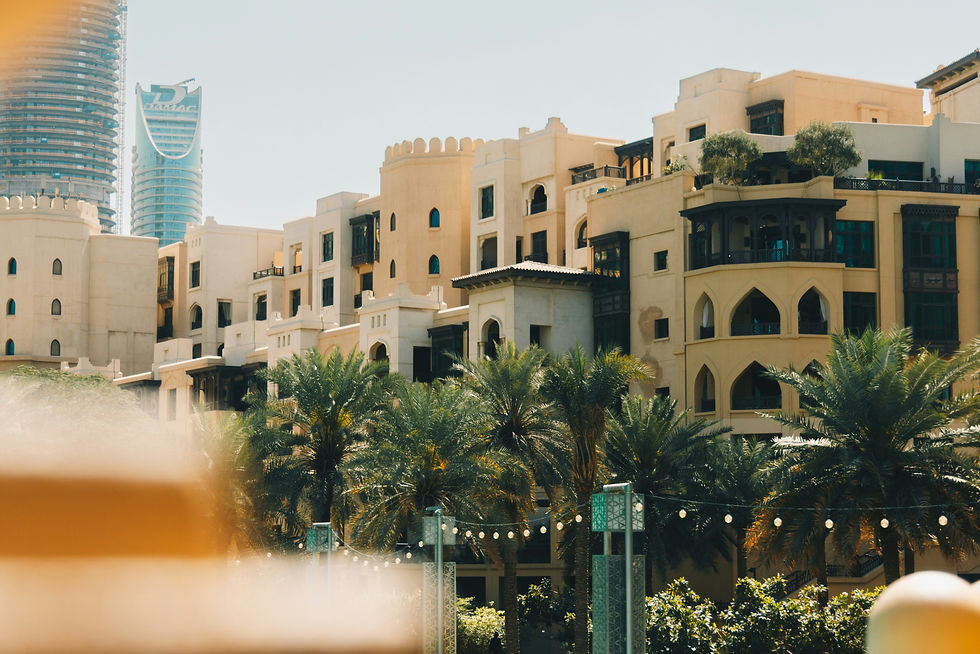
Walking into corporate banking meetings across Dubai this year, the conversation has fundamentally shifted from generic credit lines to verified decarbonization covenants. CFOs and treasury heads are finding that aligning capital expenditure with verifiable sustainability benchmarks unlocks lower borrowing margins and priority committee approvals.
Accelerated underwriting for sustainable debt is not merely a branding exercise; it reflects national regulatory directives. Circulars issued by the Central Bank of the UAE require tier-one commercial lenders to embed environmental risk metrics into standard underwriting. As of October 2026, over AED 190 billion in cumulative sustainable financing has been deployed across the country, according to financial sector tracking. All borrowing rates and credit structures cited in this guide are indicative as of October 2026; verify with the bank/developer or lending institution directly, as this analysis is for informational purposes and this is not financial advice.
Tying your corporate debt facility to measurable energy reduction is now the fastest way to pass bank risk committees.
Fast-Track Approval Timelines and Lending Margin Discounts
Commercial borrowing in the UAE historically required eight to twelve weeks of documentation review before reaching final credit committee sign-off. Green-certified facilities have compressed this timeline significantly by utilizing standardized environmental risk templates and dedicated sustainable finance desks.
Approval Acceleration and Documentation
Under fast-track frameworks operating as of October 2026, qualified corporate borrowers with verified ESG audits can secure credit committee sanction within ten to fourteen business days. Lenders bypass redundant manual assessments when documentation matches accredited taxonomy standards.
Pricing Concessions and Margin Spreads
Banks reward compliant borrowers through margin step-downs. As of October 2026, green commercial facilities carry pricing discounts ranging between 25 and 50 basis points below standard commercial margins, typically benchmarked against the Central Bank Base Rate or three-month EIBOR. All margin reductions and interest rates are indicative — verify with the bank/developer before committing, as terms depend on company balance sheet strength.
Free Zone Frameworks: DIFC and ADGM Sustainable Finance
The UAE financial free zones have built specialized ecosystems that connect regional corporate issuers with global institutional liquidity. These jurisdictions offer dedicated capital market incentives and clear legal frameworks under common law.
DIFC Sustainable Finance Framework
Within the financial free zone of DIFC, companies structuring sustainability-linked debt benefit from expedited regulatory review pipelines. As of October 2026, the centre waives selected commercial licensing and listing fees for verified green debt issuances, reducing upfront legal structuring costs.
ADGM Regulatory Incentives
Across the capital, the financial centre of ADGM offers dedicated green bond framework exemptions and sustainability certification grants. Companies operating within the hub can tap structured green trade credit lines and ESG syndicated lending syndicates with cross-border institutional participation.
Corporate Eligibility Criteria for Green Capital Facilities
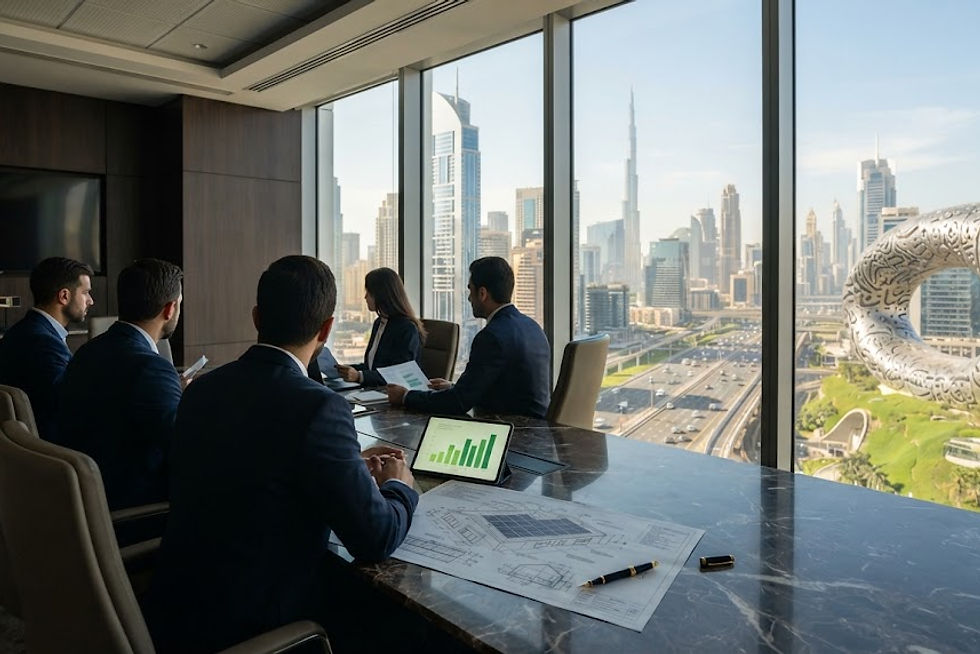
Securing sustainable corporate facilities requires demonstrating authentic environmental impact rather than superficial compliance. Financial institutions audit project blueprints against strict taxonomy guidelines before issuing preliminary terms.
Technical Audit and Carbon Reduction
Lenders require an independent technical audit verifying a minimum fifteen percent reduction in operational carbon intensity, energy consumption, or water usage as of October 2026. Practical certification assistance from the Dubai Chamber of Commerce helps mid-sized enterprises align local supply chains with global ESG standards.
Annual Monitoring and Reporting Covenants
Borrowers must accept ongoing reporting covenants throughout the loan tenure. Failure to provide third-party verification of agreed sustainability targets triggers margin step-ups, causing the interest rate to revert to standard commercial pricing. Strategic guidelines published by the Ministry of Economy provide preferential commercial licensing support for certified clean-energy enterprises.
A green margin discount only holds value if your engineering team can consistently prove annual efficiency gains.
Comparing Standard Commercial Loans Versus Green Facilities in 2026
Choosing between conventional working capital lines and sustainable project debt requires evaluating upfront audit costs against ongoing margin savings. The table below outlines key operational differences observed across UAE commercial lenders as of October 2026.
All figures and timeframes are indicative as of October 2026; verify with the bank/developer or relationship manager before applying. Beyond headline interest rates, corporate borrowers should consider these structural parameters:
Third-party environmental audit expenses typically range from AED 30,000 to AED 75,000 as of October 2026.
Margin savings compound substantially on capital facilities exceeding AED 25,000,000 in principal.
Cross-default clauses can link sustainability covenant breaches to broader credit facility reviews.
Refinancing existing commercial real estate under green building certifications unlocks retrofitting capital.
Feature | Standard Loan | Green Facility |
|---|---|---|
Approval Time | 6 to 8 weeks | 2 to 3 weeks |
Borrowing Margin | Base + 2.50% | Base + 2.05% |
Minimum Size | AED 2,000,000 | AED 5,000,000 |
Audit Requirement | Financial only | Technical ESG |
Fee Waivers | Standard fees | Discounted fees |
Application Roadmap for Fast-Track Sustainable Corporate Loans
Transitioning your corporate borrowing to a green debt facility requires cross-functional coordination between your finance, legal, and operational teams. Comprehensive policy overviews on the UAE Government Portal outline the roadmap toward national net-zero economic targets by 2050.
Corporate entities developing commercial real estate assets often align their financing models with institutional developer guidelines, while companies assess in-country procurement weighting using local supplier scoring frameworks to strengthen their institutional profile. Meanwhile, exporting and cross-border commercial service entities operating from free zones must confirm qualifying tax rules when managing interest expense deductions.
To ensure your application moves through bank underwriting without administrative delay, follow this structured five-step preparation sequence:
Commission an accredited third-party energy or emissions baseline audit across your operational facilities.
Formulate explicit Key Performance Indicators such as twenty percent solar power substitution by year two.
Select a lead corporate bank with an active sustainable finance desk and request green facility pre-screening.
Submit audited financial statements alongside the green validation report to the specialized credit committee.
Establish internal tracking protocols to deliver annual audited ESG compliance certificates before renewal dates.
FAQ
What is the minimum loan amount for sustainable corporate banking in the UAE?
Most tier-one UAE commercial banks require a minimum ticket size of AED 5,000,000 to AED 10,000,000 for customized sustainability-linked loans as of October 2026. However, specialized development institutions such as Emirates Development Bank offer targeted green financing programs for small and medium enterprises starting from AED 1,000,000 with up to fifty percent working capital credit guarantees.
What happens if a company fails to meet its green sustainability targets?
Sustainability-linked credit facilities incorporate a two-way pricing mechanism defined in the loan documentation. If an independent auditor confirms that your business failed to meet agreed annual sustainability metrics, the lender applies a contractual margin penalty of 25 to 50 basis points, effectively reverting the loan to standard commercial pricing without triggering automatic loan default.
Are green loans available to startups and early-stage companies in Dubai?
Early-stage enterprises generally face tighter eligibility criteria because commercial banks require at least two to three years of audited balance sheets. However, green technology startups operating in hubs like DIFC or Masdar City can access specialized venture debt pools and government-backed innovation funds that prioritize carbon-neutral technologies over traditional collateral.
Can existing conventional corporate loans be converted into green facilities?
Yes, several UAE commercial lenders permit corporate clients to refinance or restructure existing term loans and revolving facilities into sustainability-linked debt. This conversion requires conducting a formal environmental audit and agreeing to binding carbon reduction covenants upon the next facility renewal cycle.
Useful Links
Central Bank of the UAE — Official sustainable finance guidelines and banking circulars
DIFC — Sustainable finance framework and corporate registration rules
ADGM — Green bond issuance and sustainable capital regulations
Dubai Chamber of Commerce — ESG business accreditation and commercial trade services
Ministry of Economy — National green economy policies and commercial incentives
UAE Government Portal — Federal sustainability initiatives and corporate compliance standards
Pair It With

— Angel Tyagi, Creator of Angel In Dubai
Prices, timings and availability may change — always check directly with the venue before visiting. Not sponsored.
Story lead: gulfnews.com. Reporting can be updated or withdrawn after publication — always check the original before relying on anything here.
Rates and figures are indicative and were correct as of 11 October 2026; they change often, so verify with the provider before acting. This is general information, not financial advice.
Rules, fees and deadlines change often. This is a general summary, not legal advice — confirm with the relevant UAE authority before acting.
Photo by Damian Kamp via unsplash, Photo by Damian Kamp via unsplash, Photo by AI-generated illustration via gemini



Comments