


How Tesla Cybercab Robotaxi Launch Works in 2026: Specs, Fares & UAE Rollout Guide
- 2 hours ago
- 5 min read
Standing beside the futuristic, steering-wheel-free prototype at a recent Dubai mobility summit, I could feel the sheer shift in how we will navigate our cities. The promise of fully autonomous transportation is no longer a distant sci-fi concept; with Tesla's Cybercab preparing for its commercial launch, point-to-point driverless travel is entering real-world fleet service. As of August 2026, urban commuters across global tech hubs and the GCC are watching closely as regulatory frameworks align with vision-only autonomous driving.
In this comprehensive guide, I break down the engineering specifications, projected operational economics, regulatory milestones, and what the Cybercab means specifically for UAE residents and Dubai's ambitious self-driving transport targets. Please note: this analysis includes indicative financial projections and operational metrics—verify all figures with official operators and regulators before making transit investment decisions. This article is for informational purposes and is not financial advice.
Tesla Cybercab Hardware & Autonomous Vision Architecture (2026)

Tesla's Cybercab represents a radical departure from traditional automotive design by entirely omitting the steering wheel, accelerator pedal, and side view mirrors. As of August 2026, the two-seater vehicle relies exclusively on Full Self-Driving (FSD) vision-based architecture, utilizing high-resolution cameras integrated around the chassis paired with Tesla's AI Inference Hardware 4.
Unlike traditional autonomous shuttle designs that incorporate expensive LiDAR and HD radar arrays costing upwards of $10,000 per vehicle (indicative — verify with manufacturers as of August 2026), Tesla's vision-only approach relies heavily on deep neural networks trained on billions of real-world driving miles. (Source: Tesla Official Engineering Releases).
The vehicle design prioritizes aerodynamics and low maintenance, removing legacy mechanical links to maximize fleet uptime in high-density urban ride-hailing networks.
Inductive Wireless Charging Infrastructure
One of the standout technical innovations of the Cybercab is its automated wireless charging pad interface. Fleet management systems can autonomously route vehicles to dedicated charging pads, achieving rapid wireless charging without human intervention.
Dual butterfly doors designed for seamless curbside passenger entry and exit.
Inductive wireless charging system eliminating the need for manual plug-in charging ports.
Large central infotainment touchscreen providing real-time route tracking, media streaming, and climate control.
Optimized two-passenger cabin layout prioritizing trunk space and legroom.
Stepping inside a car without a steering wheel feels uncanny at first, but vision-based AI is rewriting the economics of urban transit.
Expected Fares vs Traditional Ridesharing: Operational Cost Breakdown
The primary value proposition of driverless robotaxis lies in reducing the per-mile cost of urban transport. By removing driver labor expenses and optimizing battery degradation cycles, Tesla projects an operating cost of roughly $0.20 per mile (AED 0.73 per mile) as of August 2026 (indicative — verify with platform operators; Source: Tesla Investor Relations).
For UAE residents accustomed to Uber, Careem, or conventional Dubai Taxi fares averaging AED 2.50 to AED 3.50 per kilometer, autonomous ride-hailing could dramatically reduce monthly commuting costs across major corridors.
Per-Mile Transit Economics
When comparing autonomous fleet operations against personal car ownership in Dubai, total cost of ownership shifts dramatically. Factoring in insurance, maintenance, fuel/charging, and parking, owning a mid-size sedan costs approximately AED 1.80 per kilometer over five years.
Transport Option | Est. Fare / Km (AED) | Driver Cost Component | Source / Basis (Aug 2026) |
|---|---|---|---|
Tesla Cybercab (Projected) | AED 0.75 - 1.10 | None (100% Autonomous) | Tesla Investor Day (Indicative) |
Standard Dubai Taxi (RTA) | AED 2.21 + Base AED 12 | Included in Fare | RTA Dubai Official Rates |
Careem / Uber Select | AED 2.80 - 3.50 | Included in Fare | Platform App Estimates |
Private Car Ownership | AED 1.75 - 2.10 | N/A (Owner Driven) | UAE Automotive Benchmark |
Regulatory Approval Landscape: Global Standards & UAE Autonomous Strategy
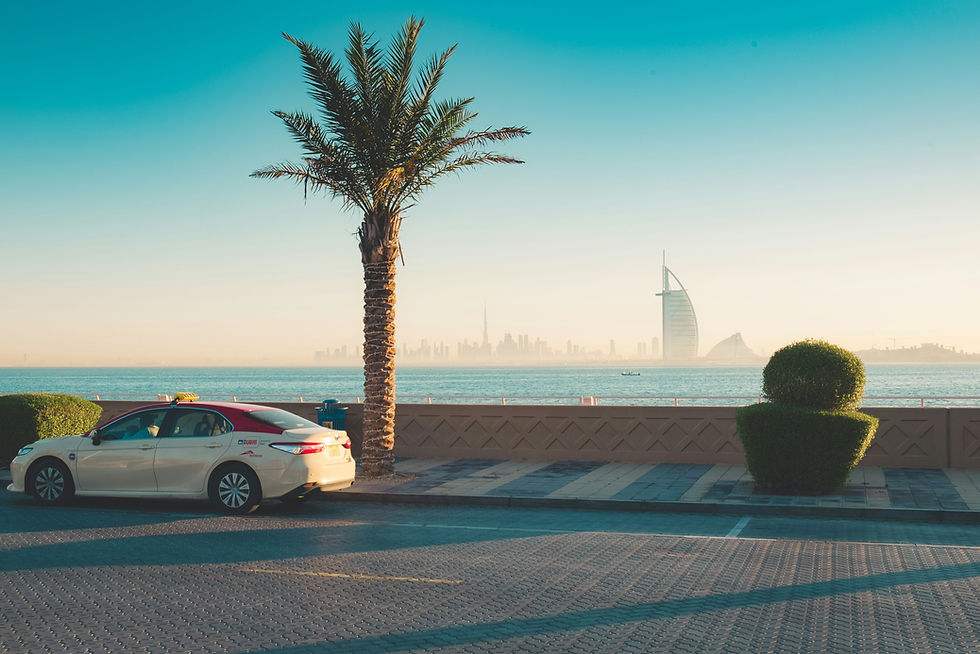
Deploying fully autonomous vehicles without human backup drivers requires strict regulatory compliance across safety, cybersecurity, and insurance protocols. In the United States, NHTSA permits and state-level DMV approvals are required for driverless commercial operation.
In the UAE, Dubai's Roads and Transport Authority (RTA) has set a clear benchmark with the Dubai Autonomous Transportation Strategy, aiming to transform 25% of total mobility trips into smart and driverless journeys by 2030 (Source: RTA Dubai, as of August 2026).
RTA autonomous vehicle testing framework and safety certification standards.
Integration with Dubai's centralized intelligent traffic management network.
Clear liability and insurance frameworks established under UAE transport laws.
UAE Self-Driving Infrastructure & Local Impact for Expats
For residents and expats living in Dubai and Abu Dhabi, the integration of Cybercabs could reshape urban planning and residential property choices. Communities further from Metro stations, such as Dubai South, DSO, or Dubailand, stand to benefit tremendously from low-cost autonomous feeder services.
Furthermore, integration with local ride-hailing regulations and mapping protocols will determine how quickly commercial fleets launch across key districts like DIFC, Downtown Dubai, and Dubai Marina.
Impact on Real Estate & Parking Demand
Reduced reliance on private vehicle ownership will likely decrease parking space requirements in new residential towers, creating opportunities for green space and community amenities.
When robotaxis drop transit costs below AED 1 per km, living further from metro stations suddenly makes perfect financial sense.
Timeline to Global Commercial Fleet Deployment (2026–2027)
Tesla's roadmap indicates initial commercial fleet trials beginning in select US metro areas before expanding internationally. Mass production of the dedicated Cybercab is slated to scale throughout 2026 and 2027, subject to regulatory greenlights (Source: Tesla Financial Reports, as of August 2026).
As UAE transport authorities evaluate driverless vehicle trials, commercial availability in Dubai could mirror pilot rollouts seen with existing autonomous shuttle initiatives across smart zones.
Phase 1 (2026): Regulatory testing and geo-fenced pilot deployments.
Phase 2 (Late 2026): Unsupervised ride-hailing service launch in approved cities.
Phase 3 (2027+): Mass production and international fleet expansion into GCC markets.
FAQ
When is the Tesla Cybercab launching commercially?
Tesla aims for initial commercial fleet rollouts in select jurisdictions during 2026, with mass production and international expansion targeted for 2026–2027 (indicative — verify with Tesla announcements as of August 2026).
Does the Tesla Cybercab have a steering wheel or pedals?
No, the Cybercab is designed specifically without a steering wheel, accelerator pedal, brake pedal, or side mirrors, relying entirely on Tesla's vision-based FSD system.
How much will a Cybercab ride cost compared to Dubai Taxi?
Tesla targets a per-mile operating cost of around $0.20 (AED 0.73), which could translate to consumer fares significantly lower than conventional Dubai Taxi rates (indicative — verify official RTA platform fares).
Will Tesla Cybercab be available in Dubai and the UAE?
While official UAE launch dates have not been confirmed, Dubai's Autonomous Transportation Strategy aims for 25% driverless trips by 2030, making the UAE a prime candidate for future deployment.
Useful Links
Roads and Transport Authority (RTA Dubai) · Tesla Official Site · UAE Government Portal · Central Bank of the UAE · Dubai Police Official Portal · Federal Tax Authority
Pair It With

— Angel Tyagi, Creator of Angel In Dubai
Prices, timings and availability may change — always check directly with the venue before visiting. Not sponsored.
Story lead: gulfnews.com. Reporting can be updated or withdrawn after publication — always check the original before relying on anything here.
Rates and figures are indicative and were correct as of 23 August 2026; they change often, so verify with the provider before acting. This is general information, not financial advice.
Photo by Burj Khalifa Wallpaper 4K, Panorama, Dubai, Cityscape via web, Photo by Kate Trysh via unsplash, Photo by Euan Cameron via unsplash



Comments