


UAE Leads $2.1 Trillion GCC Investment Growth: BlackRock 2026 Report & Opportunities
Sitting in a morning briefing at the Dubai International Financial Centre (DIFC) last week, the discussion among asset managers centered on one defining theme: the massive inflow of global capital into the Gulf region. The Middle East financial ecosystem is undergoing a structural transformation, with the UAE positioned at its very core.
According to BlackRock's landmark GCC Investment Strategy Report published as of August 2026, total regional investment capacity across the Gulf Cooperation Council is projected to reach $2.1 trillion. The report highlights that the UAE is capturing a lion's share of this expansion across private equity, infrastructure, and public equity markets. Here is my breakdown of BlackRock's findings and what this means for institutional and private investors in 2026. Disclaimer: This article is written for informational market journalism purposes only and does not constitute financial advice.
BlackRock's $2.1 Trillion GCC Investment Outlook (as of August 2026)
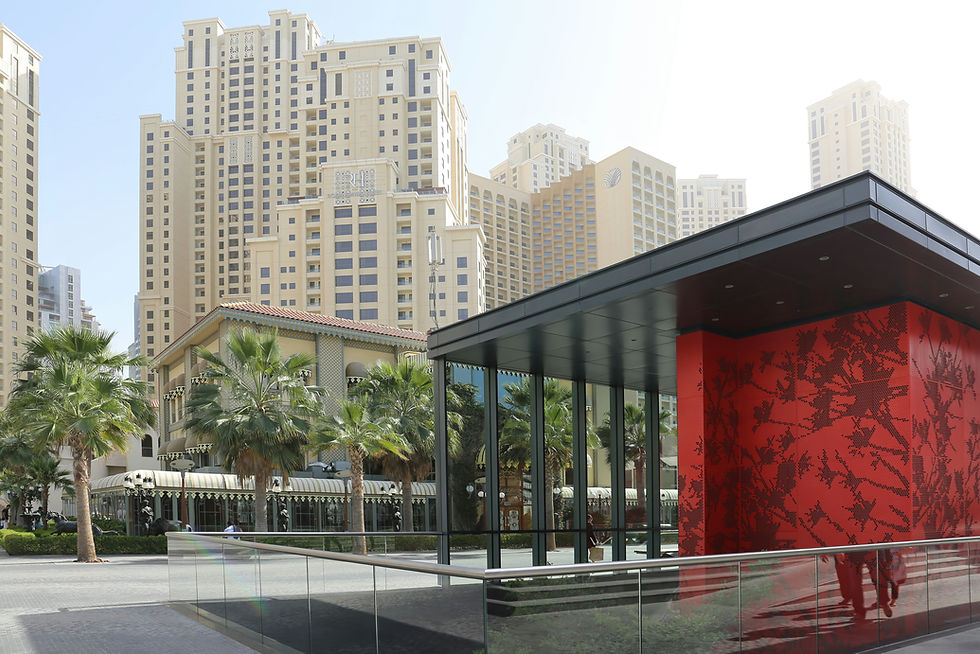
In its comprehensive regional analysis released as of August 2026, global asset manager BlackRock estimates that capital deployment across GCC markets will surpass $2.1 trillion over the coming cycle. This growth is driven by sovereign fund co-investments, accelerating foreign direct investment (FDI), and deep economic diversification programs.
The UAE has emerged as the principal destination for international asset managers establishing regional headquarters. Strong regulatory frameworks under DIFC and ADGM, combined with favorable tax structures and zero capital gains taxes, have accelerated capital inflows into UAE-domiciled funds.
Global institutional managers are no longer just visiting Dubai for fundraising—they are relocating portfolio execution teams directly to DIFC and ADGM.
Key Growth Pillars Driving Capital Allocation into the UAE
BlackRock's 2026 report highlights three primary sectors receiving the largest allocations of domestic and international private capital across the emirates.
Private Equity & Venture Capital Expansion
Private equity fundraising in the UAE grew significantly according to BlackRock data as of August 2026, focusing on high-growth technology, logistics, healthcare, and fintech platforms across the MENA region.
Infrastructure & Renewable Energy Projects
Large-scale energy transition projects and smart infrastructure development account for substantial long-term capital deployment, supported by public-private partnership (PPP) frameworks in Dubai and Abu Dhabi.
Capital Markets & Financial Free Zone Hubs (DIFC & ADGM)
Equities listed on the Dubai Financial Market (DFM) and Abu Dhabi Securities Exchange (ADX) recorded increased liquidity, backed by ongoing government IPO programs and institutional fund listings.
Comparative Asset Allocation Performance in the GCC (as of August 2026)

Understanding how investment capital is distributed across asset classes provides valuable context for strategic asset allocation. The table below outlines estimated GCC investment pool allocations and the UAE's reported market capture based on BlackRock's Middle East Investment Strategy Report as of August 2026.
All figures listed below are historical report benchmarks and are indicative — verify current fund yields, pricing, and valuations with accredited financial institutions.
Investment Sector | Estimated GCC Market Size ($ Trillion, Aug 2026) | UAE Estimated Allocation Share (%) | Reported Growth Trajectory | Primary Data Source |
|---|---|---|---|---|
Infrastructure & Energy Transition | 0.75 (indicative) | 38% (indicative) | High Expansion | BlackRock GCC Report (Aug 2026) |
Private Equity & Venture Capital | 0.55 (indicative) | 45% (indicative) | Accelerated Growth | BlackRock GCC Report (Aug 2026) |
Public Equities & Sukuk Markets | 0.50 (indicative) | 35% (indicative) | Steady Institutional Inflow | BlackRock GCC Report (Aug 2026) |
Real Estate & Logistics Assets | 0.30 (indicative) | 40% (indicative) | Robust Commercial Demand | BlackRock GCC Report (Aug 2026) |
How Institutional and Expat Investors Can Access UAE Capital Growth
For private wealth holders, expat investors, and institutional clients looking to participate in the UAE's economic expansion, multiple access points exist across public and private markets.
Navigating these opportunities requires aligning investment horizons with proper regulatory vehicles. According to BlackRock guidelines as of August 2026, key avenues for portfolio exposure include:
DFM & ADX Public Equities: Direct investment in blue-chip UAE banking, utility, and telecom equities (indicative yields — verify with broker)
Islamic Sukuk & Fixed Income: Allocating capital to UAE sovereign and corporate Sukuk instruments for steady income streams
DIFC & ADGM Qualified Funds: Participating in private equity and venture capital funds domiciled in financial free zones
Commercial & Industrial Real Estate: Investing in prime logistics hubs and green building assets across Dubai and Abu Dhabi
Diversification across local public equities, Sukuk fixed-income instruments, and DIFC-regulated funds offers balanced exposure to GCC growth.
Regulatory Protections & Corporate Governance Frameworks

A central factor in the UAE's ability to attract global fund managers like BlackRock is its robust legal architecture. Common-law financial free zones like DIFC and ADGM operate independent judicial systems based on English Common Law.
This framework ensures transparent dispute resolution, strong intellectual property protections, and strict adherence to anti-money laundering (AML) standards, providing international investors with familiarity and legal security when deploying capital.
Strategic Investment Considerations for 2026 and Beyond
While macro indicators remain strong, investors must maintain disciplined risk management. Currency peg stability (AED tied to USD), interest rate expectations, and market liquidity should all be factored into portfolio construction.
Consulting with DFSA or FSRA-licensed investment advisors ensures that asset allocations remain compliant with local regulations while optimizing risk-adjusted returns.
Long-term success in GCC markets requires partnering with accredited regional asset managers who understand local regulatory nuances.
FAQ
What is the total GCC investment capacity highlighted in BlackRock's 2026 report?
According to BlackRock's GCC Investment Strategy Report as of August 2026, total regional investment capacity across the Gulf region is projected to reach $2.1 trillion.
Why is the UAE capturing major investment inflows in the GCC?
The UAE leads regional investment capture due to its common-law financial free zones (DIFC and ADGM), zero capital gains tax environment, advanced infrastructure, and pro-business regulatory policies.
What sectors in the UAE offer top investment opportunities in 2026?
BlackRock's analysis highlights strong opportunities in infrastructure energy transition, private equity, technology venture capital, public equities on DFM/ADX, and commercial real estate.
Do investors pay capital gains tax on investments in the UAE?
No, the UAE currently levies zero personal income tax and zero capital gains tax on individual investment gains, though corporate tax rules apply to certain business entities as of June 2026.
Useful Links
UAE Ministry of Economy · Dubai Financial Market (DFM) · Dubai International Financial Centre (DIFC) · Abu Dhabi Global Market (ADGM) · Dubai Chamber of Commerce · UAE Official Government Portal
Pair It With
Blackrock Uae Gcc Investment Strategy 2026 · Adgm Abu Dhabi Financial Asset Management Setup Guide 2026 · Uae Equities Dfm Adx Market Snapshot

— Angel Tyagi, Creator of Angel In Dubai
Prices, timings and availability may change — always check directly with the venue before visiting. Not sponsored.
Story lead: khaleejtimes.com. Reporting can be updated or withdrawn after publication — always check the original before relying on anything here.
Rates and figures are indicative and were correct as of 2 September 2026; they change often, so verify with the provider before acting. This is general information, not financial advice.
Photo by Darcey Beau via unsplash, Photo by Iwona Castiello d'Antonio via unsplash, Photo by Mehedi Hasan via unsplash, Photo by KOREA.NET - Official page of the Republic of Korea via flickr


Comments