


UAE Real Estate Market Growth to $811.4 Billion by 2031: What's Driving It and How to Invest
- Jul 15
- 7 min read
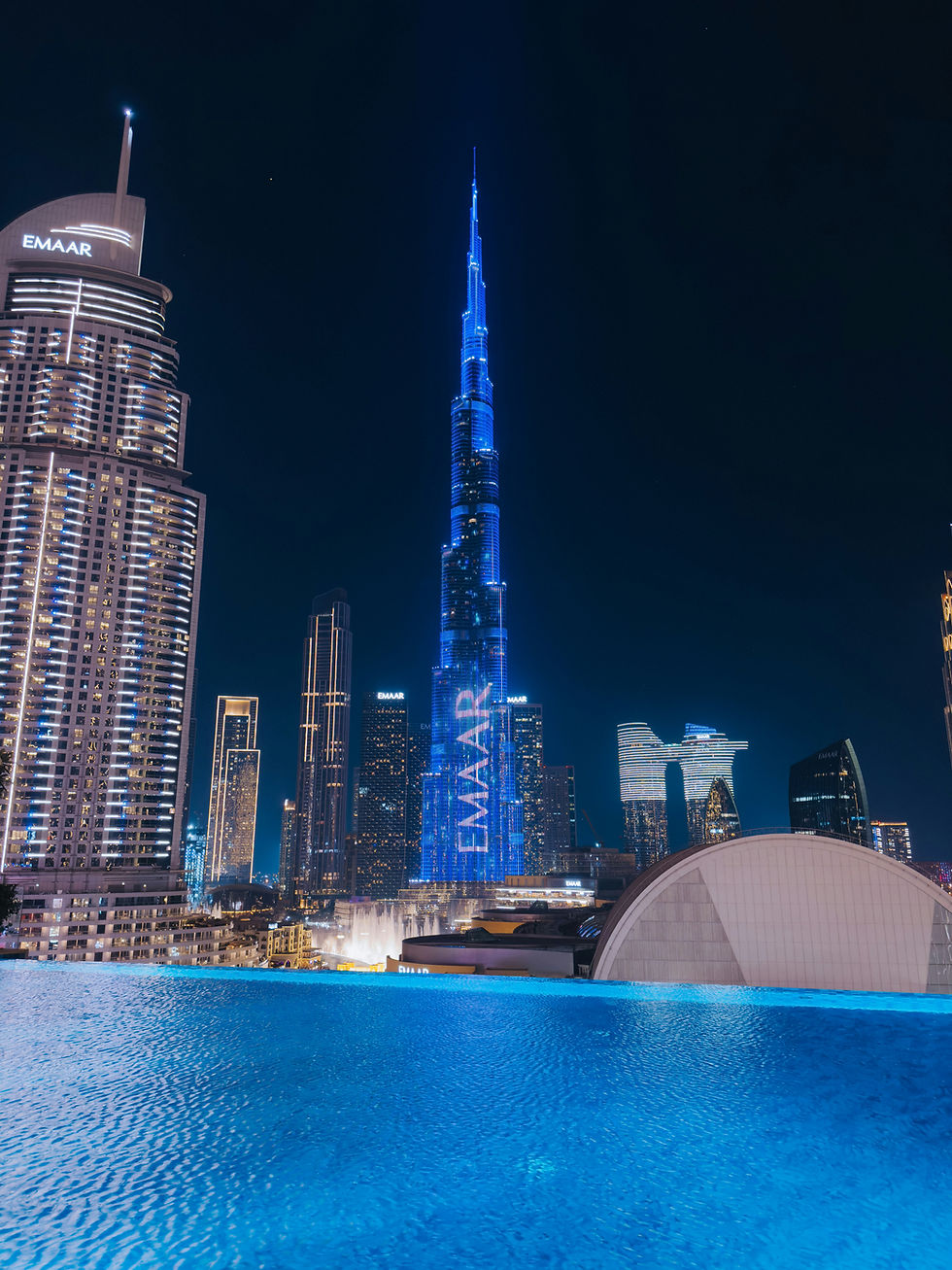
Standing on the observation deck of the Museum of the Future last month, I watched cranes pivot across the Dubai skyline like synchronized swimmers — each one a steel promise that this city has no intention of slowing down. A friend in development told me the pipeline is so deep right now that contractors are booked eighteen months out. That single detail told me more than any headline could.
The numbers back up the feeling on the ground. Industry analysts project the UAE real estate market will swell to an astonishing $811.4 billion by 2031, fuelled by a cocktail of population growth, golden-visa momentum, and — the part that excites me most — a wave of technology that is rewriting how properties are built, sold, and managed. I have been covering Dubai's property scene for years, and I have never seen this much convergence between real estate and tech. Here is my breakdown of where the market is headed and what it means for anyone thinking about buying, investing, or simply understanding the region's trajectory.
How Big Will the UAE Real Estate Market Be by 2031?

Let's put the $811.4 billion figure in perspective. In 2024, the UAE's real estate sector was valued at roughly $450 billion. Reaching $811.4 billion by 2031 implies a compound annual growth rate of around eight to nine percent — aggressive, but plausible when you factor in Dubai's record-breaking transaction volumes and Abu Dhabi's accelerating masterplan rollouts.
Dubai alone recorded over 180,000 property transactions in 2024, shattering every previous record. Off-plan sales accounted for a growing share of the pie, which signals strong forward-looking confidence from both end-users and investors. Abu Dhabi, meanwhile, is expanding its Saadiyat and Yas Island developments while opening freehold ownership to more nationalities.
The growth is not limited to luxury towers. Mid-market communities like Dubai South, Town Square, and Sharjah's Aljada are attracting young professionals and families priced out of prime areas, adding depth to the market. When a sector grows at the top and the middle simultaneously, the trajectory tends to be more sustainable.
The Role of PropTech in Reshaping UAE Real Estate

Technology is no longer a nice-to-have in Gulf real estate — it is infrastructure. The Dubai Land Department's blockchain-powered title-deed system, REST, has already tokenised property records, slashing registration times and reducing fraud risk. Abu Dhabi's DARI platform digitises every step from valuation to transfer, making the emirate one of the most transparent property markets in the region.
PropTech startups are flourishing. Companies like Stake allow fractional ownership of rental properties for as little as AED 500, democratising an asset class that once required six-figure entry tickets. AI-powered valuation tools from firms like Property Monitor are giving buyers real-time comparable data that used to be locked behind broker networks.
Virtual-reality property tours, once a pandemic gimmick, have become standard practice for international buyers. Developers like Emaar and DAMAC now offer fully immersive 3D walk-throughs of off-plan units, enabling someone in London or Mumbai to commit to a purchase without boarding a flight. When friction disappears, transaction volume climbs — and that is precisely what is happening.
*My tip: before you buy any off-plan unit, ask the developer whether they use BIM (Building Information Modelling) during construction — it is a strong signal that the handover quality will match the render quality.*
Key Factors Driving UAE Real Estate Growth Through 2031

No single force explains an $811.4 billion projection. It is a confluence of structural tailwinds that, taken together, create a compounding effect.
Population growth is the engine. The UAE's population surpassed 10 million in 2023 and is on track to exceed 12 million well before 2031, driven by golden visas, remote-work permits, and a booming job market in tech, finance, and logistics. Every new resident needs a roof.
Government policy is the accelerant. Initiatives like Dubai's 2040 Urban Master Plan, Abu Dhabi's Economic Vision 2030, and the federal push to increase non-oil GDP all funnel momentum into real estate. Regulatory reforms — 100 percent foreign ownership of companies, long-term residency visas, retirement visas — keep international capital flowing in.
Infrastructure megaprojects seal the deal. The expansion of Al Maktoum International Airport, Etihad Rail connecting all seven emirates, and Dubai's new metro extensions are opening up land corridors that did not exist five years ago.
Golden Visa programme now covers investors, entrepreneurs, scientists, and top students — broadening the buyer base significantly
Dubai's 2040 Urban Master Plan aims to increase green and recreational space by 105 percent, boosting liveability and property premiums in planned communities
Abu Dhabi's Masdar City is attracting sustainability-focused tenants and buyers, a niche that barely existed five years ago
Etihad Rail will reduce Abu Dhabi-to-Dubai commute times, unlocking affordable corridors for homebuyers priced out of city centres
Remote-work and freelancer visas are drawing digital nomads who initially rent but increasingly buy
RERA's stricter escrow regulations are improving buyer confidence in off-plan purchases
Best Areas to Watch for UAE Property Investment Before 2031
If I were allocating capital today with a 2031 horizon, I would focus on three zones.
Dubai South and the Expo City corridor are my top pick. The area around Al Maktoum International Airport — set to become the world's largest — is still priced thirty to forty percent below established communities. When that airport reaches full capacity, the surrounding land values will re-rate dramatically.
Saadiyat Island in Abu Dhabi is a cultural and luxury magnet. With the Louvre already open, the Guggenheim on its way, and a new Natural History Museum in progress, the island is becoming an intellectual-luxury brand. Capital appreciation here has been steady, and rental yields for high-end villas remain attractive at around five to six percent.
Ras Al Khaimah is the dark horse. The upcoming Wynn Al Marjan Island resort — the first integrated gaming resort in the Gulf — is expected to turbocharge tourism and, by extension, short-term rental demand. I have already seen land prices around Al Marjan Island double over the past eighteen months.
*I always remind readers: buy where the infrastructure is going, not where it already is. The UAE's masterplans are public documents — read them, and you will see where the next wave of appreciation will land.*
How Smart Cities and AI Are Shaping UAE Real Estate Value
The UAE's ambition to become a global smart-city leader is not abstract — it is literally being wired into new developments. Dubai's Smart City initiative integrates IoT sensors, autonomous transit, and AI-managed utilities into residential and commercial districts. For property owners, this translates into lower service charges, higher tenant satisfaction, and premium valuations.
AI is also transforming how developers decide what and where to build. Machine-learning models now analyse demographic flows, school enrolment data, and ride-hailing patterns to predict which micro-markets will see demand spikes two to three years out. Aldar Properties in Abu Dhabi has been particularly vocal about using data science to guide its land-bank strategy.
For individual investors, AI-driven property management platforms like Silkhaus and Frank Porter are optimising short-term rental yields by dynamically adjusting pricing, marketing channels, and turnover schedules. I have seen landlords increase their net yield by one to two percentage points simply by switching to an AI-managed operator.
Risks and Challenges to Keep in Mind
I would not be doing my job if I only painted the rosy picture. An $811.4 billion projection assumes sustained population growth, stable oil-adjacent revenues, and no global liquidity shock — none of which is guaranteed.
Oversupply remains a cyclical risk. Dubai has historically oscillated between undersupply-driven booms and oversupply-driven corrections. The current pipeline is enormous, and if global economic conditions tighten, absorption rates could slow faster than delivery schedules.
Interest-rate sensitivity is another factor. While the UAE does not have a central-bank policy rate in the traditional sense, it pegs to the US dollar, meaning Fed rate decisions directly affect mortgage costs here. If rates stay elevated longer than expected, buyer affordability will compress.
Finally, regulatory evolution cuts both ways. Stricter AML (anti-money-laundering) compliance, while excellent for the market's long-term reputation, has added friction to large cash transactions — a segment that historically powered a meaningful share of Dubai's volume.
How to Position Yourself as an Investor Before 2031
Whether you are a first-time buyer or a seasoned portfolio holder, the playbook for the next five years centres on three principles: buy infrastructure adjacency, favour developers with strong handover track records, and use technology to your advantage.
Start by setting up property alerts on the Dubai Land Department's DXBinteract portal — it gives you real-time transaction data, average price-per-square-foot trends, and rental-yield benchmarks for every community. Cross-reference that with off-plan launch calendars from major developers.
If you are an overseas buyer, open a UAE bank account early. Mortgage pre-approvals for non-residents are available from banks like Emirates NBD and ADCB at loan-to-value ratios of up to seventy-five percent. Having finance lined up before you identify a unit puts you in a stronger negotiating position.
And diversify across emirates. A portfolio that blends a Dubai rental apartment, an Abu Dhabi freehold villa, and a Ras Al Khaimah short-term rental unit is structurally more resilient than concentration in a single micro-market.
FAQ
How much will the UAE real estate market be worth by 2031?
The UAE real estate market is projected to reach approximately $811.4 billion by 2031, driven by population growth, government reforms like the Golden Visa programme, major infrastructure projects, and increasing technology integration across the property sector.
Is it a good time to invest in UAE real estate in 2026?
Many analysts consider 2026 a strategic entry point because several infrastructure mega-projects — including Al Maktoum Airport expansion and Etihad Rail — are still in development, meaning surrounding property values have not yet fully re-rated. However, investors should assess their risk tolerance, financing costs, and target holding period before committing.
What technology is changing UAE real estate?
Key technologies include blockchain-based title registration (Dubai Land Department's REST platform), AI-powered property valuations, virtual-reality tours for off-plan sales, fractional ownership platforms like Stake, and IoT-driven smart-city infrastructure that lowers operating costs and raises property premiums.
Can foreigners buy property in the UAE?
Yes. Foreigners can purchase freehold property in designated areas across Dubai, Abu Dhabi, Sharjah, Ras Al Khaimah, and Ajman. Certain emirates have expanded freehold zones in recent years, and Golden Visa eligibility through property investment starts at AED 2 million in Dubai.
Which UAE city has the best real estate investment potential for 2031?
Dubai remains the volume leader, but Abu Dhabi offers strong capital-appreciation potential thanks to cultural mega-projects on Saadiyat Island, and Ras Al Khaimah is emerging as a high-yield market driven by the upcoming Wynn resort and expanding tourism infrastructure. Diversifying across emirates is often the smartest strategy.
Useful Links
Dubai Land Department DXBinteract Portal · Abu Dhabi DARI Platform · Emaar Properties Official Site · Aldar Properties Official Site · Dubai 2040 Urban Master Plan · Stake Fractional Property Investment · Wynn Al Marjan Island Official Site
Pair It With

— Angel Tyagi, Creator of Angel In Dubai
Prices, timings and availability may change — always check directly with the venue before visiting.
Photo by Sirav Talwar via unsplash, Photo by Darcey Beau via unsplash, Photo by Naveed Anjum via unsplash, Photo by Naveed Anjum via unsplash

Comments