


UAE SME Merchant Cash Flow Solutions: 2026 Guide to Instant POS Settlements and Working Capital
Standing at the cashier counter of an artisanal roastery in Al Quoz on a Thursday afternoon, I watched the owner process dozens of card taps while juggling supplier invoices due before the weekend. He pointed to his point-of-sale terminal with an exasperated laugh, explaining that while the shop showed record revenues on paper, the money would sit locked in bank clearing queues until the middle of the following week while his roaster supplier demanded immediate cash on delivery.
That cash conversion gap is the single quietest killer of promising small businesses across the Emirates. Fortunately, merchant acquiring infrastructure in the UAE has undergone a massive upgrade in 2026, shifting from rigid multi-day clearing cycles toward real-time card payouts and automated liquidity tools. Before diving into merchant architectures, remember this is not financial advice; always consult your certified business accountant and banking partner regarding specific commercial terms.
At a glance | Details |
|---|---|
Solution Launch | September 2026 for Network MAX suite |
Payout Speeds | Same-day instant to T+2 settlement |
Acquiring Fees | 1.25% to 2.40% indicative as of Sept 2026 |
Terminal Rentals | AED 120 to AED 250 monthly indicative |
Target Sector | UAE retail, hospitality, and service SMEs |
The Liquidity Bottleneck Facing UAE Small Businesses

Cash flow timing differences create severe working capital strain for fast-growing enterprises across Dubai and Abu Dhabi. Research reports published by the Dubai Chamber of Commerce indicate that delayed customer receivables represent the primary working capital obstacle for 62 percent of local trading firms as of June 2026. While commercial rents and supplier deliveries require upfront payment, card-swiped sales historically remained trapped in payment processor settlement queues for two to three business days.
When weekend bank closures coincide with month-end payroll cycles, businesses face an artificial liquidity squeeze despite healthy sales margins. Guidelines distributed by the Ministry of Economy urge small business operators to modernize accounting books and deploy compliant electronic invoicing systems. Modernizing digital payment acquiring constitutes the foundational first step toward closing that operational funding gap.
Instant Settlement POS: How Same-Day Payouts Unlock Working Capital
The introduction of automated instant clearing services has redefined merchant acquiring for consumer-facing businesses. According to product specifications released by Network International, the Network MAX platform provides same-day card settlement for qualifying retail merchants. Instead of waiting forty-eight hours for batch reconciliations, merchants receive settlement credits into their registered corporate accounts multiple times throughout the operating day.
This rapid turnaround fundamentally alters working capital management by reducing dependence on expensive short-term bank overdrafts. Having immediate liquidity on Friday evening allows retail managers to pay wholesale delivery drivers, restock inventory for Saturday shopping traffic, and cover urgent operational repairs without drawing down standby credit lines.
Switching our boutique cafe from standard multi-day settlement to same-day automated POS deposits eliminated the weekend payroll crunch overnight.
Comparing Acquiring Gateways: Settlement Times and Merchant Fees
Selecting an acquiring partner requires balancing transaction processing expenses against cash accessibility. Under prevailing merchant schedules, interchange and gateway fees typically range between 1.25 percent and 2.20 percent per card transaction as of September 2026 according to Network International rate sheets; all fee ranges are indicative — verify with the bank or acquiring provider. Monthly terminal rental rates span from AED 120 to AED 250 per device as of September 2026 based on provider pricing disclosures; these costs are indicative — verify with the payment provider.
All fee structures cited in the comparison table reflect prevailing market quotes as of September 2026 sourced from leading UAE acquiring institutions; rates are indicative — verify with the bank or acquiring provider.
Model | Payout Speed | Typical Fee |
|---|---|---|
Standard T+2 | Two business days | 1.25 to 1.75 percent |
Next-Day T+1 | Next calendar morning | 1.50 to 1.95 percent |
Instant Payout | Real-time to account | 1.85 to 2.40 percent |
Weekly Batch | Every seven days | 1.10 to 1.50 percent |
Digital Cash Flow Forecasting and POS Integration
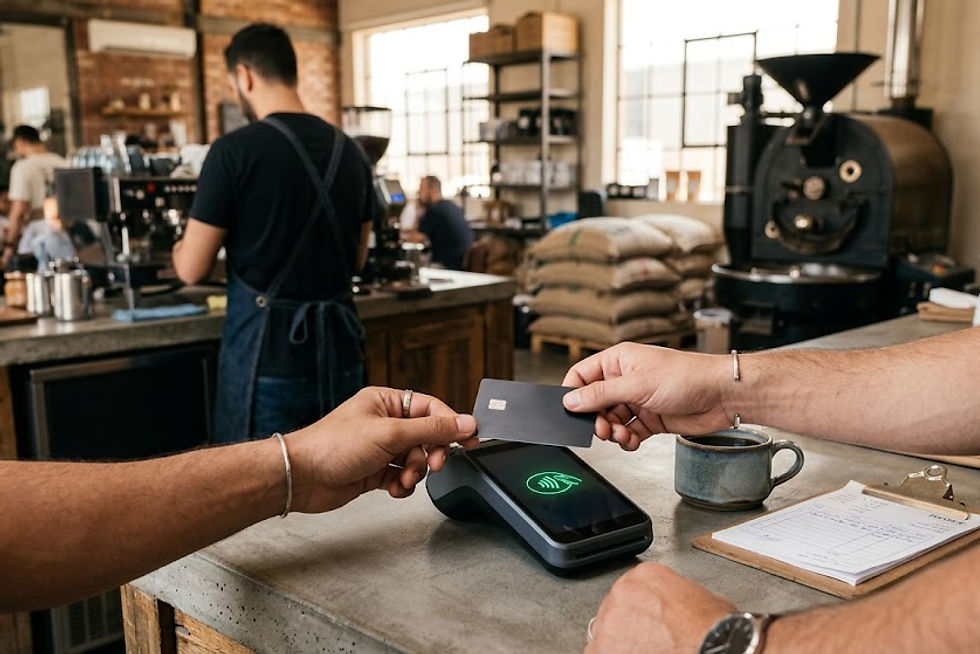
Connecting point-of-sale hardware directly into cloud financial management platforms transforms raw transaction records into forward-looking liquidity intelligence. Rather than waiting for weekly manual reconciliation spreadsheets, business owners gain real-time visibility over net cleared funds and projected overhead liabilities.
Automating Daily Sales Reconciliation
Integrating smart terminals with cloud accounting software automatically tallies gross card revenue, merchant deduction fees, and net bank deposits after each register closing shift. This automation eliminates manual entry errors and ensures that balance sheets reflect actual cleared cash rather than uncollected ledger receivables.
Predictive Invoicing and Tax Reserves
Regulatory standards enforced by the Central Bank of the UAE mandate transparent interchange fee disclosures and strict data security protocols across all digital acquiring channels. Advanced accounting plug-ins automatically carve out five percent of daily sales into dedicated tax reserve ledgers, preventing unpleasant cash shortfalls when quarterly corporate tax or VAT filings come due.
Revenue-Based Merchant Financing: Borrowing Against Card Turnover
For businesses lacking multi-year audited financial statements or fixed real estate collateral, point-of-sale card transaction volume serves as an effective credit underwriting asset. Fintech accelerators operating inside the DIFC have developed integrated revenue-based financing modules that plug directly into point-of-sale software.
Under these financing structures, lenders examine rolling monthly card revenues rather than demanding physical asset mortgages. Repayments fluctuate dynamically alongside daily business activity, rising during peak trading weekends and tapering off during slower seasonal lulls; terms are indicative — verify with the financing partner as of September 2026 based on commercial underwriting guidelines.
Treating POS card receivables as collateral for flexible working capital works best when your daily credit card turnover remains predictable and steady.
Practical Steps to Optimize Merchant Payment Architecture
Modernizing company payment infrastructure requires a systematic review of merchant service agreements, banking relationships, and terminal hardware. Official resources hosted on the UAE Government Portal outline commercial licensing criteria and financing support programmes available to registered business entities. Implementing targeted operational adjustments can unlock substantial trapped liquidity without adding permanent balance sheet debt.
Audit monthly merchant acquiring statements to identify legacy transaction surcharges as of September 2026 based on published bank tariff schedules
Negotiate daily settlement terms with acquiring banks based on annual card volumes exceeding AED 500,000 as of September 2026; figures are indicative — verify with the acquiring bank
Integrate cloud accounting platforms directly with point-of-sale hardware to eliminate manual end-of-day tally errors
Maintain a dedicated tax escrow sub-account funded automatically with five percent of daily gross receipts based on prevailing UAE corporate tax and VAT regulations
FAQ
What is the difference between standard T+2 settlement and instant POS settlement in the UAE?
Standard T+2 settlement holds funds from credit and debit card transactions for two full banking business days before depositing them into the merchant's corporate bank account. Instant POS settlement transfers cleared funds into the merchant's linked local account within minutes or on the same calendar day, even during weekends and public holidays. This speed requires a slightly higher processing fee of approximately 0.20 to 0.45 percent above standard interchange as of September 2026; fees are indicative — verify with the acquiring bank based on provider tariff sheets.
What documents are required for a UAE SME to apply for next-day or instant merchant acquiring?
Acquiring banks and payment institutions require a valid UAE commercial trade license, corporate bank statements for the preceding six months, tenancy contract, and Emirates IDs of all authorized company signatories as of September 2026. Startups operating under newly issued free zone licenses may need to demonstrate minimum initial capitalization or provide personal director guarantees depending on acquiring risk policies; requirements are indicative — verify with the payment provider.
Can a small business in Dubai use POS card sales to qualify for merchant cash advance loans?
Yes, several licensed digital lenders and bank fintech partnerships provide revenue-based working capital advances evaluated on six to twelve months of verifiable POS transaction history. Repayments are deducted automatically as a fixed percentage of daily card takings, typically between 8 percent and 15 percent, until the total advance and fixed fee are retired; terms are indicative — verify with the financing partner as of September 2026 based on commercial underwriting guidelines.
Do UAE banks charge extra fees for processing weekend and public holiday card settlements?
Most traditional tier-one UAE banks process batch settlements only on official banking business days from Monday through Friday. Specialized merchant platforms and modern fintech acquirers that offer 365-day weekend settlement usually bundle this feature into premium monthly service packages costing AED 150 to AED 300 per month as of September 2026; rates are indicative — verify with the payment provider based on active pricing schedules.
Useful Links
Dubai Chamber of Commerce — Access SME trade data and business toolkits
Ministry of Economy — Explore commercial enterprise regulations and SME programmes
Network International — Review merchant acquiring plans and POS terminals
Central Bank of the UAE — Read merchant payment and banking compliance guidelines
DIFC — Track financial technology innovation and payment licensing
UAE Government Portal — Check corporate registry and national commercial services
Pair It With

— Angel Tyagi, Creator of Angel In Dubai
Prices, timings and availability may change — always check directly with the venue before visiting. Not sponsored.
Story lead: Zawya. Reporting can be updated or withdrawn after publication — always check the original before relying on anything here.
Rates and figures are indicative and were correct as of 19 September 2026; they change often, so verify with the provider before acting. This is general information, not financial advice.
Photo by aboodi vesakaran via unsplash, Photo by PhotoHound via unsplash, Photo by AI-generated illustration via gemini


Comments