


Walkable Communities in Dubai for Family Living: 2026 Guide
Stepping outside on a cool November morning in Dubai Creek Harbour, I watched two parents push strollers along the waterfront promenade while their older child rode a scooter toward the local nursery. There were no roaring six-lane highways to cross, no frantic parking searches, and the neighbourhood Spinneys was just three minutes away on foot.
For years, living in the UAE meant accepting car dependence as an unavoidable reality of daily life. Today, master developers are reshaping urban master plans around the 15-minute city philosophy, where schools, parks, healthcare clinics, and grocery stores sit within a shaded walking or cycling radius.
At a glance | Details |
|---|---|
Top walkable hub | Dubai Creek Harbour |
Average 2-bed rent | AED 135,000 yearly |
Cycling network | 84 km connected tracks |
Errand radius | 15-minute walk limit |
Green community | The Sustainable City |
What Defines a 15-Minute Walkable Community in Dubai
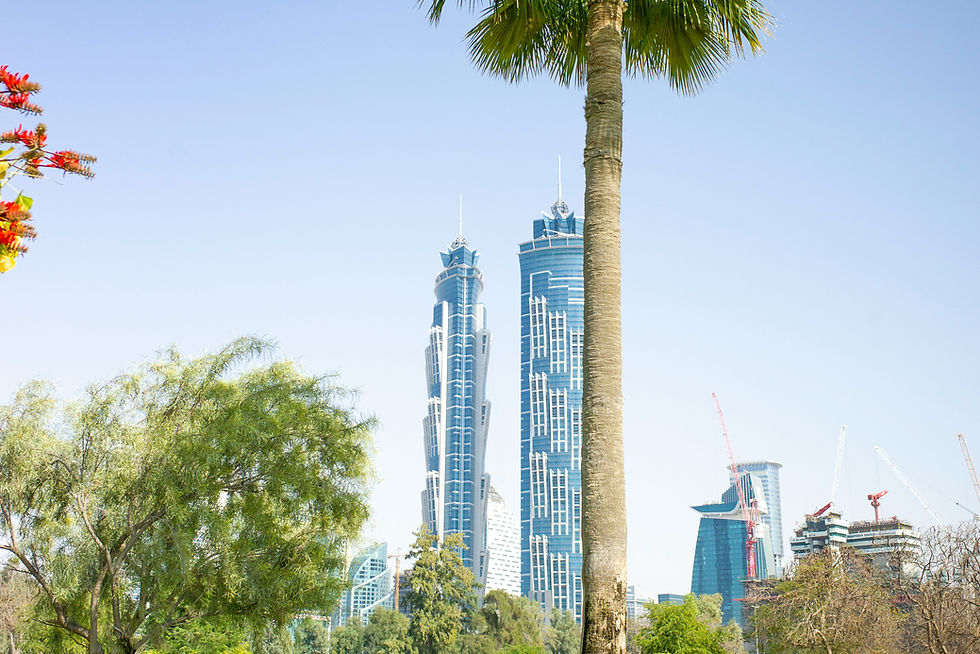
A functional walkable neighbourhood in the desert environment requires far more than sidewalks painted beside traffic corridors. Master developers now construct self-contained districts where every essential daily errand can be completed within fifteen minutes on foot or by electric scooter.
According to guidelines published by RTA Dubai, urban cycling and pedestrian links now connect metro stations to residential clusters. These corridors prioritize pedestrian safety through raised zebra crossings, grade-separated bridges, and continuous perimeter speed limits to protect young families.
Shaded walkways protected by colonnades, trees, and tensile fabrics
Supermarkets, pharmacies, and primary medical clinics within 500 meters
Traffic-calmed interior streets with speed limits capped at 30 km/h
Direct pedestrian access to nurseries or primary schools without crossing arterial highways
A truly walkable community in the desert requires continuous shade canopies, ground-floor retail, and car-free plazas where toddlers can run safely.
Top Walkable Family Communities Ranked by Everyday Livability
Family livability varies significantly between older suburban tracts and next-generation master projects. When evaluating prospective districts, compare the physical presence of grocery stores, playgrounds, and healthcare centers within your immediate walking circle.
Official sustainability initiatives highlighted on UAE Government Portal outline community targets for clean energy and reduced private vehicle dependency. The communities below demonstrate the strongest pedestrian infrastructure currently available across Dubai and Abu Dhabi.
Dubai Creek Harbour
Creek Harbour features a six-kilometer pedestrian promenade wrapping around the waterfront. Families enjoy step-free access to nurseries, Geant supermarkets, pharmacies, and outdoor splash pads without crossing vehicular streets.
The Sustainable City
Vehicles are parked in perimeter solar-shaded lots, leaving residential clusters entirely car-free. Children cycle along central green spines connecting bio-domes, an urban farm, Fairgreen International School, and an equestrian center.
Community | Best For | Annual Rent |
|---|---|---|
Creek Harbour | Waterfront promenades | AED 130k-175k |
Sustainable City | Car-free clusters | AED 190k-240k |
Town Square | Central park recreation | AED 85k-115k |
City Walk | Urban pedestrian dining | AED 165k-220k |
Yas Acres | Abu Dhabi green living | AED 160k-210k |
Balancing Summer Heat and Pedestrian Infrastructure
The true test of Dubai walkability arrives between late May and September, when midday temperatures regularly exceed 42 degrees Celsius. Sustainable communities counter extreme heat with architectural microclimate strategies including prevailing wind capture, building orientation, and deep colonnades.
Modern district cooling networks managed by DEWA ensure sustainable cooling for pedestrian retail promenades and residential buildings. During morning and evening hours, high-pressure evaporative misting systems lower ambient temperatures by up to six degrees along primary outdoor retail arcades.
During peak summer afternoons I shift my walks indoors, but from October through April, our car remains parked for entire weekends.
School Commutes and Active Mobility for Children
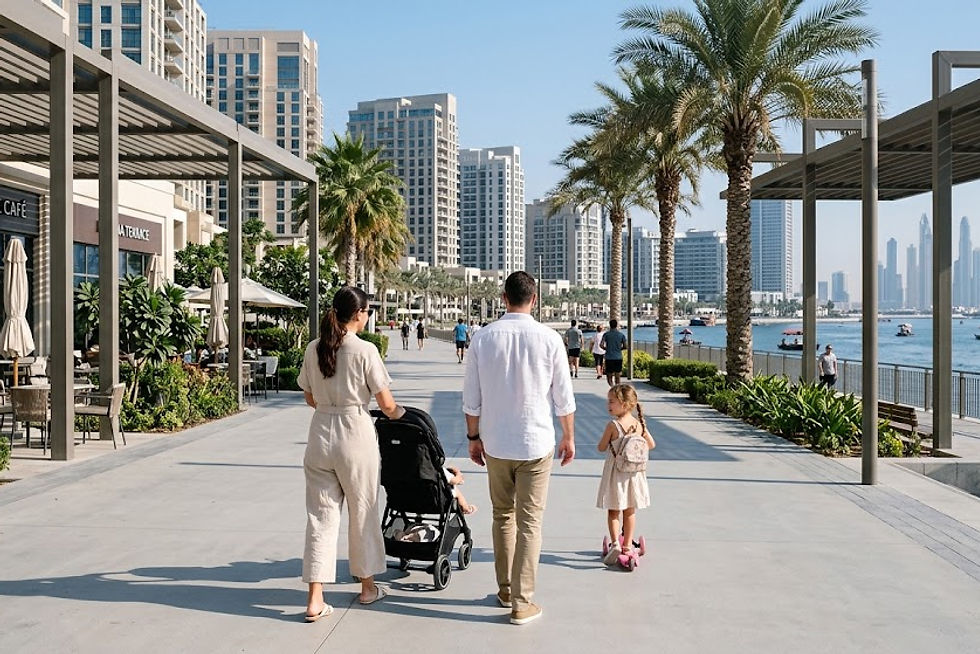
School drop-offs and pick-ups represent the single greatest traffic headache for expat parents in the UAE. Living in a master development with integrated educational facilities transforms chaotic 45-minute highway commutes into an enjoyable ten-minute morning stroll.
Traffic safety data tracked by Dubai Police shows that pedestrian crosswalk monitoring near school zones significantly reduces school-run congestion. Communities with on-site campuses allow older children to travel to school independently via dedicated bike lanes.
Walking buses where neighbourhood parents rotate escorting kids to school gates
Dedicated scooter lanes separated from vehicular roads by landscaped curbs
Direct community pathways bypassing major highway interchanges entirely
Abu Dhabi Walkable Master Developments Compared
Abu Dhabi has rapidly advanced its own pedestrian-first master plans, particularly across Yas Island and Saadiyat Island. The capital combines natural mangrove coastlines with high-density cultural quarters.
Recent municipal announcements reported by Emirates News Agency (WAM) emphasize pedestrian connectivity and urban green spaces across new residential developments in Abu Dhabi. These districts pair tranquil family environments with immediate access to world-class museums and entertainment hubs.
Yas Island and Saadiyat Grove
Developments like Yas Acres and Saadiyat Grove integrate pedestrian boulevards directly linking to cultural museums, beaches, and retail piazzas without requiring highway transit.
Al Maryah and Reem Island Connectivity
Air-conditioned skywalks and continuous waterfront boardwalks allow residents to walk from residential towers to Cleveland Clinic Abu Dhabi, Galleria Mall, and seaside parks.
Yas Acres gives families wide cycling paths that lead straight to community retail centers, blending suburban privacy with pedestrian freedom.
Practical Checklist for Evaluating a Walkable Neighborhood
Promotional developer brochures frequently highlight green parks and walking paths that prove disconnected or unfinished in practice. Inspecting the physical reality of a community prior to signing a lease protects your daily routine.
Public park guidelines enforced by Dubai Municipality require designated recreational open space and sports facilities in all new master communities. Use the following structured checklist during property viewings to gauge real-world pedestrian convenience.
Visit the community on a weekday at 8:00 AM to inspect real school traffic
Walk the exact route from the building lobby to the nearest grocery store
Check whether stroller ramps are continuous or interrupted by tall curbs
Confirm if children can access the main playground without crossing two-way roads
Verify shade coverage along primary pedestrian paths during midday sun
FAQ
Which area in Dubai is the most walkable for families?
Dubai Creek Harbour and The Sustainable City lead in family walkability due to dedicated vehicle-free pedestrian paths, integrated parks, and central retail amenities. For apartment living close to downtown, City Walk and Dubai Marina offer high walkability scores with direct tram and metro connectivity.
Can you realistically walk everywhere during Dubai summer?
Walking outdoors during summer midday is impractical due to temperatures exceeding 40 degrees Celsius. However, walkable master communities mitigate heat with shaded arcades, tree canopies, and direct basement links, while evening walks along waterfront promenades remain popular year-round.
Are rents higher in walkable Dubai communities?
Properties in master communities offering true 15-minute walkability generally command a 10 to 20 percent rent premium over car-dependent suburbs. Families often offset this expense through reduced fuel costs, fewer taxi fares, and lower vehicle maintenance.
Does Dubai have cycling paths inside residential areas?
Yes, communities such as Town Square, Dubai Hills Estate, and The Sustainable City feature segregated cycle tracks protected from street traffic. These tracks link directly with arterial paths like the 84-kilometer Al Qudra cycle track network.
Useful Links
RTA Dubai — Review Dubai active mobility and cycling master plans
UAE Government Portal — Learn about national urban sustainability initiatives
DEWA — Check residential utility and cooling standards
Dubai Police — Read school zone traffic safety updates
Emirates News Agency (WAM) — Access official UAE urban planning releases
Dubai Municipality — Explore community park regulations and standards
Pair It With

— Angel Tyagi, Creator of Angel In Dubai
Prices, timings and availability may change — always check directly with the venue before visiting. Not sponsored.
Story lead: thenationalnews.com. Reporting can be updated or withdrawn after publication — always check the original before relying on anything here.
Photo by Dubai Creek Harbor - SWA Group via web, Photo by unsplash via unsplash, Photo by AI-generated illustration via gemini


Comments