


ADNOC LNG Contracts & Ruwais Energy Guide 2026: Export Deals Explained
Driving west along the coastal highway toward Al Ruwais, the sheer scale of Abu Dhabi industrial coastline comes into sharp focus. Massive engineering rigs, cooling towers, and modular export docks line the horizon where the UAE is constructing its next generation of energy infrastructure.
Recent headlines confirmed ADNOC signed a landmark multi-year agreement to supply two million tonnes of liquefied natural gas annually to Thailand. Standing amidst this massive shift in global commodities, I wanted to break down how these long-term contracts and the low-carbon Ruwais LNG terminal shield the UAE economy while powering Asian markets.
At a glance | Details |
|---|---|
Ruwais capacity | 9.6 million tonnes per year |
Target operation | Commercial startup by 2028 |
Thailand contract | 2 million tonnes annually |
Project investment | AED 20.2 billion |
Plant location | Al Ruwais Industrial City |
The 2026 Shift: Inside ADNOC Multi-Year LNG Export Deals
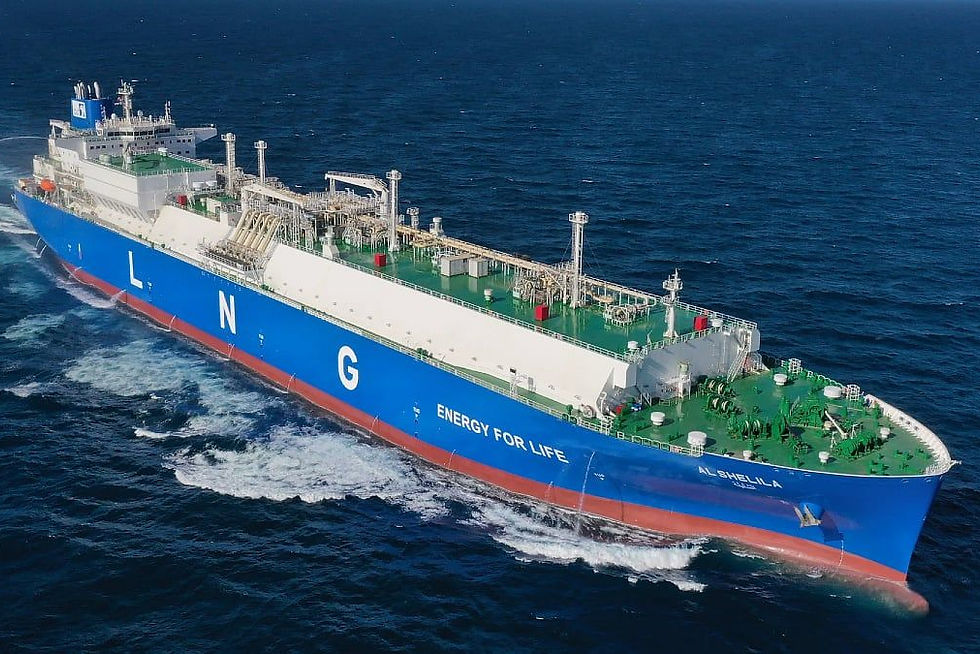
Commercial energy diplomacy moved decisively when ADNOC finalized a major long-term sales and purchase agreement with PTT Public Company Limited of Thailand. Under this multi-year contract, ADNOC will supply two million tonnes of liquefied natural gas per year to state-backed Thai utilities starting in 2027. The agreement marks a significant pivot toward Southeast Asian markets seeking reliable baseload fuel to replace declining domestic offshore gas fields in the Gulf of Thailand.
According to official releases from the Emirates News Agency, this supply pact is part of a deliberate commercial strategy to lock in high-volume off-take commitments years ahead of facility commissioning. Rather than leaving export volumes exposed to volatile spot market pricing that fluctuated wildly over past trading cycles, Abu Dhabi is securing decades of guaranteed revenue while helping emerging industrial economies manage their coal-to-gas transition.
The Thailand deal follows a sequence of strategic pre-construction sales agreements across Asia and Europe. Buyers in rapidly industrializing economies face strict carbon-reduction mandates, making ADNOC contracted volumes particularly attractive because deliveries will carry verified lower lifecycle emissions than competing cargoes from North America or Australia.
Locking in multi-decade off-take volumes today guarantees revenue stability long before the first tanker leaves the terminal.
Ruwais LNG Project Timeline and Expansion Capacity
The cornerstone of the UAE gas export strategy is the Ruwais LNG export facility currently under construction in Al Ruwais Industrial City, located 240 kilometers west of Abu Dhabi city. The site features two liquefaction trains capable of processing 4.8 million metric tonnes annually, delivering a combined capacity of 9.6 million metric tonnes per year.
Detailed engineering blueprints published by ADNOC outline that the Ruwais terminal will more than double the national export capacity when it joins the operational Das Island terminal. Das Island currently produces approximately 6 million metric tonnes annually, meaning the completed Ruwais development will elevate total UAE export capacity to 15.6 million metric tonnes each year.
Heavy engineering, procurement, and construction contracts valued at 20.2 billion dirhams were awarded in mid-2024 to a joint venture consortium led by Technip Energies, JGC Corporation, and NMDC Energy. Site preparation, marine dredging, and foundation works progressed steadily through 2025, keeping the first export train on schedule for commercial operations by 2028.
Facility | Capacity | Power Source |
|---|---|---|
Das Island | 6.0 mtpa | Conventional gas turbines |
Ruwais LNG | 9.6 mtpa | Clean nuclear solar grid |
Combined UAE | 15.6 mtpa | Hybrid national grid |
Clean Power and Low-Carbon Liquefaction Technology
Traditional liquefaction facilities burn significant quantities of natural gas on-site to drive giant gas turbines that chill methane down to minus 162 degrees Celsius. At Ruwais, engineers have eliminated those direct combustion turbines entirely, replacing them with massive electric-driven motors that draw power directly from the UAE zero-carbon grid.
Operational guidelines released by ADNOC Gas confirm that this electrification initiative establishes Ruwais as one of the lowest carbon-intensity LNG plants globally. The facility integrates advanced acoustic leak sensors and automated optical flare monitors to eliminate routine venting during everyday liquefaction runs.
Grid Electrification via Barakah
The heavy electrical load required to compress and chill the gas will be supplied by clean nuclear electricity generated at the nearby Barakah Nuclear Energy Plant. Operating four APR-1400 nuclear reactors in the Al Dhafra region, the plant generates steady baseload electricity that allows the liquefaction trains to operate around the clock without burning fossil fuels for site power.
Methane Monitoring and Carbon Capture
In addition to clean grid power, the plant design incorporates closed-loop cooling towers and real-time infrared emission scanners across all processing manifolds. Any residual acid gas streams separated during pre-treatment are captured and routed into geological storage reservoirs, keeping emissions well below international LNG benchmarks.
Asian Energy Demand and UAE Long-Term Gas Security

Global energy trading in 2026 shows a sharp divergence between short-term spot market volatility in Europe and long-term security planning across the Asia-Pacific region. Rapidly expanding manufacturing sectors in Thailand, India, and Japan require guaranteed natural gas flows over fifteen to twenty year investment cycles to displace coal power plants and protect domestic power grids against fuel shortages.
Energy analysts at the International Energy Agency emphasize that flexible long-term contracts from trusted Arabian Gulf suppliers provide critical macroeconomic stability for developing Asian economies. By guaranteeing predictable delivered pricing, Abu Dhabi positions itself as the partner of choice for regional power grids seeking baseload decarbonization without risking sudden price spikes during cold winters.
The geographical advantage of shipping from the Arabian Gulf directly into the Indian Ocean without traversing high-risk maritime choke points gives UAE export terminals an operational edge. Tankers departing Ruwais reach Southeast Asian regasification terminals in less than half the voyage time required for shipments sailing from the United States Gulf Coast.
Thailand contracted 2.0 million tonnes annually through state utility PTT starting in 2027
Indian utilities secured over 1.7 million tonnes per annum across multi-year supply packages
Japanese power consortia locked in 0.8 million tonnes annually through long-term off-take terms
German buyers signed supply agreements totaling 1.6 million tonnes annually for European gas grids
Asia wants decades of fuel predictability, and Abu Dhabi is offering clean electrons and reliable shipments to back it up.
How Long-Term LNG Contracts Anchor UAE Economic Resilience
For residents and financial professionals living in the UAE, large-scale industrial export contracts might seem distant from day-to-day commerce. However, multi-decade gas sales provide the baseline capital that underpins national fiscal stability, infrastructure spending, and corporate liquidity across both Abu Dhabi and Dubai.
According to economic guidance on the UAE Government Portal, state revenues generated from sovereign resource sales are reinvested into national infrastructure, renewable energy projects, and local supply chains. The ADNOC In-Country Value program mandates that a substantial portion of engineering and procurement spending stays within local manufacturing companies, channeling billions of dirhams directly into domestic service providers, logistics firms, and skilled private-sector employment.
Long-term gas contracts also provide sovereign credit rating agencies with predictable multi-year revenue projections. This dependable foreign currency inflow shields the UAE dirham peg to the US dollar and allows federal and emirate-level entities to finance large-scale urban developments and clean technology transitions at highly competitive borrowing rates.
What Ruwais LNG Means for Regional Energy Investors
The expansion of UAE gas export capacity creates compelling structural opportunities across local financial markets. International energy majors including Shell, TotalEnergies, BP, and Mitsui each acquired ten percent equity stakes in the Ruwais project, validating the commercial resilience of the asset under rigorous international scrutiny.
For individual investors in the UAE, the growth in LNG infrastructure reinforces the earnings potential of listed utilities and energy service providers on the Abu Dhabi Securities Exchange. Strong contracted revenues support dependable corporate dividend distributions while funding the ongoing transition toward domestic hydrogen and solar power generation.
Watching these equity partnerships develop highlights how the UAE integrates global capital into its core industrial base. Rather than relying solely on government balance sheets, syndicating project equity shares risk, cements customer relationships across target export nations, and ensures advanced technical expertise remains embedded in local operations.
Watching global majors buy ten percent equity slices proves that low-carbon LNG remains a primary institutional asset class.
FAQ
When will the ADNOC Ruwais LNG plant begin commercial exports?
Commercial export shipments from the Ruwais LNG terminal are scheduled to begin in 2028 following commissioning of the first 4.8 mtpa liquefaction train. Initial pre-commissioning flows and system testing will take place in late 2027 to align with early delivery windows for long-term Asian off-takers.
How does Ruwais LNG produce lower carbon emissions than traditional plants?
The facility replaces gas-fired combustion turbines with high-efficiency electric motor drives powered entirely by clean grid electricity from nuclear and solar assets. This electric liquefaction design cuts operational greenhouse gas emissions per tonne of LNG produced by more than fifty percent compared to the global industry average.
Which international energy companies hold equity in Ruwais LNG?
ADNOC retains a sixty percent majority operating stake in Ruwais LNG, while four international energy majors hold minority stakes of ten percent each: BP, Mitsui and Co, Shell, and TotalEnergies. These equity partners also take proportional off-take volumes for their global portfolio distribution.
What is the difference between ADNOC Das Island LNG and Ruwais LNG?
Das Island is the original LNG export facility operating in Abu Dhabi since 1977 with an annual capacity of approximately 6 million metric tonnes using conventional gas-driven power. Ruwais LNG is a newly constructed 9.6 million metric tonnes per annum mainland export complex powered entirely by clean grid electricity.
Useful Links
PTT Public Company Limited — Official Thailand state energy company portal
Emirates News Agency — Official UAE state news agency
Barakah Nuclear Energy Plant — Official UAE nuclear energy corporation
International Energy Agency — Global energy statistics and market outlook
UAE Government Portal — Official UAE government services portal
Pair It With

— Angel Tyagi, Creator of Angel In Dubai
Prices, timings and availability may change — always check directly with the venue before visiting. Not sponsored.
Story lead: gulfnews.com. Reporting can be updated or withdrawn after publication — always check the original before relying on anything here.
Rates and figures are indicative and were correct as of 6 October 2026; they change often, so verify with the provider before acting. This is general information, not financial advice.
Photo by ADNOC signs “landmark” 15-year LNG agreement from low-carbon Ruwais ... via web, Photo by ADNOC L&S Takes Delivery of 4 New LNG Carriers from Jiangnan Shipyard ... via web, Photo by web via web


Comments