


Best Design Thinking and Innovation Programs in Dubai Private Schools: 2026 Guide
Walking into a school design lab in Al Barsha on a Wednesday afternoon, the first sound you notice is not a teacher lecturing from a whiteboard. Instead, you hear the hum of three-dimensional printers melting filament, the clatter of laser-cut balsa wood, and intense negotiations among twelve-year-olds debating how to filter greywater from school air conditioning units.
Over the past two academic years, schools across the emirates have dismantled traditional computer suites to build dedicated design thinking studios. Supported by modern national frameworks, students in Dubai are no longer simply memorising textbook definitions of sustainability; they are actively prototyping working hardware to solve genuine community problems across their neighbourhoods.
At a glance | Details |
|---|---|
Focus Areas | Empathy, Prototyping, and Community Impact |
Age Groups | Grade 4 through Grade 12 Students |
Core Curriculums | IB MYP, British Design Tech, and US STEAM |
Supervising Body | KHDA Dubai School Inspection Bureau |
Standard Equipment | 3D Printers, Laser Cutters, and Microcontrollers |
How Dubai Classrooms Moved from Theory to Empathy-Led Design
The educational philosophy inside UAE private classrooms has shifted away from rote memorisation toward practical human-centred problem solving. Inspired by Stanford d.school frameworks and local innovation directives, schools now require students to interview real community members before sketching any technical ideas.
Students start by identifying everyday pain points, such as heat stress for outdoor service staff, food waste in school cafeterias, or navigational barriers for people of determination. By grounding engineering challenges in human empathy, children understand that viable technology must serve a social purpose before commercial considerations come into play.
Community Fieldwork and Observation
Rather than assigning fictional hypothetical problems, teachers take students into campus grounds, school bus depots, and local parks. Learners document observed environmental challenges using digital notebooks, audio interviews, and photographic evidence.
Cross-Disciplinary Subject Integration
Design challenges merge mathematics, biology, and language arts into single collaborative projects. A project addressing neighbourhood biodiversity requires calculating local soil salinity, drafting persuasive presentation decks, and coding environmental sensor arrays.
The Five Stages of the Student Design Thinking Cycle
Private academies throughout the emirate structure their project-based terms around a formal design iteration cycle. This step-by-step structure teaches pupils that failure during prototyping is a necessary component of genuine scientific discovery.
Empathise through direct interviews with affected community stakeholders and service workers.
Define the specific operational bottleneck using structured point-of-view problem statements.
Ideate multiple potential solutions through unrestricted collaborative team brainstorming sessions.
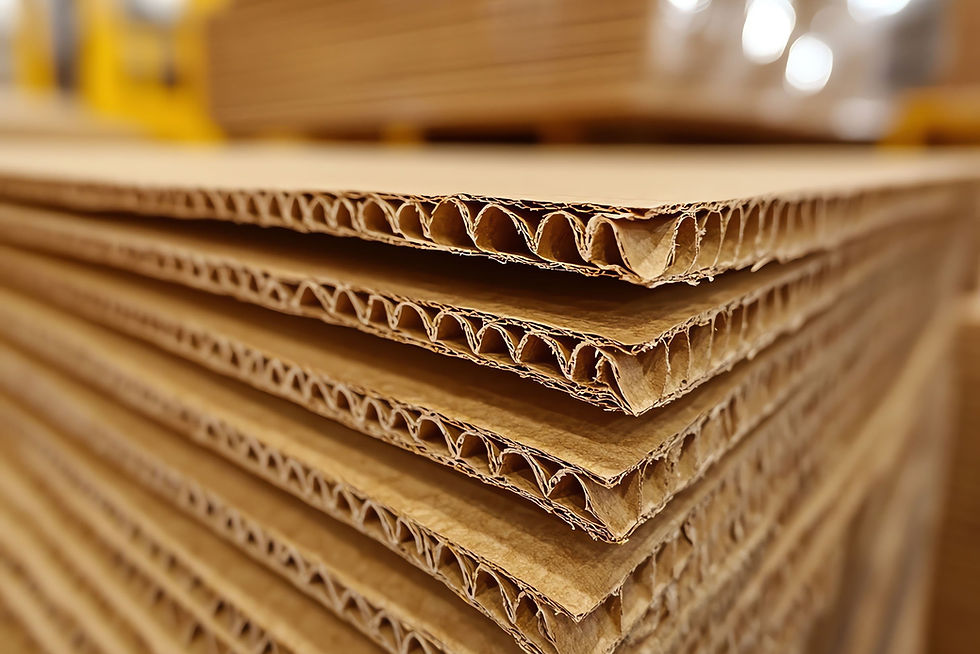
Prototype low-fidelity physical models using cardboard, foam core, and microcontrollers.
Test prototypes with target users on campus and collect quantitative feedback for refinement.
Watching a student calmly redesign a snapped 3D-printed component after three failed attempts shows resilience that no standard written exam can measure.
Comparing Innovation Frameworks Across Major Curriculums
Different international curriculums in Dubai approach practical design challenges with specialised pedagogical models. Parents selecting a school should consider how each curricular approach balances artistic craftsmanship, engineering rigor, and entrepreneurial viability.
The comparison below highlights how the primary school frameworks integrate design thinking into everyday timetables across Dubai.
Curriculum | Lab Focus | Assessment Type |
|---|---|---|
IB Continuum | Social impact ethics | Criterion-based project portfolios |
British National | Resistant materials craft | GCSE design technology coursework |
American STEAM | Digital fabrication coding | Continuous capstone prototype evaluation |
Real-World Community Challenges Tackled by UAE Students

Official educational directives from the Ministry of Education encourage schools to align student coursework with federal sustainability initiatives. Classrooms have become incubators for environmental hardware aimed at conserving water, reducing single-use packaging, and monitoring local biodiversity.
In recent terms, middle school groups have engineered automated plant irrigation controllers powered by miniature solar panels for community gardens in Nad Al Sheba. High school teams have designed ergonomic grips for elderly residents with arthritis and constructed lightweight robotic litter collection devices deployed on local public beaches.
Solar-powered condensation collectors capturing moisture from domestic outdoor compressor units
Automated smart compost monitors tracking temperature and aeration in school cafeteria gardens
Tactile navigation maps with audible beacons designed for visually impaired campus visitors
Recycled plastic filament extruders converting used water bottles into 3D printer materials
How School Regulators Evaluate Campus Innovation Labs
The inspection framework established by the KHDA places heavy emphasis on student enterprise, critical inquiry, and future skill readiness. Inspection teams assess whether school maker spaces function as integrated daily classrooms rather than ornamental marketing showrooms.
Regulators examine student project logs to determine whether learners can articulate their design journey, evaluate ethical consequences, and adapt when engineering hypotheses fail. Facilities receiving top inspection ratings routinely demonstrate that their innovation programmes involve every year group, rather than reserving lab spaces exclusively for elective clubs.
A world-class school lab is judged by the mess on the workbenches and the curiosity in student project notebooks, not the shine of unused equipment.
Regulatory Guidance and Youth Innovation Platforms in the UAE
National policy guidelines published on the UAE Government Portal outline comprehensive strategies to build an economy powered by homegrown research and development. Federal initiatives partner with cultural and scientific institutions to give student inventors public platforms for their working models.
Youth competitions organized alongside the Museum of the Future provide young engineers with direct mentorship from professional industrial designers. At the same time, forward-looking initiatives managed by the Dubai Future Foundation connect senior high school teams with corporate mentors to explore patent filings and business incubation.
FAQ
What age do private schools in Dubai begin teaching design thinking?
Most international schools introduce foundational problem-solving and simple mechanical building blocks as early as Kindergarten and Grade 1. Formal design thinking cycles, coding, and physical workshop machinery generally begin in Grade 4 or Grade 5.
Do design thinking classes replace standard academic subjects like science or maths?
No, design thinking serves as an interdisciplinary framework that reinforces traditional subjects rather than replacing them. Students apply mathematical calculations and physics concepts directly to construct functional prototypes during dedicated lab hours.
Are student design projects in Dubai schools entered into external competitions?
Yes, high-performing student groups regularly submit their prototypes to nationwide events such as the Young Scientist UAE competition, sustainability hackathons, and regional robotics championships. Many winning ideas receive development grants from local university incubation hubs.
How much do specialized STEM and maker lab equipment fees add to school tuition?
In most KHDA-approved fee structures, standard lab usage and consumable workshop materials are included within the general tuition schedule. Specialized elective clubs or external credential certifications may carry modest additional semester charges of AED 500 to AED 1,500.
Useful Links
Ministry of Education — Official federal educational standards and national curriculums
KHDA — Dubai private school inspection ratings and framework
UAE Government Portal — Federal youth innovation initiatives and policies
Museum of the Future — Exhibition programmes and youth innovation challenges
Dubai Future Foundation — Youth accelerator initiatives and future research
ADEK — Abu Dhabi education policies and innovation programmes
Pair It With

— Angel Tyagi, Creator of Angel In Dubai
Prices, timings and availability may change — always check directly with the venue before visiting. Not sponsored.
Story lead: gulfnews.com. Reporting can be updated or withdrawn after publication — always check the original before relying on anything here.
These are Angel's own editorial picks based on the criteria described above — not a paid placement, and not an independent survey.
Photo by Dubai Skyline HD Wallpapers - Top Free Dubai Skyline HD Backgrounds ... via web, Photo by Corrugated Cardboard Packaging - Diamond Box Packaging via web, Photo by web via web


Comments