


Dubai Greenery & Plantation Manual 2026: Landscaping Rules & Compliance Guide
- 3 hours ago
- 6 min read
Walking through Dubai Hills Estate earlier this week, I noticed landscape crews systematically replacing expansive lawn patches with drought-tolerant native flora and smart subsurface drip systems. This widespread shift across residential communities is far from accidental—it reflects the mandatory rollout of Dubai Municipality's updated Greenery & Plantation Manual 2026.
As a property owner and investor in Dubai, I have watched urban greenery evolve from an aesthetic luxury into a central, heavily regulated pillar of real estate development. Whether you are a developer delivering a new master plan or a homeowner remodeling your villa garden, understanding these updated standards is essential for passing municipal inspections and protecting your property valuation.
Overview of the Dubai Greenery & Plantation Manual 2026

Dubai Municipality officially launched the updated Greenery & Plantation Manual 2026 to establish unified urban landscaping benchmarks across the emirate. The manual addresses long-term sustainability goals, heat island mitigation, and water conservation while creating clear guidelines for master developers, commercial plot owners, and private villa residents.
Under the 2026 framework, all new building permit applications and major landscape renovation projects must submit a certified landscape design plan prior to site execution. This regulation ensures that private developments align with Dubai's broader green vision without placing unsustainable pressure on municipal water supplies.
Core Regulatory Objectives
The 2026 manual focuses on three core objectives: reducing municipal water consumption by expanding recycled water infrastructure, preserving local biodiversity through native plant quotas, and expanding total urban canopy cover across all freehold zones.
Who Must Comply?
Compliance is mandatory for master developers (such as Emaar, Nakheel, and Dubai Holding), commercial property owners, community management companies, and individual villa owners undertaking structural plot landscaping.
Mandatory Greenery Coverage Ratios and Native Flora Quotas
One of the most significant changes in the 2026 manual is the enforcement of minimum green space ratios relative to total plot area. As of September 2026, developers and homeowners are required to allocate fixed percentages of land to softscaping and deep-root trees.
Furthermore, the manual mandates that a significant portion of all installed plants must belong to approved native or naturalized species list. Native trees such as the Ghaf (Neltuma cineraria) and Sidr (Ziziphus spina-christi) are prioritized due to their minimal water requirements and high resistance to extreme summer temperatures.
Development Type | Minimum Green Coverage Ratio | Native Flora Requirement | Approved Water Sources |
|---|---|---|---|
Master Communities | 20% of total site area (as of September 2026) | Minimum 50% native/adapted flora | 100% Treated Sewage Effluent (TSE) |
Private Villa Plots | 15% of total plot area (as of September 2026) | Minimum 40% native/adapted flora | TSE or Smart Metered Water (subsurface drip) |
Commercial & Mixed-Use | 10% of total plot area (as of September 2026) | Minimum 35% native/adapted flora | TSE Recycled Water Connection |
Before purchasing plants for your garden, verify that at least 40% of selected species are native—doing so prevents costly compliance delays during final municipal inspections.
Smart Irrigation and Water Conservation Standards
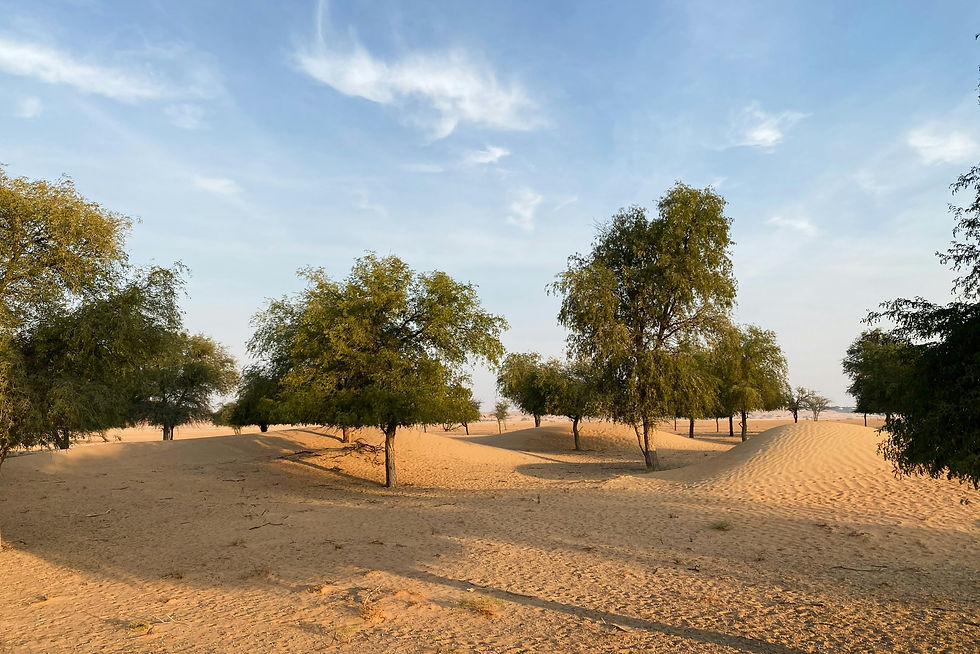
Water efficiency forms the backbone of the 2026 regulations. The manual strictly limits traditional overhead spray sprinklers for turf grass and encourages low-evaporation irrigation technologies. In my own villa landscaping experience, upgrading to smart weather-linked controllers significantly cut monthly DEWA utility consumption while staying fully compliant.
All commercial plots and master community common areas must connect directly to Dubai's Treated Sewage Effluent (TSE) network where available, reserving potable DEWA water exclusively for human consumption.
Automated Weather-Linked Controllers
Irrigation systems must utilize smart controllers capable of adjusting watering cycles based on local temperature, humidity, and wind conditions.
Subsurface Drip Networks
Drip lines must be installed at root depth beneath mulch layers to maximize water absorption and eliminate surface runoff.
Mandatory smart soil moisture sensors linked to automated irrigation timers (as of September 2026).
Requirement for subsurface drip lines under all shrub beds and tree root zones to cut evaporative loss by up to 45% (indicative — verify with contractor).
Automated flow meters equipped with leak detection shut-off valves for all plots exceeding 500 square meters.
Strict prohibition of daytime overhead spraying between 10:00 AM and 5:00 PM during summer months.
Approved Plant Palette: Recommended vs Restricted Species
Dubai Municipality's 2026 handbook features a comprehensive plant classification index categorizing species by drought tolerance, root growth characteristics, and ecological benefit. Choosing the right species avoids damage to underlying underground utilities and foundation walls.
Recommended Native and Adapted Plants
High-performing species include the Ghaf tree, Sidr tree, Bougainvillea, Desert Rose, Washingtonia Palm, and Date Palm. These plants thrive in local alkaline soil conditions and require minimal supplemental fertilization.
Restricted and High-Water Consumption Flora
Large expanses of water-intensive natural turf grass (such as Bermuda grass) are restricted on private plots unless supported by recycled TSE water lines. Invasive trees with aggressive surface root systems that disrupt pavements are explicitly banned near public boundary walls.
Developer Compliance, Inspections, and Approval Timelines

For anyone investing in off-plan developments or building custom villas, navigating the municipal landscape NOC (No Objection Certificate) process is critical. Dubai Municipality conducts multi-stage audits before issuing final Building Completion Certificates.
Non-compliance can lead to inspection rejections, delayed handover schedules, and municipal fines. If you are tracking new property launches across the emirate, checking whether the developer has pre-approved master landscaping plans ensures smoother community handovers.
Phase 1: Landscape Concept Plan submission alongside architectural drawings.
Phase 2: Irrigation hydraulic calculation and TSE connection review.
Phase 3: On-site pre-inspection of soil preparation and plant spacing.
Phase 4: Final site audit for Building Completion Certificate and NOC issuance.
I always advise buyers checking villa handover checklists to request the approved landscape NOC upfront—unapproved greenery can delay your Ejari registration and utility activation.
Cost Indications, Property Valuations, and Service Charges
Implementing compliant 2026 landscaping standards carries initial capital expenditure, but yields strong long-term benefits in property resale values and community service charge management. Softscaping and smart irrigation installation costs typically range from AED 120 to AED 250 per square meter as of September 2026 (indicative — verify with contractor/developer).
Properties featuring mature, water-efficient native landscaping and park views often command a premium in the secondary market. Buyers exploring [single-row villa buyer guides](single-row-villa-dubai-investment-buyer-guide) will find that compliant green perimeter buffers enhance privacy while protecting long-term capital appreciation. Similarly, master-planned developments featured in our [dubai off-plan launches tracker](dubai-off-plan-new-launches-tracker) and projects like [Athlon by Aldar townhouses](athlon-by-aldar-dubai-townhouse-price-payment-plan) incorporate these sustainable greenery guidelines to optimize community service fees over time.
Disclaimer: This article is for informational purposes only and does not constitute financial, legal, or professional landscaping advice. All figures, regulations, and costs are indicative as of September 2026 and subject to change by Dubai Municipality or master developers.
FAQ
What is the minimum green coverage required for private villas in Dubai under the 2026 manual?
As of September 2026, private villa plots must maintain a minimum of 15% softscape greenery relative to total plot area, with at least 40% consisting of native or adapted flora species (indicative — verify with Dubai Municipality).
Can I use potable DEWA water for garden irrigation in Dubai?
While potable water is permitted for small private villa gardens, the 2026 manual mandates subsurface drip systems and smart sensors to minimize usage. Commercial plots and master communities must connect to Treated Sewage Effluent (TSE) lines.
Are Ghaf trees protected under Dubai Municipality landscaping rules?
Yes, the Ghaf tree is the UAE's national tree and is strictly protected under Dubai Municipality regulations. Removing or damaging a Ghaf tree without official permits incurs heavy fines.
Do I need Dubai Municipality approval before landscaping my villa garden?
Yes, structural landscaping alterations, tree planting near boundary walls, or irrigation modifications require a landscape NOC from your master developer and Dubai Municipality prior to starting work.
Useful Links
Dubai Municipality Official Portal · Dubai Land Department · UAE Government Official Portal · RTA Dubai Permits · Dubai Police E-Services · Dubai Municipality Instagram
Pair It With
Single Row Villa Dubai Investment Buyer Guide · Dubai Off Plan New Launches Tracker · Athlon By Aldar Dubai Townhouse Price Payment Plan

— Angel Tyagi, Creator of Angel In Dubai
Prices, timings and availability may change — always check directly with the venue before visiting. Not sponsored.
Story lead: Zawya. Reporting can be updated or withdrawn after publication — always check the original before relying on anything here.
Rates and figures are indicative and were correct as of 3 September 2026; they change often, so verify with the provider before acting. This is general information, not financial advice.
Angel in Dubai is not a real-estate broker and holds no DLD or RERA advertising permit. Any prices here are reported market data as of the date noted — not an offer, and not an invitation to buy. Verify directly with the developer or on the Dubai Land Department portal.
Rules, fees and deadlines change often. This is a general summary, not legal advice — confirm with the relevant UAE authority before acting.
Photo by Julius Yls via unsplash, Photo by Dinu J Nair via unsplash, Photo by Datingscout via unsplash, Photo by Pavlo Antonio via unsplash


Comments