


Dubai Metro Expansion 2026: Which New Stations Will Boost Property Values
- Jul 8
- 6 min read
There is a particular thrill in standing on a half-finished Dubai Creek Harbour boardwalk and hearing, faintly, the drone of tunnel-boring machinery somewhere beneath your feet. That sound, more than any developer brochure, is what has Dubai's property circles talking this month.
Between April 2026's unveiling of the Gold Line and the Blue Line already under construction, the Roads and Transport Authority is adding close to 30 new stations to the network over the next six years. For anyone who owns, rents, or is eyeing a unit near one of these future stops, the metro map has quietly become a property map.
The snapshot: two new lines, nearly 30 stations, AED 54.5 billion
As of 8 July 2026, Dubai is building two brand-new metro lines simultaneously — something the network hasn't done before:
Blue Line — approved and under construction: 30km, 14 stations (nine elevated, five underground), AED 20.5 billion, opening 9 September 2029. It runs in two branches meeting at International City, linking Al Jaddaf, Dubai Festival City, Dubai Creek Harbour, Ras Al Khor, International City, Dubai Silicon Oasis and Academic City on one side, and Al Rashidiya, Mirdif and Al Warqa on the other.
Gold Line — unveiled 22 April 2026: 42km, fully underground, 18 stations, AED 34 billion, opening 9 September 2032. It runs from Al Ghubaiba through City Walk, Business Bay, Downtown, Meydan, Dubai Hills, Al Barsha and JVC to Dubai Production City and Jumeirah Golf Estates, with a future Etihad Rail interchange.
Combined effect: the network grows from 120km to 162km — roughly a 35% expansion — and directly touches an estimated 55 real-estate developments currently under construction.
Sources: Gulf News — Gold Line route map, Khaleej Times — Blue Line completion date, The Week — Gold Line 42km/18 stations.

A Dubai Metro train on an elevated stretch of track downtown — the same rail-first model the Blue and Gold Lines will extend into new neighbourhoods. Photo: Rob Dammers via Wikimedia Commons.
What's actually driving the price conversation
I want to be careful here, because a lot of what circulates on Instagram this month rounds up to "metro = instant riches." The honest picture is more specific.
1. Historical precedent is real, but it's a range, not a guarantee
Academic and industry studies of the original Red and Green Lines found residential properties in directly connected areas saw price growth in excess of 26% over their observation windows, and rents on stations-adjacent stock have commanded up to 30% more than comparable units further away. Portals and agencies covering the new lines are citing similar 22–30% appreciation for units within roughly 500 metres of a confirmed station, as of July 2026. These are historical and current-market observations, not a promise about what happens to any specific building.
2. The uplift shows up before the trains do
Dubai's off-plan market prices in infrastructure years ahead of completion — the Blue Line opens 2029, the Gold Line 2032, and buyers are already repositioning around both. That's the classic "buy the rumour" pattern this city has run before with the Red Line and the Expo 2020 Route 2020 extension.
3. Not every station lifts every building equally
Direct walking distance to a station entrance matters more than being "in the area." A villa community two kilometres from a Gold Line stop in Dubai Hills won't see the same effect as an apartment tower built to front onto the station plaza. Noise, construction disruption during the multi-year build, and unit type (studios/1-beds near transit hubs tend to see the strongest rental demand) all shape the real number.
My honest read after a decade of covering this market: buy the location and the building quality you'd want even without the metro line — then treat the future station as a bonus, not the whole thesis.

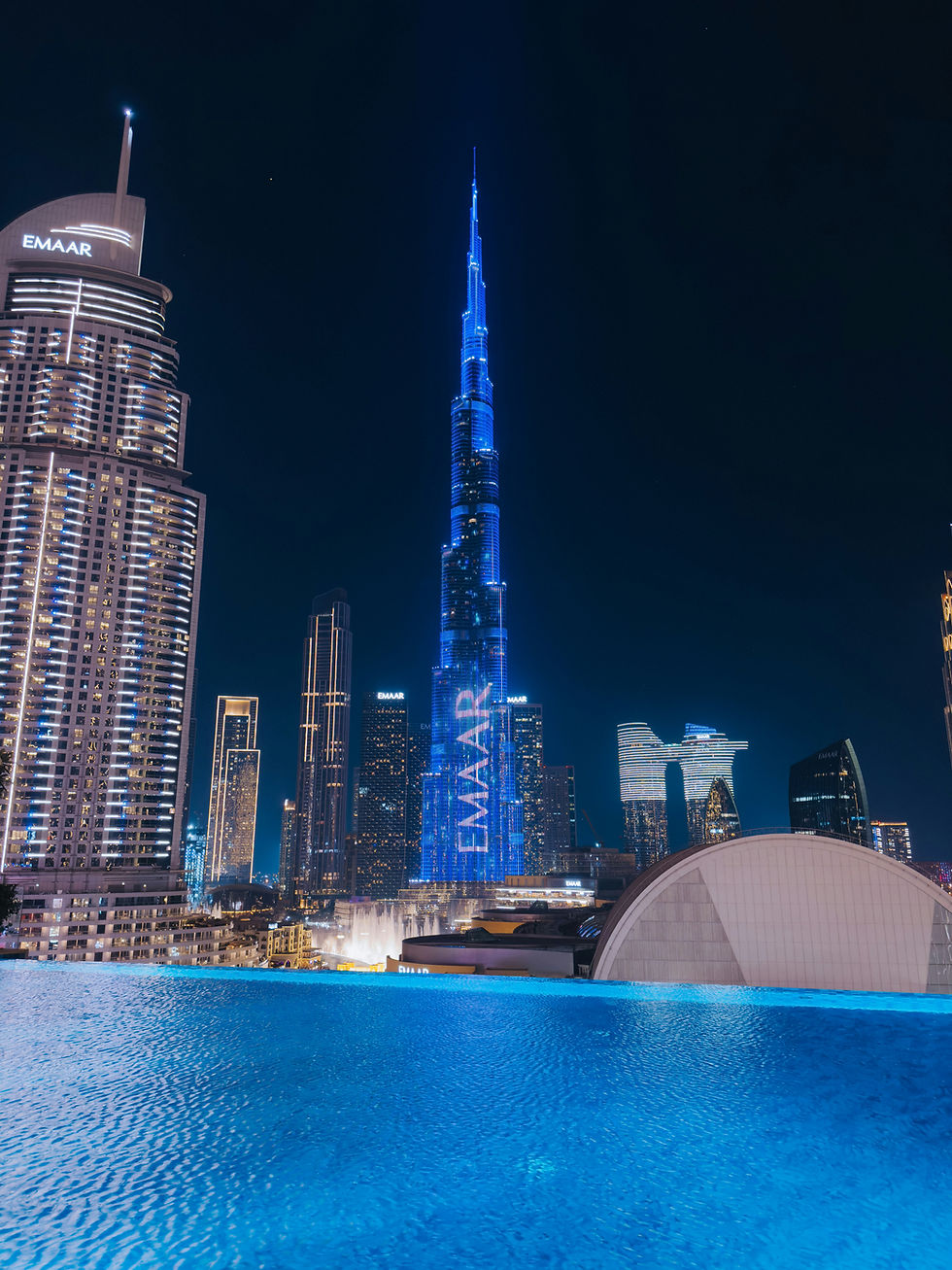
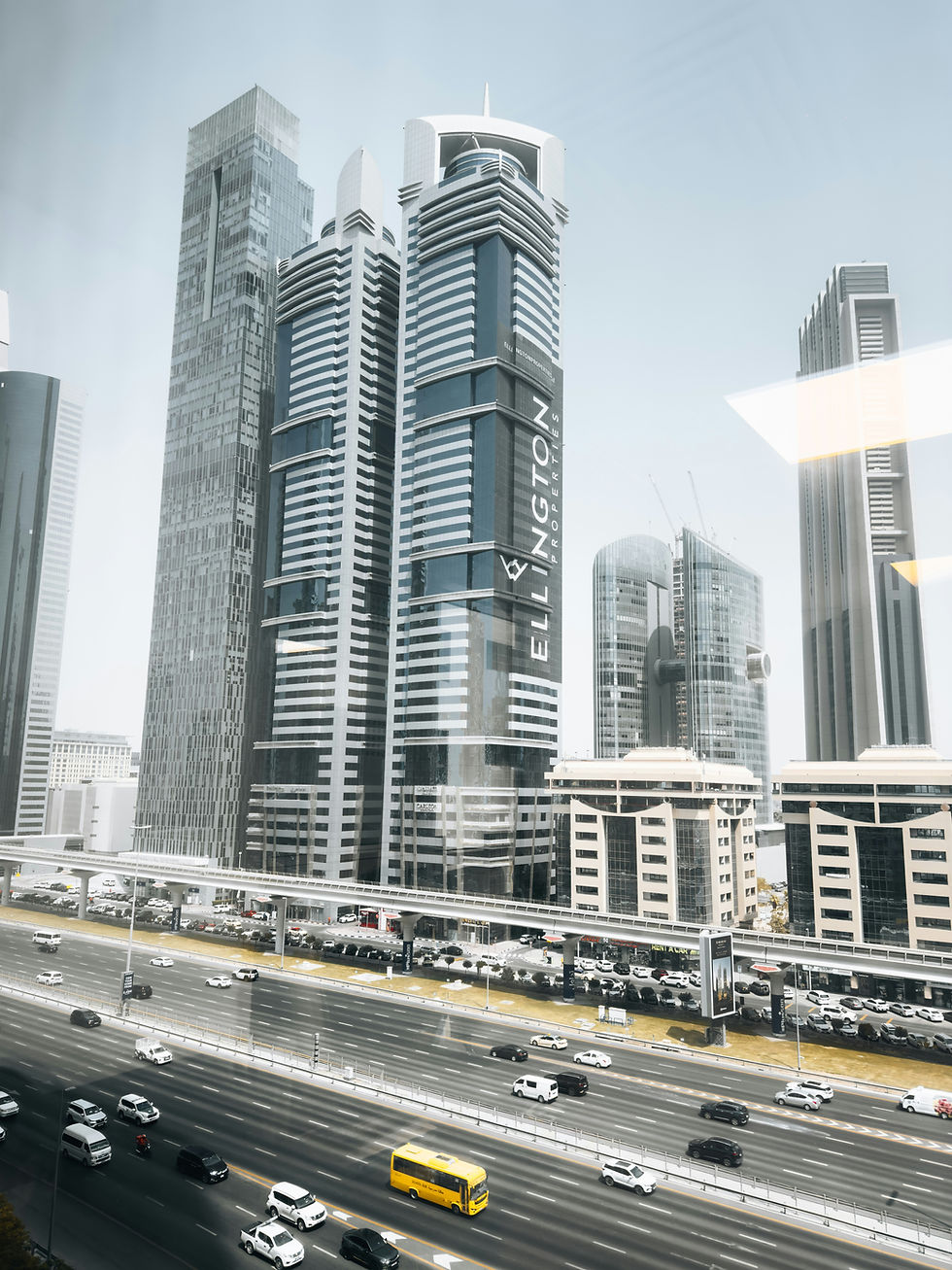
Downtown Dubai and Business Bay, where the Gold Line's Burj Khalifa Road and Business Bay Interchange stations will sit — already among the city's most metro-dependent commercial districts. Photo via Wikimedia Commons.
Who this actually affects
End-user buyers: a future station can be a genuine lifestyle upgrade — no car needed for a DIFC or Downtown commute from JVC or Dubai Production City once the Gold Line opens in 2032.
Off-plan investors: areas like Dubai Creek Harbour, Meydan and Dubai Hills already carry "metro-adjacent" premiums in current launch pricing — worth asking developers directly which stations serve their masterplan and how far the walk actually is.
Landlords with existing stock: Mirdif, Al Warqa and International City — all served by the new Blue Line — have historically been rental-yield plays rather than capital-appreciation plays; better transit access could shift that balance by 2029.
Renters: expect gradual rent increases on stations-adjacent buildings as each line nears completion, well before the first train runs.
What to watch next
A few dates worth putting in your calendar if you're tracking this:
September 2029: Blue Line target opening — RTA has stated this date publicly; construction milestones will be the leading indicator of whether it holds.
Through 2026–2027: watch Dubai Land Department transaction data and portal listing-price trends for the specific streets fronting confirmed Gold Line and Blue Line stations, not just the wider district.
September 2032: Gold Line target opening, plus the Etihad Rail interchange at Jumeirah Golf Estates, which adds a second layer of connectivity value for that specific node.

An RTA metro train on an elevated section of track — the same Alstom rolling stock design being extended onto the new Blue and Gold Line routes. Photo via Wikimedia Commons.
If you're weighing a purchase near a future station
This is where I'd point you to the practical numbers rather than the hype. Before you factor a metro premium into an offer, run the same math I use for any Dubai property decision — check the
Dubai Mortgage & Home Loan Rates Comparison if you're financing, and if the unit is off-plan, cross-reference it against the Dubai Off-Plan New Launches Tracker to see how the developer is already pricing the metro connectivity into the launch.
Illustrative example only, as of 8 July 2026: if a one-bedroom near a confirmed Gold Line station in Dubai Hills is priced at AED 1.4 million and comparable non-metro-adjacent units in the same community rent for AED 85,000/year (per current Bayut/PropertyFinder listings), a station-adjacent premium historically observed in the 20–30% rental range would be an assumption, not a guaranteed uplift — treat it as a scenario to stress-test, not a return to bank on.
Rates, prices and station-distance premiums are indicative and change frequently — always verify current figures directly with the bank, developer or a licensed valuer before acting. This is not financial advice.
Pair it with
For the wider context on how much capital is actually moving through Dubai property right now, see my breakdown of Dubai's H1 2026 real estate sales hitting AED 221.3 billion.
FAQ
How many new Dubai Metro stations are being built in total?
Between the Blue Line (14 stations, opening September 2029) and the Gold Line (18 stations, opening September 2032), the RTA is adding close to 30 new stations across the two projects, as of July 2026.
Which areas benefit most from the Dubai Metro Gold Line?
The Gold Line's confirmed route touches City Walk, Business Bay, Downtown Dubai, Meydan, Dubai Hills Estate, Al Barsha, Jumeirah Village Circle, Dubai Production City and Jumeirah Golf Estates — all areas already seeing metro-connectivity premiums in current listing prices.
Does a nearby metro station guarantee higher property value?
No. Historical data shows meaningful average uplift for metro-adjacent buildings, but the effect varies by walking distance, unit type and building quality — it is a factor to weigh, not a guaranteed return, and this is not financial advice.
When does the Dubai Metro Blue Line open?
The RTA has stated a target opening date of 9 September 2029 for the Blue Line, connecting Al Jaddaf, Dubai Creek Harbour, International City, Dubai Silicon Oasis, Academic City, Mirdif and Al Warqa.
Is it worth buying off-plan near a future metro station?
It can be, but treat the metro connection as one factor among several — location fundamentals, developer track record, payment plan and service charges matter just as much. Always verify current rates and prices with the developer or bank before committing, as this is not financial advice.

— Angel Tyagi, Creator of Angel In Dubai
Prices, timings and availability may change — always check directly with the venue before visiting.
This content is for informational purposes only and does not constitute financial advice.
Photos: Rob Dammers, and Wikimedia Commons contributors (CC BY 2.0 / CC BY-SA 3.0).

Comments