


Dubai Metro 29 New Stations Guide 2026: Route Map and Locations
Standing on the elevated footbridge at Centrepoint station during the evening rush hour, watching commuters fan out across the concourse, the scale of Dubai transit dependency is obvious. For over a decade, the Red and Green Lines have shouldered the daily journeys of over two million weekly passengers, but suburban expansion across eastern and southern Dubai left noticeable gaps in the rail network.
The Roads and Transport Authority has officially detailed the full trajectory for the twenty-nine new stations joining the network, anchored primarily by the thirty-kilometer Blue Line and critical network extensions. Traversing key residential hubs from Dubai Creek Harbour and Academic City to International City and Mirdif, these new stations reshape how we commute, rent, and move across the emirate through 2029 and into 2030.
At a glance | Details |
|---|---|
New stations | 29 planned stations across Red, Green and Blue networks |
Project investment | AED 18 billion total capital expenditure |
Route length | 30 kilometers of track with 15.5 km underground |
Key interchanges | Centrepoint, Creek, and Academic City junction hubs |
Target completion | Operational opening scheduled for 2029 |
Complete Overview of the 29 New Metro Stations and Route Blueprint
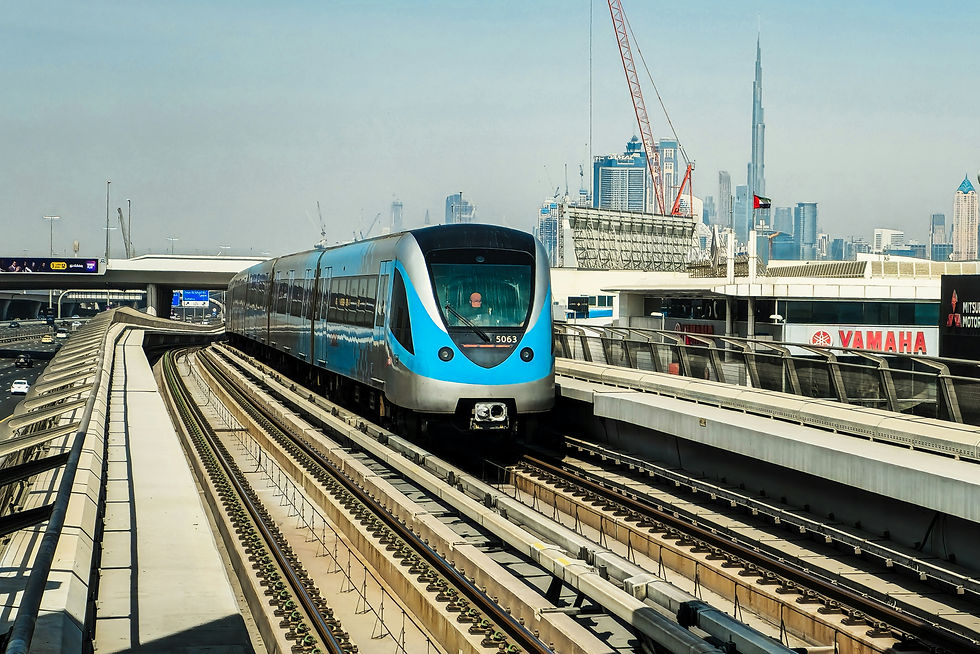
Dubai ambitious railway expansion represents the largest single leap in urban mass transit since the original Red Line inaugurated commercial service in September 2009. The centerpiece of this expansion is the Blue Line, a thirty-kilometer network comprising fourteen new passenger stations that bridges the gap between the existing Red Line in Rashidiya and the Green Line in Al Jaddaf.
According to detailed project releases from RTA Dubai, the thirty-kilometer Blue Line route incorporates both elevated viaducts and underground tunneling. Official announcements broadcast by the Emirates News Agency confirmed the AED eighteen billion budget allocation for comprehensive metro infrastructure construction.
Public sustainability guidelines hosted on the UAE Government Portal outline target benchmarks for shifting twenty percent of daily trips to mass transit.
Underground vs Elevated Route Segments
The route splits into two distinct structural phases. Exactly fifteen point five kilometers run beneath densely settled urban neighborhoods via subterranean tunnels, housing five underground stations. The remaining fourteen point five kilometers climb onto viaducts with nine elevated stations spanning major highways like Sheikh Mohammed Bin Zayed Road and Al Khail Road.
Rolling Stock and Automated Capacity
Twenty-eight new driverless trainsets have been commissioned to service the line, each equipped with five carriages featuring Gold Class, Women and Children cabins, and high-capacity Silver Class seating. During peak periods, the automated signaling system permits headways as tight as ninety seconds between arriving trainsets.
Key Interchange Hubs Connecting the Red, Green, and Blue Lines
What makes the twenty-nine station expansion fundamentally distinct from earlier spur lines is its integration of multiple interchange hubs. Rather than forcing all transfers into historical bottlenecks like Union and BurJuman, the new alignment creates direct orbital connections that bypass the crowded historic city core entirely.
Commuters traveling from eastern residential suburbs will no longer need to travel west before pivoting south. The network creates seamless passenger flow across multiple transport corridors.
Interchange Hub | Connecting Lines | Station Type |
|---|---|---|
Centrepoint | Red and Blue | Elevated junction |
Creek Station | Green and Blue | Underground junction |
Academic City | Blue Line split | Elevated terminal |
Transferring between lines at Creek station will finally link Deira and Dubai Creek Harbour without forcing commuters through BurJuman or Union.
Neighborhood by Neighborhood Breakdown of Station Locations
The station placement strategy focuses on high-density residential developments, innovation business hubs, and educational clusters that have developed rapidly over the past decade. For hundreds of thousands of residents, the expansion converts car-dependent suburban enclaves into transit-oriented communities.
Transit safety protocols managed by Dubai Police will integrate automated surveillance and crowd flow sensors across every new platform concourse. Here are the core communities anchored by the new station footprints:
Dubai Creek Harbour with two dedicated waterfront stations serving residential towers and the central boulevard
Dubai Festival City connecting the retail mall, waterfront promenade, and surrounding commercial offices
Ras Al Khor industrial zone and wetland visitor sanctuary
Dubai International City featuring two stations designed to relieve chronic surface bus congestion
Dubai Silicon Oasis connecting tech startup incubators, corporate headquarters, and residential villas
Dubai Academic City providing direct platform access for tens of thousands of university students
Mirdif and Al Warqaa gaining dedicated rail links to eliminate morning bottlenecks on Airport Road
Engineering Timeline, Construction Milestones, and 2029 Opening

Building thirty kilometers of electrified rail through dense infrastructure requires rigorous civil engineering sequencing. Grid power coordination reports from DEWA detail the construction of dedicated traction substations to energise driverless train operations.
The project timetable follows five structured phases to achieve passenger readiness by 2029:
Complete tunneling contracts and underground borehole surveys across creek bed geological formations
Construct primary viaduct piers and underground station cavern boxes along major highway easements
Lay thirty kilometers of electrified ballastless track and install third rail power delivery networks
Deliver initial fleet of automated driverless rolling stock to the primary maintenance depot
Conduct comprehensive safety testing and trial passenger runs ahead of 2029 launch
Commuting Time Reductions Across Key Dubai Travel Corridors
For everyday residents, the real measure of the twenty-nine new stations is the dramatic reduction in daily travel times. Peak hour bottlenecks along Sheikh Mohammed Bin Zayed Road and Dubai Al Ain Road frequently push surface car commutes past an hour for simple ten-kilometer journeys.
Urban planning directives issued by Dubai Municipality require high-density pedestrian access corridors around all newly zoned underground metro exits.
International City to Downtown and DIFC
A morning drive from International City to DIFC currently demands forty-five to sixty minutes in congested traffic. The direct Blue Line connection to Centrepoint and subsequent Red Line transfer will compress this trip to twenty-two minutes regardless of highway conditions.
Academic City to Dubai International Airport
Students and faculty heading from Academic City to Terminal 3 will enjoy a direct thirty-minute journey without switching between multiple feeder buses and suburban taxi routes, lowering daily transit costs substantially.
Skipping the morning jam on Al Awir Road alone will reclaim nearly four hours of commuting time each week for International City residents.
Property Rental Premiums and Resident Living Impact
Infrastructure expansions consistently reshape Dubai property economics. Historical transaction data from the Red and Green Line openings demonstrated that residential properties situated within a ten-minute walk of a metro station enjoyed twelve to eighteen percent higher rental yields and lower vacancy rates compared to transit-isolated buildings.
Landlords in Silicon Oasis, Mirdif, and International City are already pricing future transit connectivity into lease renewal forecasts. Tenants looking to secure affordable long-term contracts should consider locking in leases before structural viaduct construction becomes visible on neighborhood streets.
Ten-minute walking catchment zones see highest capital appreciation and rental liquidity
Reduced tenant dependency on private car ownership and expensive secondary parking bays
Increased footfall for retail convenience shops anchored around new station entry plazas
Substantial reduction in household transport budgets for young professional families
FAQ
When will the 29 new Dubai Metro stations open to passengers?
The newly announced Dubai Metro stations, headlined by the Blue Line expansion, are scheduled to open for commercial passenger service in 2029. Initial tunneling and heavy civil works commenced following tender finalisation, with operational safety trials scheduled throughout early 2029.
Which communities will the new Dubai Metro Blue Line connect?
The Blue Line connects nine major residential and commercial districts across Dubai. Primary areas include Dubai Creek Harbour, Dubai Festival City, Ras Al Khor, International City, Dubai Silicon Oasis, Academic City, Mirdif, and Al Warqaa, providing rail access to over one million residents.
Will ticket fares increase when the new metro stations open?
RTA fares will continue to operate under Dubai standard tiered transit zoning rules. Standard Nol card trips across one, two, or all zones will apply to the new stations, with fares ranging from AED three for a single zone to AED seven point five for all zones on regular silver Nol cards.
Where are the new interchange stations located on the Dubai Metro?
The network features three primary interchange stations connecting the existing and new lines. Centrepoint station in Rashidiya connects the Red Line to the Blue Line, Creek station connects the Green Line to the Blue Line, and an integrated transit hub at Academic City links regional feeder corridors.
Useful Links
RTA Dubai — View official metro blueprints and service alerts
Emirates News Agency — Read official government transit contract awards
UAE Government Portal — Review master plan sustainable transit goals
Dubai Police — Inspect smart metro station security systems
DEWA — Inspect electrical substation grids for metro
Dubai Municipality — Check civic zoning around transit hubs
Pair It With

— Angel Tyagi, Creator of Angel In Dubai
Prices, timings and availability may change — always check directly with the venue before visiting. Not sponsored.
Story lead: Time Out Dubai. Reporting can be updated or withdrawn after publication — always check the original before relying on anything here.
Rules, fees and deadlines change often. This is a general summary, not legal advice — confirm with the relevant UAE authority before acting.
Photo by Miguel Joya via unsplash, Photo by aboodi vesakaran via unsplash, Photo by web via web


Comments