


Emirates Just Launched the World's First Travel Insurance Like This — Here's What It Covers
- Jun 18
- 5 min read
There is a particular kind of quiet you feel at the gate when everything has gone right — boarding pass scanned, bag checked through, a window seat on the A380 and the long golden curve of the Dubai evening waiting on the other side. And then there is the other kind: the scroll through delay notices, the half-understood travel-insurance fine print, the small worry of what happens if a trip does not go to plan. This week Emirates went after exactly that second feeling — and the result is, by the airline's own account, a genuine world first.
On 17 June 2026, Dubai's flagship carrier launched what it is calling the world's most comprehensive travel insurance for its passengers: a single, airline-backed cover designed to wrap around your whole journey rather than just the easy, predictable bits. Here is exactly what it includes, how you add it to a booking, and my honest take on whether it is worth ticking the box.
What Emirates just launched
According to the official announcement from Emirates, the new Comprehensive Travel Cover makes it the first airline in the world to offer this depth of protection as an integrated product, created in partnership with Travel Guard. As reported by Arabian Business and Gulf Business, it folds trip cancellation, baggage and worldwide medical cover into one policy you can buy directly when you book your flight — no hunting for a third-party plan, no guessing whether your airline and your insurer will actually talk to each other if something goes wrong.
What the Comprehensive Travel Cover actually includes
Strip away the marketing and the cover is genuinely broad. Per the airline's own breakdown, a single policy bundles together the protections most travellers usually have to assemble piecemeal:
Unlimited medical and emergency evacuation — worldwide cover for medical expenses and emergency evacuation, which is the line item that matters most and is exactly where cheap policies tend to cap out.
Trip cancellation cover — protection if you have to cancel before you fly, for the covered reasons set out in the policy.
Baggage delay and loss — compensation if your bag is delayed or lost — the everyday mishap that quietly ruins the first day of a trip.
Conflict-related medical cover — reimbursement of medical expenses of up to US$25,000 for conflict-related incidents, a benefit most standard travel policies simply exclude.
Free trip extension — a complimentary extension of your stay of up to 30 days if disruption keeps you from travelling as planned.
Airline-managed support — hotel accommodation and, where needed, complimentary rebooking onto other airlines to get you to your destination during major disruption.
A useful detail flagged by Economy Middle East: the medical and disruption protection is designed to apply regardless of government travel advice — so the cover does not quietly evaporate the moment a journey gets complicated, which is precisely when travellers have historically found their old policies least helpful.

The headline feature — and why it is a first
The reason this has made headlines from London to Singapore is the conflict-related medical cover and the up-to-30-day free extension. Travel insurance, as anyone who has read the fine print knows, has traditionally drawn a hard line around anything it deems out of the ordinary — leaving exactly the most stressful scenarios uncovered. By building protection around disruption rather than excluding it, Emirates has flipped the usual logic: instead of a policy that works beautifully right up until you actually need it, this one is meant to keep working when plans wobble.
It is worth being clear-eyed about what this is and is not. This is an insurance product with terms, conditions and limits — the US$25,000 conflict-medical figure and the 30-day extension are caps, not blank cheques, and availability varies by market. But as a statement of intent from a major carrier, it is a meaningful raising of the bar for what travellers can expect to be looked after for.
My honest tip after more flights than I can count: the value of travel insurance is never in the smooth trips — it is in the one journey a decade that goes sideways. I read the cover for the worst day, not the best one. A policy that quietly keeps working when a trip gets messy is worth far more than a cheaper one that politely excuses itself the moment things get interesting.

How to add it to your booking
Practically, this is refreshingly simple. The cover is an optional, paid add-on — Emirates describes it as an "accessible premium" but, as of June 2026, has not published a flat price; the exact cost is shown when you add it to a specific booking, since it varies by route and market. You can opt in two ways: tick the box when you book a new flight on emirates.com, or add it to an existing reservation through Manage Booking before you travel. At launch it was available across 24 markets — including the UAE, the UK, Canada, France, Germany, the Netherlands, Spain, Singapore and South Africa — so most of Emirates' major passenger bases are covered from day one. You can confirm the current terms and your market's availability directly with Emirates (their official Instagram is the quickest place to catch updates), and you will find the airline's home base on the map at Dubai International Airport.
Why this matters if you fly through Dubai
Because Emirates hubs entirely out of Dubai, this lands squarely in the lap of anyone whose travel runs through the city — residents flying home for the holidays, expats hopping to Europe or Asia for a long weekend, and the millions who connect through DXB every year. It is also part of a wider regional pattern of carriers competing on reassurance rather than just fares: Abu Dhabi has its own traveller-protection story, which I unpacked in my guide to free medical travel insurance for Abu Dhabi visitors. If you are mapping out where you can actually go from here, pair this with my rundown of every big new flight route from the UAE in 2026 — between the new destinations and the new safety net, this is a genuinely good moment to be flying out of Dubai.
Is it worth it? For a short, simple, fully-flexible trip you already have covered elsewhere, maybe not. But for a long-haul journey, a multi-stop itinerary, or any trip where peace of mind is part of the holiday, having medical, baggage and disruption protection sitting inside the same booking as your ticket is a quietly brilliant convenience. Read the policy for the worst day, weigh the premium against what you would pay a standalone insurer, and decide with your eyes open.

Not sponsored. This is general travel information, not insurance or financial advice — always read the full policy wording, terms, limits and exclusions before you buy, and confirm cover for your own circumstances. Product details (including the US$25,000 conflict-medical figure, the up-to-30-day extension, the 24 launch markets and the "accessible premium" pricing) are as of June 2026, are drawn from the official Emirates announcement and reporting by Arabian Business, Gulf Business and Economy Middle East, and may change. Verify the current terms directly with Emirates and Travel Guard before you rely on them.
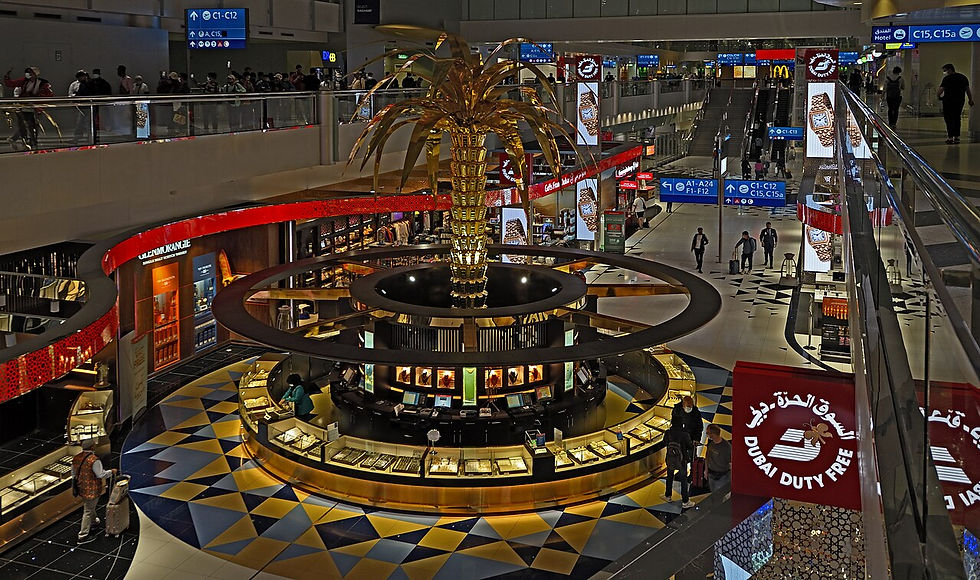
Photos: the Emirates A380 cover by Fabian Joy, the Emirates Boeing 777 by Unleashed Agency, and the Dubai Marina seaplane scene by Zahra, all via Unsplash; the Dubai International Airport Terminal 3 interior via Wikimedia Commons (depicting the actual DXB terminal); the airport-walkway image by Josh Sorenson via Unsplash is a representative travel photo, not DXB. All were reviewed this session for subject, location and quality.
— Angel Tyagi, Creator of Angel In Dubai


Comments