


Etihad Rail Dubai Metro Bridge Guide: Passenger Stations, Opening & Route 2026
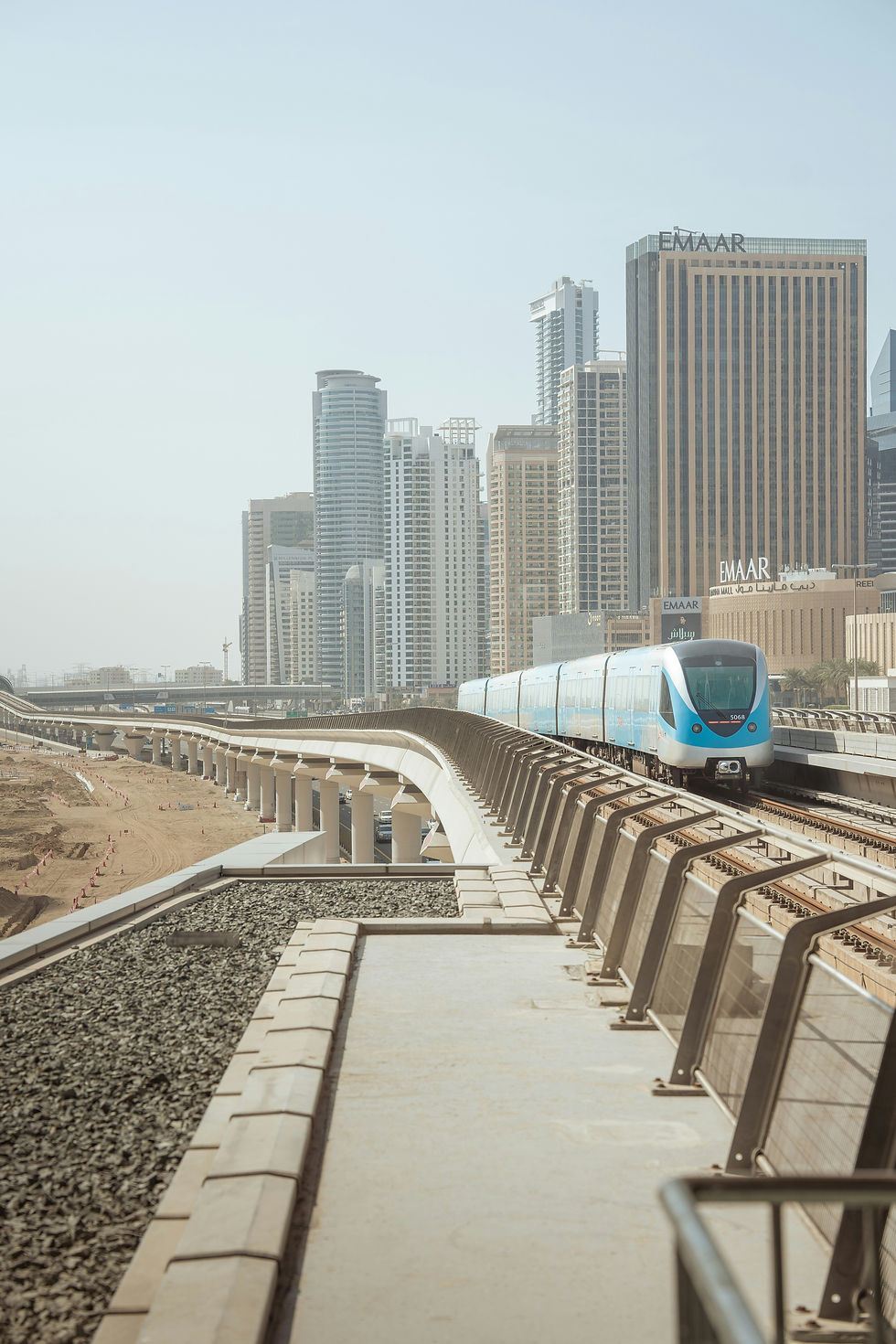
I stood on the Expo City pedestrian footbridge last Tuesday at seven in the morning, looking down at the newly finished steel-and-concrete rail flyover spanning the roadway below. A silver test locomotive rolled quietly along the freshly ballasted track, crossing right above the arterial lanes where thousands of cars were already crawling toward central Dubai at twenty kilometers an hour.
That elevated crossing is the physical link connecting the national Etihad Rail passenger corridor directly into Dubai's urban transit grid. For years, the promise of catching a passenger train from Dubai to Abu Dhabi in under an hour felt like an abstract rendering on a developer billboard, but seeing the physical tracks cross right beside the Red Line route confirms that the country's daily commute is on the verge of a permanent transformation.
At a glance | Details |
|---|---|
Bridge location | Jebel Ali corridor near Expo City |
Train top speed | 200 km/h passenger operating speed |
Dubai to Abu Dhabi | 57 minutes city center to center |
Dubai passenger hubs | Jebel Ali and Al Jaddaf interchanges |
Passenger launch | Phased network rollout through 2026 |
What the New Etihad Rail Dubai Metro Bridge Connects

The structural completion of the dedicated rail bridge linking Etihad Rail lines to Dubai Metro infrastructure marks the physical union of the national heavy rail network with the emirate's mass transit system. Engineered as an elevated viaduct that traverses high-capacity highway routes and utility corridors near Jebel Ali, the structure carries dual standard-gauge tracks engineered to support passenger trains traveling up to two hundred kilometers an hour alongside freight trains.
Official project briefs published by Etihad Rail confirm that structural integration along the Dubai corridor is now mechanically complete. By bridging the gap over arterial highway choke points, this elevated corridor eliminates ground-level track conflicts and ensures regional trains can interface with Dubai's western logistics and passenger nodes without slowing local road traffic.
Coverage of the bridge milestone from Emirates News Agency documented the final structural placement over major arterial roadways. The completed bridge deck now connects the southern rail segments arriving from the Abu Dhabi border toward designated depot facilities and passenger staging tracks adjacent to Dubai South.
Watching passenger tracks physically cross above the Sheikh Zayed Road corridor turns a long-promised national transit map into concrete reality.
Dubai Passenger Station Locations and Metro Interchange Hubs
Integrating passenger rail into Dubai requires more than laying steel across desert borders; it demands seamless interchange facilities where regional travelers can transfer directly onto city metro lines. The infrastructure plan establishes two primary passenger connection points within Dubai to balance suburban mobility with downtown access.
Checking the route layout on Google Maps reveals how close the southern rail junction sits to the Expo 2020 metro station. That strategic proximity enables a direct pedestrian and concourse link, allowing travelers arriving from Abu Dhabi or Al Ain to step off an intercity train and walk directly to Red Line turnstiles within three minutes.
Jebel Ali and Dubai South Passenger Gateway
The primary southern interchange station sits positioned between Jebel Ali, Dubai Investments Park, and the Expo City transit corridor. This hub serves daily corporate commuters traveling between Abu Dhabi industrial zones and Dubai commercial offices, offering park-and-ride facilities alongside direct Red Line metro connectivity.
Al Jaddaf Intermodal Terminal
To serve central and northern Dubai travelers, a secondary passenger facility is situated near the Al Jaddaf district adjacent to Dubai Creek. This station interfaces with the Dubai Metro Green Line and marine transit ferries, giving cross-country rail passengers immediate access to Business Bay, Downtown Dubai, and Deira.
UAE Intercity Commute Times Compared: Train vs Highway Driving
Anyone who commutes between Dubai and Abu Dhabi on the E11 know the daily dread of morning bottlenecks near Ghantoot and evening snarls around Downtown Jebel Ali. A predictable fifty-seven-minute rail journey completely changes the daily calculation for professionals who currently spend four hours behind the wheel every weekday.
Federal sustainability targets outlined on the UAE Government Portal mandate a significant passenger modal shift away from private cars. Operating electric-diesel passenger trains at cruising speeds of two hundred kilometers an hour cuts intercity travel times by more than half compared to peak highway driving.
The time savings become even more dramatic on cross-country journeys to the Northern Emirates and the East Coast, where single-lane bottlenecks and heavy truck traffic often double estimated weekend travel times.
Route | Train Time | Drive Time |
|---|---|---|
Dubai to Abu Dhabi | 57 minutes | 100 to 120 minutes |
Dubai to Fujairah | 105 minutes | 130 to 150 minutes |
Dubai to Sharjah | 18 minutes | 45 to 80 minutes |
Abu Dhabi to Ruwais | 70 minutes | 140 to 160 minutes |
Ticketing and Nol Card Integration for Daily Commuters
The operational success of any multi-tier transport network hinges on ticketing simplicity. If commuters must purchase separate tickets on different apps and queue twice during a morning transfer, convenience evaporates. Transport planners have designed the interchange hubs to support frictionless cross-system transit.
According to technical standards published by RTA Dubai, commuter transfer bridges will connect directly to existing metro fare gates. Commuters will be able to plan journeys and settle regional train fares using digital accounts coordinated directly with existing municipal smart cards.
Fare structures are designed around tiered service levels, including standard economy seating with laptop tables and complimentary Wi-Fi, premium business class cabins for quiet working, and discounted monthly commuter passes for daily inter-emirate workers.
Integrated smart gates supporting unified card taps between national rail and Dubai Metro
Dedicated air-conditioned pedestrian bridges linking train platforms to metro stations
Luggage-friendly passenger coaches with dedicated storage for travelers heading to Dubai South airports
Live arrival displays and synchronized timetable feeds inside the municipal journey planner app
Keep your digital Nol wallet funded because tapping through the regional train gates right into the metro concourse will shave twenty minutes off your daily transfer.
Expected Passenger Launch Phases and 2026 Milestones
The opening of the bridge over Dubai's transport corridor signals that heavy civil construction on the line is complete, clearing the path for operational safety certification and systems integration. Rail systems require extensive testing before passenger manifests are opened to the public.
Field progress updates shared on the Etihad Rail Instagram account show track electrification and passenger coaches undergoing testing. These trial runs evaluate braking distances, automated signaling response times, and station platform alignment under extreme summer temperature conditions.
High-Speed Dynamic Testing
Full-speed runs operating up to two hundred kilometers an hour are being carried out along the mainline tracks between Abu Dhabi and Dubai. These tests validate the European Train Control System Level 2 signaling that governs train separation and station approaches.
Commercial Passenger Timetable Rollout
Initial ticketed services are scheduled to open on priority intercity routes linking Abu Dhabi with Dubai South and Fujairah. Subsequent phases through 2026 will expand service frequency and add intermediate stops at Sharjah, Ras Al Khaimah, and Al Ruwais.
How the Rail Bridge Changes Daily Commuting in Dubai
For over a decade, Dubai's rapid urban expansion has pushed residential suburbs further south and east, creating heavy reliance on private cars and taxi fleets. The bridge connection between Etihad Rail and Dubai Metro effectively bridges two different scales of mobility: regional distance and local neighborhood delivery.
Residents living in suburban communities like Dubai Investments Park, Expo City, and Jumeirah Golf Estates will gain direct access to national rail corridors without having to drive to a central terminus. At the same time, professionals working in Downtown Dubai or DIFC can commute to meetings in Abu Dhabi's capital district without spending two hours in highway traffic.
This transit synergy will also accelerate commercial development around interchange hubs, transforming suburban transit stops into active mixed-use centers with retail dining, co-working lounges, and pedestrian-friendly public spaces.
Living in Dubai while working in Abu Dhabi has always demanded an exhausting highway grind; this rail bridge finally turns that daily slog into productive reading time.
FAQ
When will Etihad Rail open for regular passengers in Dubai?
Passenger services are conducting operational testing through 2026 with commercial service scheduled to open in stages, starting with intercity trunk routes connecting Abu Dhabi, Dubai, and Fujairah before full domestic commuter schedules commence.
Where is the main Etihad Rail passenger station located in Dubai?
Dubai will feature passenger facilities in the Dubai South corridor near Jebel Ali and Al Maktoum International Airport with connections to the Red Line, alongside a major transit facility near Al Jaddaf close to the Green Line.
Can I use my Dubai Nol card to pay for Etihad Rail tickets?
Under the bilateral transport framework between RTA and Etihad Rail, fare integration is planned through Nol accounts and unified digital ticketing, allowing commuters to tap through connected urban and national rail turnstiles.
How much will a train ticket cost from Dubai to Abu Dhabi on Etihad Rail?
While exact ticket tiers will be published closer to public launch, transport authorities have indicated fares will remain competitive with regional coach travel and private highway tolls, offering standard, business, and commuter pass structures.
Useful Links
Etihad Rail — official passenger network details and route updates
Emirates News Agency — verified government announcements and infrastructure bulletins
Google Maps — view interchange hub location near Expo
UAE Government Portal — federal transit regulations and inter-emirate travel rules
RTA Dubai — public transit maps and Nol fare integration
Etihad Rail Instagram — construction clips and train prototype footage
Pair It With

— Angel Tyagi, Creator of Angel In Dubai
Prices, timings and availability may change — always check directly with the venue before visiting. Not sponsored.
Story lead: timeoutdubai.com. Reporting can be updated or withdrawn after publication — always check the original before relying on anything here.
Photo by Dubai Travel Blog via unsplash, Photo by aboodi vesakaran via unsplash


Comments