


UAE Green Bonds and Sustainable Sukuk Guide 2026: What the Emirates NBD Deal Means for ESG Investors
I was standing inside the Emirates NBD private banking lounge in downtown Dubai earlier this week, listening to fixed income specialists pore over a term sheet that looked markedly different from the usual US dollar paper. Spread across the marble table was a CHF 150 million private placement, printed in Swiss francs to fund domestic solar installations and low-carbon commercial real estate across the Emirates.
The transaction marks a decisive turning point in how Gulf financial institutions source international capital. With European institutional investors paying close attention to Middle Eastern environmental frameworks, sustainable debt in the UAE is rapidly transitioning from a compliance showcase into an everyday liquidity engine.
At a glance | Details |
|---|---|
Issuance Size | CHF 150 million |
Issuer | Emirates NBD in Dubai |
Listing Venues | SIX Swiss Exchange and Nasdaq Dubai |
Target Tenor | 3 years maturing in 2029 |
Framework | ICMA Green Bond Principles 2026 |
Eligible Assets | Solar energy and Al Sa'fat buildings |
Why Emirates NBD Tapped the Swiss Franc Green Debt Market
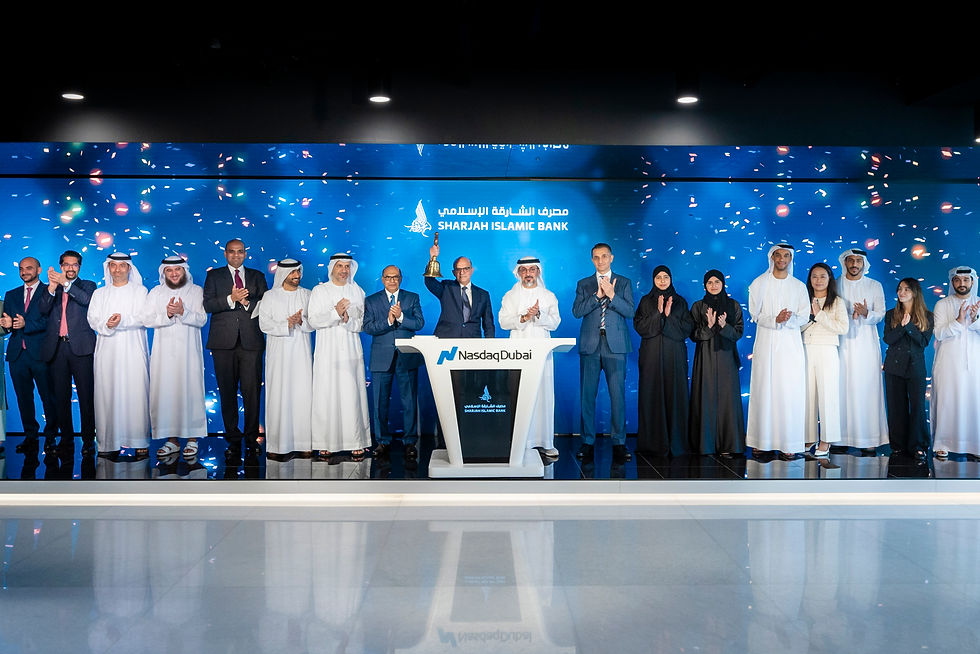
When banking group Emirates NBD priced its CHF 150 million green bond, the decision surprised market observers accustomed to standard benchmark US dollar issuances out of the Gulf. Swiss franc green issuances open direct access to a notoriously conservative investor base of private Swiss cantonal banks, pension funds, and dedicated European environmental wealth managers who rarely touch conventional emerging market debt.
By dual-listing the debt on the SIX Swiss Exchange and regional venues, the bank secured tightly priced funding tailored to long-dated infrastructure. The coupon pricing reflected strong European institutional appetite, allowing the lender to fund three-year sustainable asset portfolios without absorbing the typical spread premium demanded on secondary syndicated dollar paper.
This placement proves that regional issuers can bypass heavy domestic bank liquidity when funding environmental assets. European capital pools are actively hunting for rated investment-grade paper from the Middle East, provided the underlying projects meet transparent verification thresholds.
Currency | Tenor | Investor Base |
|---|---|---|
CHF | 3 to 5 years | Swiss institutional wealth managers |
USD | 5 to 10 years | Global sovereign and pension funds |
AED | 2 to 5 years | Domestic commercial bank treasuries |
How Green Sukuk Differ from Conventional Green Bonds
The structural distinction between conventional green bonds and sustainable Islamic certificates lies at the core of the UAE debt capital landscape. A conventional green bond functions as a direct promise to repay principal alongside periodic interest coupons, with the issuing institution pledging to ring-fence proceeds for qualifying green initiatives.
Islamic sukuk do not operate on interest or debt obligations. A green sukuk issues undivided beneficial ownership certificates in tangible assets or specified service contracts, generating asset-linked returns rather than traditional interest payments.
Asset Backing and Sharia Board Approvals
Every sustainable sukuk requires approval from an internal Sharia supervisory board before entering the market. The underlying assets must be tangible, operational, and socially constructive, which makes renewable solar installations and certified energy-efficient buildings natural fits for Islamic green tranches.
Secondary Trading Venues in the Gulf
Regional trading activity concentrates on Nasdaq Dubai, where green sukuk listings benefit from dual international clearing links. International clearing houses allow European and Asian institutional investors to clear Islamic sustainable paper with the exact same custodial workflow they use for London or Luxembourg debt.
Always check whether an Islamic green issuance is asset-backed or asset-based before projecting liquidity, because true asset ownership dictates secondary pricing behavior during volatile market cycles.
Eligible Projects Under UAE Sustainable Finance Frameworks
To issue compliant green debt, UAE institutions must publish comprehensive sustainable finance governance frameworks aligned with the International Capital Market Association guidelines. These documents define strict criteria for which domestic projects qualify to receive capital allocations from bond proceeds.
Utility-scale solar initiatives backed by DEWA represent one of the primary capital destinations for local green debt tranches. Projects linked to the Mohammed bin Rashid Al Maktoum Solar Park require substantial multi-year capital expenditure, making long-term fixed income instruments the ideal funding conduit.
Beyond utility power generation, proceeds flow into commercial building upgrades, municipal water efficiency pipelines, and clean urban mobility fleets. Issuers publish annual allocation and impact reports confirming metric tons of avoided carbon dioxide equivalents.
Rooftop and utility solar photovoltaic plants delivering verifiable clean kilowatt-hours
Commercial building retrofits achieving Al Sa'fat gold and platinum ratings
Desalination plant conversions from thermal energy to reverse osmosis technology
Corporate and public transport fleets transitioning to battery-electric powertrains
Understanding Coupon Yields and the GCC Greenium

Recent statements published through the Emirates News Agency (WAM) highlight how regional green issuances frequently achieve pricing parity with or outperform conventional paper. In global debt markets, this pricing advantage is known as the greenium, representing the basis points an issuer saves because investor demand for sustainable paper outstrips available supply.
For Gulf investment-grade institutions, the greenium historically hovered around two to five basis points. In Swiss franc and euro private placements, the primary benefit often appears not as a massive coupon discount, but rather as book depth, drawing bids from institutional portfolios that are legally barred from buying standard carbon-intensive sovereign debt.
This dynamic creates a competitive environment for local corporate treasurers. Companies that invest in proper ESG auditing and impact frameworks can tap international capital pools during periods when conventional debt syndication faces headwinds from volatile global interest rates.
A green bond coupon rarely cuts borrowing costs by full percentage points, but the real dividend shows up when your order book fills three times over while conventional books sit half empty.
How National Decarbonization Mandates Accelerate Issuance
Strategic directives published on the UAE Government Portal outline the national commitment to reaching net zero greenhouse gas emissions by 2050. Achieving this target requires billions of dirhams in private capital deployment across heavy industry, real estate development, and transport logistics.
The UAE Sustainable Finance Working Group, which brings together central banking regulators and local securities authorities, has introduced standardized ESG disclosure rules for public joint stock companies. These reporting standards force commercial lenders to examine the carbon footprint of their entire loan portfolios.
As banks decarbonize their own balance sheets, offering green loans and refinancing them via international green bonds becomes an operational necessity. The pipeline of corporate sustainable debt is projected to expand significantly as medium-sized enterprises seek preferential green credit terms.
How Accredited and Retail Investors Can Participate
Secondary access is expanding through Dubai Financial Market and regional brokerage houses that offer fixed income trading desks to qualified investors. While primary wholesale debt tranches typically carry minimum ticket sizes of USD 200,000 or CHF 100,000, secondary trading platforms allow qualified high-net-worth investors to purchase smaller lots.
Retail investors looking for exposure to local sustainable debt generally access the asset class through regional ESG exchange-traded funds and mutual funds. These funds aggregate green bonds and sukuk issued by Gulf financial institutions, providing regular coupon income alongside geographic diversification.
Individual investors should examine whether a target fund holds conventional debt or Sharia-compliant sukuk. Checking the fund fact sheet confirms the percentage of capital allocated to UAE green projects versus wider regional emerging market issuances.
Do not let wholesale minimum denominations discourage you from the sector, because domestic ETF listings now offer fractional exposure with no minimum lock-in penalties.
FAQ
What is the typical minimum investment amount for UAE green bonds?
Institutional wholesale tranches generally require a minimum ticket of USD 200,000 or CHF 100,000 at initial book building. Qualified private banking clients in the UAE can often access secondary odd lots starting from USD 50,000 through regional relationship managers. Retail investors can gain exposure with as little as AED 500 through locally listed ESG exchange-traded funds on regional exchanges.
Are yields on UAE green bonds subject to UAE corporate tax?
Under Federal Decree-Law No. 47 of 2022 on the Taxation of Corporations and Businesses, qualifying income earned by non-resident corporate investors from UAE debt instruments and sukuk is generally subject to a zero percent withholding tax. Individual investors holding personal wealth or private investments are exempt from UAE corporate income tax on coupon gains. Institutional domestic entities should review their specific free zone or mainland corporate tax filings for net interest calculations.
How do independent agencies verify that green bond proceeds are spent properly?
Issuers commission a Second-Party Opinion from specialized ESG rating agencies such as S&P Global, Sustainalytics, or Moody's before launching debt. Following allocation, external auditors verify that every dirham spent directly correlates with qualifying assets listed under the issuer published sustainability framework. Annual post-issuance impact reports must disclose specific metrics like megawatt-hours generated or cubic meters of water treated.
Can foreign non-resident investors trade UAE sustainable sukuk?
Foreign investors can freely purchase and trade UAE green sukuk listed on Nasdaq Dubai and regional exchanges without foreign ownership caps. An investor needs an active National Investor Number registered with the exchange, which can be acquired through an authorized international or local brokerage. Clearing takes place through Euroclear, Clearstream, or direct exchange depository systems.
Useful Links
Emirates NBD — View official sustainable finance framework details
SIX Swiss Exchange — Check Swiss bond listing and settlement
Nasdaq Dubai — Track secondary green debt trading data
DEWA — Explore renewable energy infrastructure project criteria
Emirates News Agency (WAM) — Read official sovereign sustainable debt disclosures
UAE Government Portal — Review national sustainable finance policy guidelines
Dubai Financial Market — Monitor local listed corporate debt securities
Pair It With

— Angel Tyagi, Creator of Angel In Dubai
Prices, timings and availability may change — always check directly with the venue before visiting. Not sponsored.
Story lead: Zawya. Reporting can be updated or withdrawn after publication — always check the original before relying on anything here.
Rates and figures are indicative and were correct as of 1 October 2026; they change often, so verify with the provider before acting. This is general information, not financial advice.
Rules, fees and deadlines change often. This is a general summary, not legal advice — confirm with the relevant UAE authority before acting.
Photo by List of Emirates NBD Branches, ATMs, and CDMs in Dubai via web, Photo by Nasdaq Dubai - Region’s international financial exchange via web, Photo by web via web


Comments