


How to Use DIFC Courts for Business Contracts in Dubai: 2026 Commercial Guide
When negotiating high-stakes commercial agreements in Dubai, one of the most critical decisions business owners and corporate counsels make is selecting the governing legal jurisdiction. For global investors and UAE enterprises alike, choosing the right judicial forum provides peace of mind, operational transparency, and enforceable remedies should a contractual dispute arise.
In recent years, the Dubai International Financial Centre (DIFC) Courts have emerged as a premier venue for international dispute resolution. Built on an independent English common law framework operating within the UAE, DIFC Courts allow any business worldwide to 'opt in' to their jurisdiction. Here is my complete guide to understanding DIFC Courts, inserting opt-in clauses into your commercial contracts, and leveraging Dubai's world-class legal infrastructure in 2026.
*Disclaimer: This article is for informational purposes only and does not constitute formal legal or financial advice. Figures, court fees, and jurisdictional thresholds quoted are indicative as of August 2026—always consult qualified UAE legal counsel before drafting commercial agreements.*
Why Global and Local Businesses Opt Into DIFC Courts in 2026

The DIFC Courts system operates as an independent, English-language common law jurisdiction alongside the UAE's onshore civil law court structure. According to the DIFC Courts H1 2026 Operational Performance Report as of August 2026 (source: DIFC Courts official releases), international opt-in cases reached historic highs, driven by multinational corporations, tech startups, and regional commercial entities choosing DIFC legal security.
The court's primary appeal lies in its familiarity for international investors used to English common law precedent, transparent procedures, digital filing systems, and specialized benches handling complex commercial litigation, technology disputes, and maritime arbitrations.
*Tip: You do not need to be physically located in DIFC to use DIFC Courts—any business globally can insert an opt-in jurisdiction clause into its contracts.*
DIFC Courts vs Onshore Courts vs ADGM Courts: Key Differences
Understanding how DIFC Courts compare to Onshore Dubai Courts and Abu Dhabi Global Market (ADGM) Courts helps commercial teams select the best forum for their business model as of August 2026 (source: CBUAE and DIFC legal framework disclosures; indicative — verify with qualified legal counsel).
Judicial Forum | Primary Legal System | Court Language | Opt-in Eligibility | Enforcement Scope |
|---|---|---|---|---|
DIFC Courts | English Common Law | English | Any global or UAE business | UAE Onshore, GCC & global via treaties |
Onshore Dubai Courts | Civil Law (UAE Codes) | Arabic | Mandatory onshore unless opted out | UAE Onshore & regional GCC treaties |
ADGM Courts | English Common Law | English | Any global or UAE business | Abu Dhabi, GCC & global network |
DIAC Arbitration | Arbitral Rules (DIFC/Onshore) | English / Arabic | Requires contractual arbitration clause | 170+ countries via New York Convention |
How to Include an Opt-In Jurisdiction Clause in Your Contracts
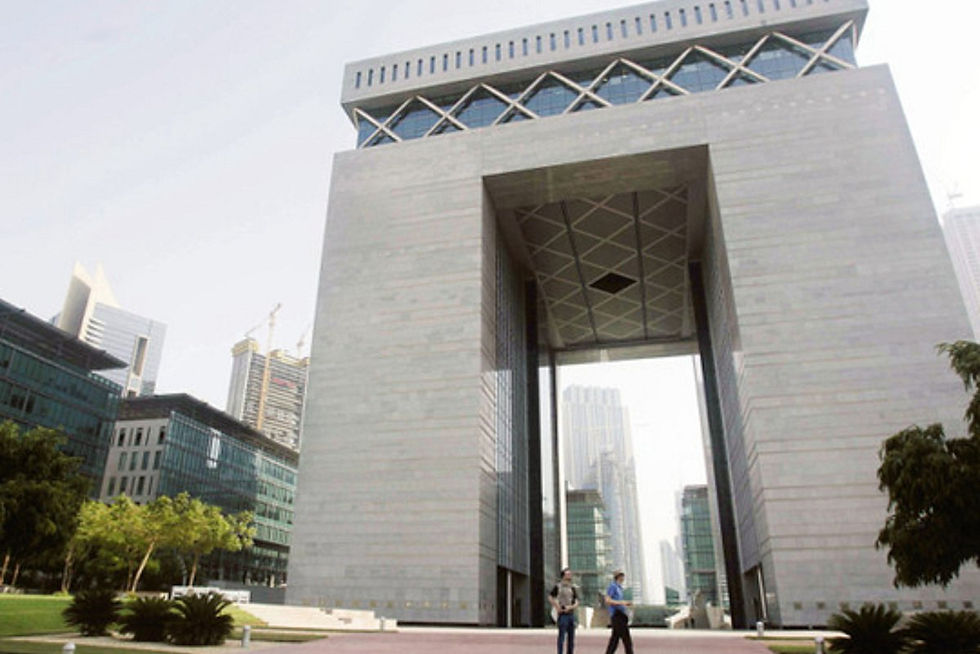
Opting into DIFC Courts jurisdiction requires clear, unambiguous drafting in your commercial contracts. Omitting explicit jurisdiction clauses can result in jurisdictional challenges or fallback to onshore courts.
Explicit Forum Selection: Insert standard DIFC Courts model clause wording designating DIFC Courts as having exclusive jurisdiction as of August 2026.
Governing Law Choice: Clarify whether the substantive agreement is governed by DIFC Law or English Law.
Small Claims Tribunal Allocation: Specify that disputes under AED 500,000 will be referred to the DIFC Small Claims Tribunal for rapid resolution (indicative — verify filing rules with DIFC Courts as of August 2026).
Digital Service Consent: Include designated email addresses for electronic service of court documents to accelerate proceedings.
Navigating Court Divisions: Small Claims Tribunal vs Court of First Instance
DIFC Courts feature specialized divisions designed to handle commercial disputes efficiently based on claim value and technical complexity as of August 2026 (source: DIFC Courts Practice Directions).
DIFC Small Claims Tribunal (SCT)
Tailored for SMEs, employment contracts, and commercial invoice disputes valued under AED 500,000 (or up to AED 1,000,000 by party agreement). The SCT resolves most cases via video hearings within 4 to 6 weeks as of August 2026.
Court of First Instance (CFI) & Technology & Construction Division
Handles multi-million dirham corporate lawsuits, shareholder battles, intellectual property claims, and complex construction disputes presided over by renowned international commercial judges.
*Pro tip: The Small Claims Tribunal allows business founders to represent themselves online without hiring expensive legal counsel for claims under AED 500,000.*
Cross-Border Enforcement of DIFC Court Judgments

A court judgment is only as valuable as your ability to enforce it. DIFC Court rulings benefit from seamless enforcement mechanisms both within the UAE and internationally as of August 2026 (source: Ministry of Economy and DIFC Judicial Authority law).
Onshore Dubai Enforcement via Execution Courts
Under Dubai Law No. 12 of 2004, DIFC Court judgments are directly enforceable by Onshore Dubai Execution Courts without re-litigating the merits of the dispute as of August 2026.
Global Recognition & Treaty Enforcement
DIFC Court orders and arbitral awards are recognized across GCC states, Commonwealth nations, and over 170 countries signatory to the New York Convention.
Cost Management & Legal Fee Considerations for Businesses
Filing fees in DIFC Courts are structured as a percentage of the claim value, capped according to official court tariffs as of August 2026 (source: DIFC Courts Fee Structure; indicative — verify directly with the registry). Crucially, DIFC Courts follow the English common law principle where the losing party generally reimburses a significant portion of the winning party's reasonable legal fees, deterring frivolous litigation.
*The 'loser pays' principle in DIFC Courts provides strong protection against meritless commercial claims.*
FAQ
Can onshore Dubai companies use DIFC Courts for contracts?
Yes, any onshore or international business can opt into DIFC Courts jurisdiction by inserting an explicit DIFC Courts jurisdiction clause in their commercial agreements as of August 2026.
What language are DIFC Court proceedings conducted in?
All DIFC Court filings, evidence submissions, and hearings are conducted entirely in English, avoiding the requirement for Arabic translations.
What is the claim limit for the DIFC Small Claims Tribunal (SCT)?
The default claim limit for the DIFC Small Claims Tribunal is AED 500,000, though parties can agree in writing to extend SCT jurisdiction up to AED 1,000,000 as of August 2026 (source: DIFC Courts Practice Directions; indicative — verify with legal counsel).
Are DIFC Court judgments enforceable outside the UAE?
Yes, DIFC Court judgments and arbitral awards are enforceable internationally through GCC treaties, bilateral judicial conventions, and the New York Convention as of August 2026.
Useful Links
DIFC Courts Official Website · Dubai International Financial Centre (DIFC) · Dubai Chamber of Commerce · Ministry of Economy UAE · Abu Dhabi Global Market (ADGM) · UAE Government Portal
Pair It With
Dubai Free Zone Commercial Occupancy Office Space 2026 · Enterprise Ai Implementation Cost Roi Uae Business 2026 · Uae E Invoicing System Compliance Guide 2026 1

— Angel Tyagi, Creator of Angel In Dubai
Prices, timings and availability may change — always check directly with the venue before visiting. Not sponsored.
Rates and figures are indicative and were correct as of 18 August 2026; they change often, so verify with the provider before acting. This is general information, not financial advice.
Rules, fees and deadlines change often. This is a general summary, not legal advice — confirm with the relevant UAE authority before acting.
Photo by DIFC Courts records strong uptake of services in H1 2024, handles 480 ... via web, Photo by Raimond Klavins via unsplash, Photo by DIFC breaks ground Gate Village Building 11 via web, Photo by Hearing Room Rentals | DIFC Courts via web


Comments