


Japanese Property Developers in Dubai: 2026 Guide to Asian Real Estate Capital
Walking through the Dubai International Financial Centre concourse toward the gate district, the international character of capital flowing into the Emirates has taken a distinct geographic shift. While European private wealth and regional family offices have dominated previous cycles, Tokyo-listed property developers and institutional Japanese asset managers are now establishing dedicated operations on the ground.
Firms such as Kasumigaseki Capital have initiated direct development strategies in the UAE, pairing institutional equity from East Asia with Dubai high-demand residential and commercial property sectors. Here is an analysis of why Japanese balance sheets are deploying into Dubai real estate, how their design philosophy alters project delivery, and what the financial math reveals as of October 2026.
At a glance | Details |
|---|---|
Key developer | Kasumigaseki Capital Tokyo |
Tokyo listing | TSE ticker 3498 |
Target sectors | Logistics and luxury residential |
Comparative yield | 6.0% to 8.5% indicative as of Oct 2026 |
Tokyo cap rate | 2.2% to 3.4% indicative as of Oct 2026 |
Regulatory hub | DIFC and Dubai Economy |
The New Wave of Japanese Institutional Developers in Dubai
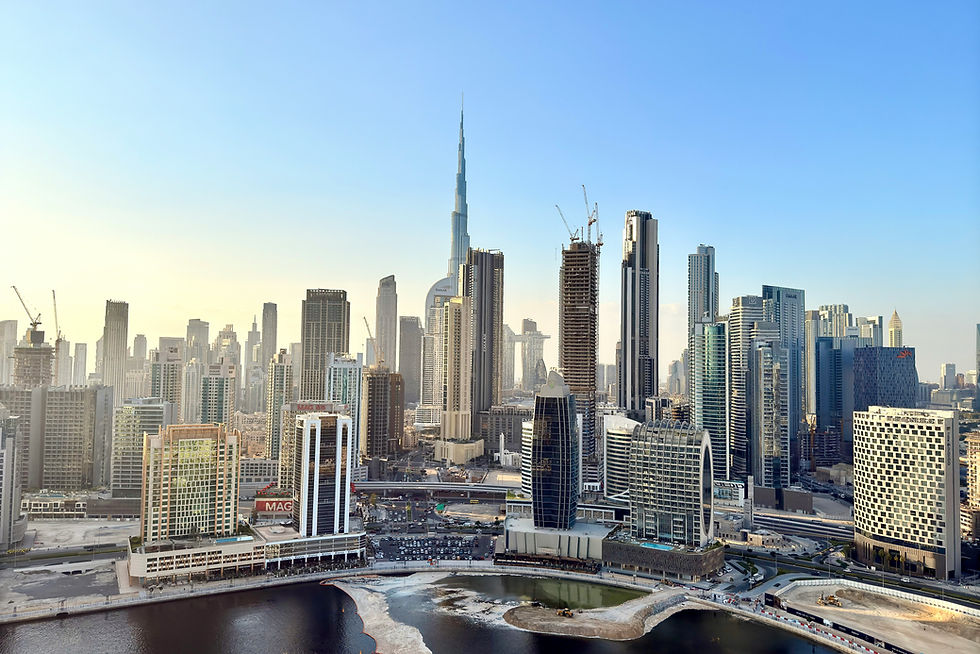
Headquartered in Tokyo and listed publicly, Kasumigaseki Capital has established an operational corporate presence in Dubai to deploy development capital. This entry marks a transition from passive Asian portfolio investment into active, ground-up real estate creation within the Emirates.
Bilateral trade monitors tracked through the JETRO regional office confirm steady growth in Japanese professional service firms entering the Gulf. While architectural giants like Nikken Sekkei have engineered landmark UAE towers for decades, Tokyo balance sheets are now funding full project equity rather than simply supplying engineering consultancy.
Asian institutional funds used to park capital quietly in London or New York commercial trusts, but Dubai yields and regulatory certainty are making the Gulf an essential asset allocation.
Kasumigaseki Capital and Tokyo Stock Exchange Expansion Models
Market valuation data published through the Japan Exchange Group reflects increasing investor demand for geographic revenue diversification outside Japanese borders. Kasumigaseki Capital trades under ticker 3498 in Tokyo and has built a domestic reputation in automated logistics centers, renewable energy assets, and boutique hospitality properties.
Official trade records documented by the Dubai Chamber of Commerce highlight expanding Asian corporate registrations across international real estate and logistics sectors. By securing local operating licenses, Japanese entities bypass third-party syndication fees and retain executive control over master planning, procurement, and asset management.
Industrial and Cold-Chain Logistics
A primary focus for incoming Japanese capital is automated supply-chain facilities located near Jebel Ali Port and Al Maktoum International Airport. Modern cold-chain storage assets in Dubai command gross yields between 7.5 and 9.0 percent as of October 2026, indicative — verify with the developer, far exceeding compressed yields on comparable Tokyo Bay distribution centers.
High-Density Residential Formats
In the residential segment, developers are testing space-efficient apartment footprints that incorporate Japanese acoustic dampening, concealed storage joinery, and prefabricated bathroom modules. These configurations target urban professionals seeking functional layouts in Business Bay and Dubai South.
Investment Yield Spread: Tokyo Versus Dubai Commercial Property
The macroeconomic engine powering this corporate migration is the stark yield differential between East Asian real estate markets and the UAE. In central Tokyo, prime residential and office capitalization rates sit between 2.2 and 3.4 percent as of October 2026 (source: Japan Real Estate Institute, indicative — verify with local brokers).
In contrast, prime Dubai commercial and residential assets generate average net yields ranging from 6.0 to 8.5 percent as of October 2026 (source: Dubai Land Department transaction disclosures, indicative — verify with property brokers). Combined with an AED currency pegged directly to the US Dollar, Japanese developers insulate their returns against ongoing domestic currency volatility while capturing wider net rental margins.
Market Metric | Tokyo Metro | Dubai Prime |
|---|---|---|
Average yield | 2.2 to 3.4 percent | 6.0 to 8.5 percent |
Yield spread | Benchmark baseline rate | Plus 380 basis points |
Currency peg | Free floating Yen | US Dollar fixed peg |
Corporate tax | 30.6 percent headline | 9 percent qualifying |
Foreign title | Unrestricted domestic law | Freehold zone deed |
Architectural Precision, Modular Engineering, and Japandi Design
Beyond financial returns, Japanese developers bring distinctive construction engineering methodologies to a Dubai market traditionally reliant on concrete frame and blockwork techniques. Precision pre-casting, seismic-grade dampening systems, and modular mechanical assemblies reduce on-site construction timelines and minimize material waste.
Design aesthetics emphasize minimalism, natural materials, and biophilic light wells, appealing to buyers fatigued by ornate finishes. This design philosophy blends Japanese spatial discipline with modern Scandinavian functionalism to maximize usable indoor area.
Acoustic floor insulation: multi-layer floating slab systems reducing footfall sound transfer between residential tiers by up to 18 decibels as of October 2026, indicative
Engineered millwork: concealed storage walls and sliding partition panels that allow a 600-square-foot suite to function with the utility of a standard one-bedroom layout
Low-energy HVAC integration: variable refrigerant flow heat pumps engineered to sustain optimal thermal efficiency during Dubai summer temperatures exceeding 45 degrees Celsius
Greywater recycling systems: decentralized on-site treatment cycling cooling condensation into landscape irrigation to meet Green Building regulations
True luxury in high-density development comes down to acoustic isolation and millimetric joinery; Japanese engineering prioritizes how a building performs over decorative flash.
Regulatory Setup and Capital Structuring for Asian Developers
Commercial licensing rules supervised by the Ministry of Economy permit one hundred percent foreign ownership for overseas developers establishing mainland subsidiaries. This statutory clarity eliminates the historical requirement for local sponsorship and allows Japanese corporate boards to own their development holding companies directly.
Financial structuring entities established within the DIFC operate under an independent English common law framework to safeguard institutional capital. Many Asian funds establish special purpose vehicles in the financial center to pool co-investment equity from Japanese pension funds and regional institutional syndicates.
RERA Escrow Protections
Developers selling off-plan units must open project-specific escrow accounts with accredited UAE banks under Real Estate Regulatory Agency oversight. Construction disbursements are released only upon independent engineering inspection certifying physical milestone completion, ensuring strict capital protection for purchasers.
Corporate Tax Structuring
Foreign development branches must account for the UAE federal corporate tax rate of 9 percent on taxable profits exceeding AED 375,000 as of October 2026, indicative. This tax structure remains highly competitive compared to the combined effective corporate tax rate of over 30 percent in Japan.
Market Due Diligence, Currency Exposure, and Execution Risks
Entering an overseas construction market presents tangible operational hurdles that institutional developers must actively mitigate. This analysis is for educational and market journalism purposes only and does not constitute financial, investment, or legal advice. Capital returns are subject to market conditions and are never guaranteed.
National investment guidelines published by the UAE Government Portal outline the streamlined approval process for foreign direct investment into commercial construction. However, developers must navigate local municipal permitting, subcontracting supply chains, and extreme climatic impacts on concrete curing times.
Establish an onshore or free zone holding corporate vehicle licensed specifically for real estate development activities under Dubai Economy
Register the entity with the Real Estate Regulatory Agency and secure accreditation for project-specific bank escrow facilities
Partner with verified local engineering consultants to adapt Japanese modular blueprints to Dubai Municipality building codes
Implement cross-currency hedging instruments to protect repatriation margins against Yen to AED currency fluctuations as of October 2026, indicative — verify with financial institutions
FAQ
Can individual retail investors buy apartments directly from Japanese developers in Dubai?
Yes, once a Japanese developer registers a project within a designated Dubai freehold area and obtains RERA marketing permits, individual retail buyers of any nationality can purchase units. Purchases follow standard off-plan procedures with payments deposited into regulated project escrow accounts.
Are Japanese property developers subject to Dubai RERA escrow account regulations?
Yes, all private real estate developers in Dubai, regardless of international pedigree or stock exchange listing, must comply with Law No. 8 of 2007. Developers must deposit 100 percent of off-plan buyer funds into an approved local bank escrow account, accessible only as building milestones are verified.
How do Japanese building specifications differ from traditional Dubai construction?
Japanese developers frequently incorporate higher thermal insulation standards, factory-prefabricated bathroom pods, advanced acoustic damping subfloors, and modular joinery. These techniques prioritize precision tolerances, long-term lifecycle durability, and lower operational utility costs compared to conventional masonry work.
Do Japanese institutional funds qualify for UAE corporate tax exemptions?
Generally no, commercial development profits generated from UAE real estate are subject to the standard 9 percent federal corporate tax on taxable income above AED 375,000 as of October 2026, indicative — verify with a licensed tax advisor. However, qualifying institutional investment funds may apply for specific exemptions under Federal Decree-Law No. 47 of 2022 if statutory regulatory conditions are met.
Useful Links
Kasumigaseki Capital — Review Tokyo developer corporate filings and projects
JETRO — Track Japan Middle East trade agreements
Japan Exchange Group — Inspect Tokyo Stock Exchange equity disclosures
Dubai Chamber of Commerce — Access bilateral UAE Japan business council data
Ministry of Economy — Check foreign corporate ownership legal frameworks
DIFC — Review common law fund formation regulations
UAE Government Portal — Verify federal foreign direct investment regulations
Pair It With

— Angel Tyagi, Creator of Angel In Dubai
Prices, timings and availability may change — always check directly with the venue before visiting. Not sponsored.
Story lead: Emirates 24|7. Reporting can be updated or withdrawn after publication — always check the original before relying on anything here.
Rates and figures are indicative and were correct as of 12 October 2026; they change often, so verify with the provider before acting. This is general information, not financial advice.
Photo by Pavlo Antonio via unsplash, Photo by Sirav Talwar via unsplash


Comments