


Middle East Energy 2026 Returns to Dubai — the 50th Edition of the Region's Biggest Energy Show
- Jun 16
- 5 min read
There is a particular kind of energy — pun intended — that fills the Dubai World Trade Centre when one of its mega-exhibitions is in full swing: thousands of badges, a dozen languages in the coffee queue, and aisle after aisle of machinery humming under the lights. This September, that hum belongs to the people who quite literally keep the lights on across the region. Middle East Energy 2026 is coming back to Dubai — and it is marking a milestone.
Running from 1 to 3 September 2026 (note: this is the official organiser date — some third-party listings still show an older April slot), the show celebrates its 50th edition, capping more than four decades as the region's flagship power and energy trade fair. For a city that has bet so heavily on becoming a global business and clean-energy hub, hosting it is no small thing.
What Middle East Energy is
Middle East Energy is, simply, the biggest energy event in the Middle East, Africa and South Asia region. According to the Dubai World Trade Centre's event page and the official organiser, Informa Markets, the show is expected to gather more than 1,900 exhibitors and over 35,000 professionals — utilities, contractors, manufacturers, consultancies and end-users from across the region and beyond. (Scale figures as published by the organiser, as of June 2026.)
It is a trade-only event, so it is aimed at the industry rather than the general public — but the technology on display ends up touching every one of us, from the solar panels on a warehouse roof to the batteries in the next generation of electric cars on Sheikh Zayed Road.
Half a century of powering the region
Reaching a 50th edition is genuinely rare for any trade event. Middle East Energy has run for more than four decades, growing alongside the region's own transformation — from an era defined almost entirely by oil and gas into one racing to add solar, wind, storage and smart grids. The show's longevity is a kind of living timeline of how the Middle East powers itself, and the fact that it has stayed anchored in Dubai for so much of that journey says plenty about the city's pull.
What started as a focused electricity exhibition has broadened into a sprawling showcase covering the entire chain — generation, transmission, distribution, storage and the software that ties it together. For anyone curious about where the region's power is headed, the 2026 floor is essentially the industry's roadmap, laid out hall by hall.
Six sectors, one big theme: cleaner power

The 2026 floor is organised around six product sectors, which together read like a map of where energy is heading:
Renewable & clean energy — solar, wind and the technologies driving the region's shift away from fossil fuels.
Battery & e-mobility / smart solutions — storage and the charging backbone behind the electric-vehicle boom.
Critical & backup power — keeping hospitals, data centres and airports running without interruption.
Transmission & distribution — the grids and cables that move electricity from where it's made to where it's needed.
Energy consumption & management — the software and metering that help cut waste and bills.
Smart grid solutions — the digital layer making the whole system more responsive and efficient.
It is no coincidence Dubai hosts this. The emirate has poured serious ambition into clean power — the Mohammed bin Rashid Al Maktoum Solar Park, run by DEWA, is one of the largest single-site solar projects in the world, and the city has set out clear targets to draw a growing share of its power from renewables. A show like this is where those national ambitions meet global supply chains.
My honest take: you do not need to be an engineer to find this fascinating. I always tell friends in property, hospitality or tech that the energy show is a sneak preview of the bills, the buildings and the cars of the next decade — the trends that start on this floor tend to land in our daily lives a few years later.
Why it keeps coming back to Dubai

Fifty editions is a long relationship, and it speaks to Dubai's pull as a business hub. The city sits at a natural crossroads between the energy-rich Gulf, the fast-growing markets of Africa and South Asia, and the technology suppliers of Europe and Asia. Add world-class venues and easy visa access for trade visitors, and you have the ideal neutral ground for an industry that is genuinely global.
That same magnetism shows up across Dubai's economy — from its record-breaking free-zone trade to its push to put AI at the heart of how local companies operate. Hosting the region's biggest energy show is one more thread in the same story: a city that wants to be where the future of major industries gets decided.
Thinking of attending?
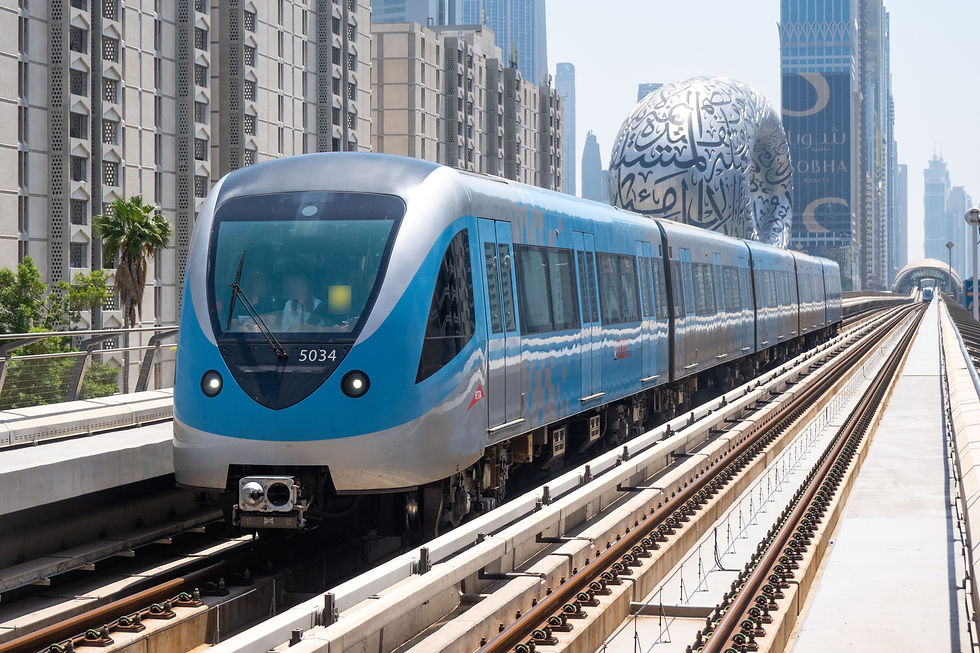
If you work anywhere near the energy, construction, utilities or sustainability space, this is worth a day in your calendar. Registration and trade-visitor details go up on the official Middle East Energy website, and you can confirm hall and date logistics on the Dubai World Trade Centre listing. My practical advice mirrors any big DWTC show: take the Metro to the World Trade Centre station, wear comfortable shoes (the halls are vast), and block out the morning for the keynote sessions before the floor gets busy.
Even if you never walk the floor, it is worth knowing that for three days in September, the people shaping how the region powers its homes, factories and cars will be doing it right here in Dubai. That is the kind of quiet significance I love about this city — there is always something globally important happening just down the road.
— Angel Tyagi, Creator of Angel In Dubai
Dates, scale figures and programme details are set by the organiser (Informa Markets) and the Dubai World Trade Centre and can change — confirm the latest, including the 1-3 September 2026 dates, on the official channels before making plans, as some older third-party listings show different dates. Figures cited are as published by the organiser as of June 2026. This article is general information, not official guidance or financial advice. Not sponsored — no one paid for this coverage.
Photos: World Trade Centre Station, Dubai Metro by Tim Wu (CC BY-SA 4.0) and the Mohammed bin Rashid Al Maktoum Solar Park by Anoop S (CC BY 2.0) via Wikimedia Commons; Dubai skyline by Ondrej Bocek and transmission infrastructure by Dong Cheng via Unsplash. The transmission image is representative of the show's sectors, not the event itself.


Comments