


Best Sustainability and STEM Programs in UAE Private Schools: 2026 Guide
Walking into the central atrium of an eco-forward Dubai private school on a Tuesday morning, the first sound you hear is not the rustle of textbooks, but the steady trickle of water circulating through automated nutrient beds. In a climate where summer temperatures easily exceed forty degrees Celsius, primary school students in lab aprons are busy calibrating digital pH sensors and harvesting vibrant romaine lettuce cultivated entirely without soil.
Environmental sustainability in UAE classrooms has transitioned from symbolic poster presentations into sophisticated applied engineering. Driven by national climate priorities and regulator standards across Dubai and Abu Dhabi, leading private institutions now equip pupils with genuine STEM competencies, linking circular economy experiments directly to computer science, biotechnology, and physics.
At a glance | Details |
|---|---|
Flagship bio-domes | The Arbor School, 3 domes |
Net-zero campus | Fairgreen, The Sustainable City |
Key accreditation | Eco-Schools Green Flag award |
Average student harvest | 120 kg greens per school year |
Curriculum options | IB ESS, IGCSE, AP Environmental |
Regulator oversight | KHDA and ADEK annual audits |
Green Campus Architecture and Ecological Curricula Across the Emirates
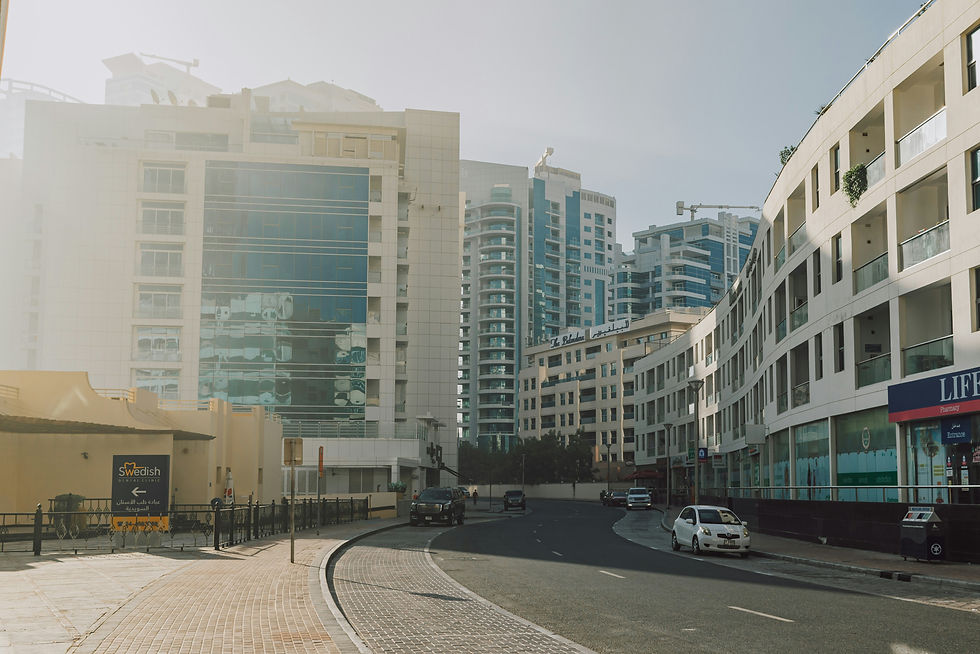
Modern campus design in the United Arab Emirates increasingly mirrors commercial green development standards. Purpose-built private schools now integrate solar photovoltaic arrays, rainwater diversion cisterns, and passive architectural shading into the educational environment itself. Rather than treating campus maintenance as a background facility function, science teachers use real-time building management data to teach resource conservation in everyday classes.
Institutional regulators play a foundational role in evaluating these standards. Annual school inspection reports from KHDA evaluate how effectively private institutions implement green education and environmental responsibility. Campuses that combine hands-on conservation infrastructure with measurable academic outcomes consistently earn top praise in community leadership categories.
School | Core Focus | Eco Feature |
|---|---|---|
The Arbor School | Ecological literacy and botany | Three climate controlled bio domes |
Fairgreen School | Baccalaureate sustainability learning | Solar powered net zero campus |
GEMS Legacy | Circular economy and robotics | Large scale organic composting |
Dubai British School | STEM conservation engineering | Rooftop hydroponic farming units |
High-Tech Agricultural Labs: Hydroponics, Aquaponics and Biodomes
Controlled environment agriculture represents one of the most visible STEM investments across UAE private education. Because arid desert conditions limit traditional outdoor gardening during warmer terms, schools construct specialized indoor farming facilities where biology and engineering intersect.
Climate-Controlled Biodomes for Real-World Botany
Campus tours at The Arbor School showcase three full-size biodomes dedicated to tropical, arid, and temperate plant ecosystems. Students enter these sealed biospheres during scheduled science lessons to observe natural humidity cycles, measure photosynthetic rates, and care for native desert plants alongside non-native species.
Operating within The Sustainable City, Fairgreen International School integrates solar-powered facilities with daily international baccalaureate science coursework. Pupils study natural shade canopy dynamics and organic pest control directly within the community urban farming plots, connecting classroom theory to practical regional agriculture.
Student-Operated Vertical Hydroponics
Vertical nutrient film technique (NFT) racks allow classrooms to grow hundreds of plants within compact corridor footprints. Secondary students program microcontrollers using Python to adjust nutrient dosage based on automated electrical conductivity readings.
These student-managed agricultural units yield well over one hundred kilograms of fresh produce annually per school. Much of the harvest supplies campus canteens or gets packaged by student enterprise clubs for weekly parent farmers markets, introducing young learners to sustainable food supply economics.
Watching primary pupils measure water conductivity in an indoor farm proves that sustainability is now a core scientific skill rather than an extracurricular novelty.
Circular Economy and Student Waste-to-Energy Innovations
Moving beyond conventional single-stream recycling, forward-thinking campuses challenge students to design closed-loop material cycles within school grounds. Network-wide circular economy programs across GEMS Education incorporate student-run hydroponics and campus waste reduction initiatives. These practical projects ensure that organic waste generated during morning break times directly enriches campus soil or powers experimental energy setups.
Micro-scale biodigesters converting fifty kilograms of daily canteen food scraps into methane gas for science lab burners
Smart sorting bins equipped with computer vision sensors achieving ninety-two percent recycling purity in corridors
Greywater filtration units using natural sand and reed-bed biofilters to irrigate native Ghaf tree nurseries
Upcycled plastic filament extruders turning discarded water bottles into three-dimensional printer filament for design classes
Eco-School Green Flag Accreditations and National Competitions

Achieving external validation provides schools with structured accountability for their environmental milestones. Schools pursuing the international eco-schools flag coordinate directly with Emirates Environmental Group to audit their campus waste. Earning the prestigious Green Flag requires an active student-majority committee capable of demonstrating measurable operational improvements.
The Seven-Step Green Flag Certification
The certification pathway demands rigorous environmental review, action planning, and curriculum monitoring over twelve to twenty-four months. Student leaders measure electricity consumption across individual classrooms, enforce digital light-switch protocols, and present quarterly progress dashboards to school governing boards.
Renewal audits occur every two years, preventing schools from treating certification as a static badge. Campuses that fail to maintain documented reductions in per-pupil waste output risk losing their official accreditation.
Inter-School Climate Hackathons and STEM Challenges
Campus sustainability frameworks supervised by ADEK encourage private schools in Abu Dhabi to track renewable energy production. Students collaborate on inter-school design sprints to build smart irrigation prototypes and automated solar trackers.
Top-performing student teams frequently represent the UAE at international youth environmental forums, pitching solutions for urban heat island mitigation and coastal mangrove preservation to corporate engineers.
School inspection frameworks now actively reward campuses that demonstrate measurable drops in per-pupil kilowatt consumption.
Integrating Environmental Engineering into International Curricula
Green STEM programs deliver the strongest academic value when woven seamlessly into international examination boards. Rather than functioning as standalone clubs, sustainability projects now fulfill formal coursework criteria across British, International Baccalaureate, and American academic tracks.
National environmental literacy standards guided by Ministry of Education establish climate education targets across primary and secondary levels. Under the International Baccalaureate Diploma Programme, the Environmental Systems and Societies (ESS) course allows students to conduct complex fieldwork on marine salinity and urban soil health. Similarly, Cambridge IGCSE Environmental Management students apply statistical analysis to real-time solar inverter data gathered directly from campus rooftops.
What Parents Should Ask on Campus Tours: Admissions Checklist
For parents evaluating prospective schools across Dubai and Abu Dhabi, identifying genuine environmental excellence requires asking precise operational questions during admissions tours. Shiny marketing presentations frequently highlight green initiatives, but physical campus practices reveal whether sustainability is truly embedded in the school culture.
Does the school timetable regular curriculum hours in the agricultural lab or biodome for every academic year group
Are student eco-committees empowered to propose capital spending on campus energy saving projects
How does the secondary STEM curriculum incorporate renewable solar energy and water desalination mechanics
What external certifications like the Eco-Schools Green Flag has the institution achieved and maintained over recent years
Can the admissions team demonstrate how student research projects link to international academic awards or university credits
Ask to see the student compost heap or solar monitoring screen during your tour to verify that green credentials extend beyond marketing brochures.
FAQ
What is an Eco-School Green Flag certification in the UAE?
The Green Flag is an internationally recognized sustainability accreditation awarded by the Foundation for Environmental Education through Emirates Environmental Group. Schools must complete a seven-step framework including environmental audits, action plans, and student-led monitoring across areas like energy conservation, biodiversity, and waste reduction.
Which curricula in UAE private schools offer environmental STEM qualifications?
Both the British and International Baccalaureate curricula feature formal environmental specializations, notably the IB Environmental Systems and Societies course at Standard and Higher Level, as well as Cambridge IGCSE Environmental Management. American-curriculum schools frequently provide Advanced Placement Environmental Science alongside dedicated engineering electives.
Do school sustainability initiatives affect tuition fees?
Campus green facilities such as biodomes and vertical farms are capital investments funded within approved school tuition schedules regulated by KHDA or ADEK. While premium tier schools with specialized ecological facilities often sit in the higher fee bracket of AED 65,000 to AED 98,000 annually, existing operational savings from solar power and greywater systems help offset ongoing running costs.
How can students participate in national UAE sustainability competitions?
Students can enter recognized inter-school challenges such as the EEG Inter-School Environmental Public Speaking Competition, university hackathons hosted by institutions like RIT Dubai, and national young innovator challenges. Most secondary schools form dedicated student eco-councils in September that select and mentor competition teams throughout the academic term.
Useful Links
The Arbor School — Explore ecological curriculum and campus biodomes
Fairgreen International School — Learn about net-zero school campus programs
GEMS Education — Review private school network sustainability initiatives
KHDA — Access Dubai school inspection ratings
ADEK — Check Abu Dhabi education sustainability standards
Ministry of Education — Read national education curriculum standards
Emirates Environmental Group — View Green Flag accreditation guidelines
Pair It With

— Angel Tyagi, Creator of Angel In Dubai
Prices, timings and availability may change — always check directly with the venue before visiting. Not sponsored.
Story lead: thenationalnews.com. Reporting can be updated or withdrawn after publication — always check the original before relying on anything here.
These are Angel's own editorial picks based on the criteria described above — not a paid placement, and not an independent survey.
Photo by Ziad Al Halabi via unsplash, Photo by Kate Trysh via unsplash, Photo by AI-generated illustration via gemini


Comments