


Why Global Business Leaders Are Moving to Dubai in 2026 — And Why It Makes Complete Sense
- Jun 3
- 6 min read
It was a Tuesday morning at a café in Business Bay when it clicked for me. The man at the next table was on a call with New York — I could tell by the time zone math he was doing in his head. The woman two tables over was talking through a term sheet with someone in Singapore. Behind me, a group of Indian founders were sketching out a Series A pitch on a napkin. This was not a WeWork. This was a regular Tuesday in Dubai, and it told me everything about why this city has become the world's favourite business relocation story of 2026.

The Numbers Don't Lie: Dubai's Business Migration in 2026
According to Dubai Chamber of Commerce data, the UAE attracted over 4,800 new international businesses in the first quarter of 2026 alone. The founder relocation trend has accelerated sharply: international business leader relocations to the UAE are up 34% year-on-year, with British, American, European, and Indian founders leading the wave — all seeking a more operationally efficient base that does not penalise growth at every tax bracket. Dubai's Invest Dubai portal now handles the complete business setup journey online, and the free zone incorporation process can be completed in under two weeks. The velocity of this migration is not driven by hype. It is driven by spreadsheets.
Zero Income Tax — Not a Slogan, an Actual Policy
I know the sceptics. I was one. 'Zero income tax' sounds like a promise that comes with an asterisk. But in the UAE, at the personal level, it genuinely does not. As a UAE-resident individual, you pay zero personal income tax on your salary, dividends, freelance income, and most investment returns. There is a 9% corporate tax introduced in June 2023 for mainland businesses turning over AED 375,000 (approximately $102,000) or more annually — but free zone companies selling primarily to international clients remain largely tax-free under qualifying conditions. For a founder previously paying 45% income tax in the UK, or 37% in the US, the maths rewrites everything: runway, reinvestment capacity, personal wealth accumulation. The compounding effect over a three-to-five-year horizon is not marginal. It is transformational.
The day my accountant ran the comparative figures — Dubai setup costs versus two years of UK income tax on the same revenue — I stopped asking 'can we afford to relocate?' and started asking 'can we afford not to?'
Dubai's Free Zones — Over 50 Options Built for Every Industry
One of the things that genuinely surprised me when I arrived was how precisely Dubai has engineered its free zones around specific industries. This is not one-size-fits-all licensing dressed up with a flag. These are purpose-built ecosystems — each with its own regulatory infrastructure, visa quotas, and sector-specific incentives. Choosing the right free zone for your business model matters enormously, so here is a practical shortlist:
DIFC — Dubai International Financial Centre [Maps] | website: The GCC's premier financial hub, home to 7,000+ companies operating under English common law courts and an independent regulatory body. The go-to address for banks, asset managers, and fintech firms targeting the GCC and broader MENA markets.
DMCC — Dubai Multi Commodities Centre | website: Five-time winner of the Global Free Zone of the Year award (Financial Times fDi). The natural home for trading, commodities, precious metals, and digital asset businesses.
Dubai Silicon Oasis (DSO) | website: Dubai's integrated technology park, with R&D incentives, semiconductor and hardware facilities, and a growing startup and corporate innovation ecosystem.
Expo City Dubai | website: The legacy of Expo 2020, now a fully operational innovation district with sustainability, mobility, and future-economy tenants already in place.
Dubai Media City and Dubai Internet City: The established cluster for agencies, media companies, tech firms, and e-commerce operations. Home to regional offices of Microsoft, Google, and LinkedIn alongside hundreds of high-growth companies.
The Talent Pool Is Deep — and Getting Deeper
Dubai attracts professionals from over 200 nationalities. For business leaders concerned about hiring, this is not a compromise market — it is a deliberate feature. The city has spent decades cultivating a dense, multilingual, internationally credentialed workforce that has actively self-selected for a high-ambition, internationally-oriented environment. Golden Visa expansions in 2024 and 2025 extended eligibility to scientists, engineers, exceptional graduates, and specialised medical professionals — meaning Dubai's talent density is increasing by policy design. I wrote about the nuances of navigating Dubai's competitive hiring landscape in detail — covering what actually happens after you hit apply and how to work the algorithm — in my piece on Dubai's job application landscape in 2026. Well worth reading whether you are hiring or being hired.

Lifestyle Is a Business Asset — and I Mean That Seriously
When founders tell me Dubai's lifestyle is why they came, they rarely mean what I used to assume. Yes, the restaurants are world-class, the weather is extraordinary for much of the year, and the beaches are twenty minutes from most business districts. But the real lifestyle dividend is more operational than indulgent. Three hundred and sixty-five days of sunshine dramatically reduces the cognitive drag of grey-season winters — something founders who have spent a decade in London or Amsterdam describe as quietly life-changing. The geographic timezone means you can take a call with Tokyo before 9am and close out with New York before midnight without a single red-eye flight. International schools at every price point ensure families do not trade their children's education for a lower tax bill. And the healthcare infrastructure — modern, accessible, and often employer-provided — removes a layer of chronic background anxiety that quietly underlies entrepreneurial burnout in countries where healthcare is prohibitively expensive or chronically understaffed.
What Does It Actually Cost to Set Up in Dubai?
Setting up a free zone company in Dubai typically costs between AED 15,000 and AED 50,000 (approximately $4,000 to $14,000 USD) for the first year, inclusive of trade licence, visa eligibility, and flexi-desk or office space. Mainland company setup — required if you are selling primarily into the UAE domestic market — is broadly comparable and now permits 100% foreign ownership across most commercial sectors following the 2021 Companies Law amendments. Ongoing annual costs, including licence renewal, visa renewal, and basic accountancy, typically run AED 10,000 to 25,000 ($2,700 to $6,800) depending on entity size and headcount. If you are also weighing residential real estate alongside the business case — which many founders do, given the property-linked visa pathways — my Dubai property price forecast for Q3 and Q4 2026 breaks down the current community-by-community divergence in detail. Understanding the real estate landscape before you commit to a neighbourhood will save you significant money and a great deal of second-guessing.
Is Dubai Right for Your Business?
The honest answer is: it depends on your model. Dubai rewards businesses with international revenue streams, regional GCC and South Asia ambitions, and a genuine need for operational agility. It is less naturally suited to businesses with purely domestic market requirements, complex supply chains tied to other jurisdictions, or sectors facing UAE-specific regulatory limitations. But for the growing cohort of global service businesses, consulting and advisory firms, fintech and digital-asset founders, content and media operations, fund managers, and professional services operators — the alignment is almost frictionless. The infrastructure is there. The tax efficiency is there. The talent is there. The culture of deliberate, international ambition is embedded in the city's DNA. The only real question is whether your specific model fits. In most cases, with the right free zone, it does.
What I have watched happen in this city over the years I have lived here is not a trend. It is a structural shift. The founders and executives arriving in 2026 are not gamblers chasing a low-tax loophole — they are deliberate, well-advised business builders choosing the most operationally efficient jurisdiction they can find. Dubai, for all its energy and ambition, has quietly become one of the most intelligent environments on Earth to build and scale a business. I believe it will hold that position for a very long time.
— Angel Tyagi, Creator of Angel In Dubai
Not financial advice: This article is for informational purposes only and does not constitute financial, legal, or investment advice. Always consult a licensed UAE business setup consultant, legal advisor, and qualified tax professional before making any relocation or incorporation decisions. Company registration costs, tax structures, free zone eligibility, and visa regulations are subject to change. Pricing and information in this post may change — verify with official sources. Not sponsored.
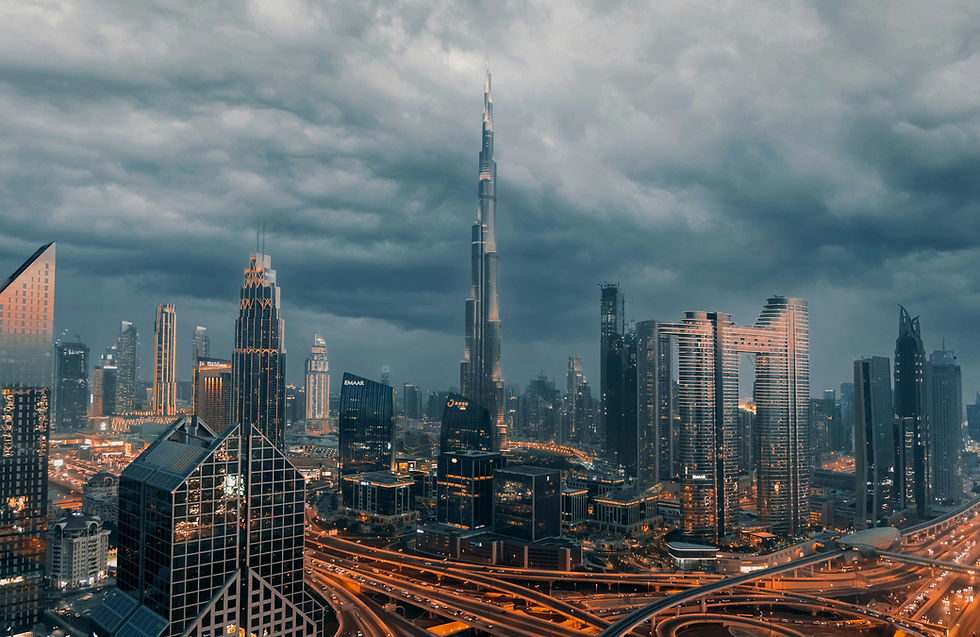
Photo by Darcey Beau via Unsplash (Sheikh Zayed Road, Dubai). Photo by Ahmed Aldaie via Unsplash (Downtown Dubai aerial). Dubai night skyline panoramic and Dubai Marina skyline photos via Unsplash contributors. Used under the Unsplash License.


Comments